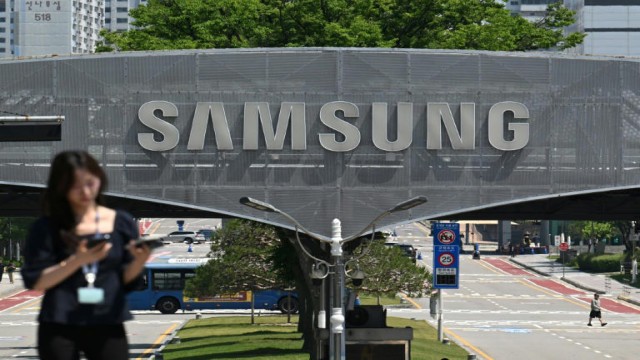
SEOUL, July 7, (V7N)– Samsung Electronics forecast a roughly 19-fold jump in second-quarter operating profit on Tuesday, driven by sustained AI-driven demand for memory chips, but the upbeat outlook failed to impress investors as shares tumbled amid broader tech market jitters.
The world's largest memory chipmaker estimated April-June operating profit at 89.4 trillion won ($58.4 billion), up 1,810% year-on-year, with revenue likely rising 129% to 171 trillion won, according to a company statement. The estimate beat market forecasts by 6.2% and marked another quarterly record, Yonhap News Agency reported.
Frenzied global demand for advanced memory chips used in AI data centres has already helped South Korean semiconductor giants post record profits this year. The boom also strengthened workers' pay demands, though Samsung avoided a major strike in May after reaching a bonus agreement with employees.
Despite the stellar numbers, Samsung's shares plunged around 7% in early trade, dragging the Kospi index down 5% and deepening a two-week rout that has erased much of this year's gains. The Kospi had more than doubled to a record high in June but has shed about 20% since then.
"Samsung's preliminary second-quarter numbers were, on their face, spectacular," said Stephen Innes at SPI Asset Management. "AI memory demand remains ferocious, supply remains tight, and margins are enjoying levels that would have looked implausible only a few years ago." However, he added that the market is now "priced for perfection. Good is no longer good enough. Even exceptional is not enough."
Analysts said investors are increasingly focused on the long-term trajectory of the memory cycle rather than past results. Some see potential delays in AI infrastructure investment as the biggest risk to the current boom, though Counterpoint Research analyst MS Hwang said there is "no evidence that the gap between suppliers' production capacity and customers' demand is narrowing."
Samsung and domestic rival SK hynix are involved in an 800 trillion won public-private investment to build a new semiconductor fabrication hub in the country's southwest. The AI boom has also sparked debate over how to use the tax windfall from the sector's success, with presidential chief of staff Kang Hoon-sik saying it would help finance large-scale AI projects, reduce inequality, and support youth housing, startups, and employment.
In other markets, Asian stocks were mixed, with Tokyo and Shanghai also declining while Hong Kong and Taipei saw gains. Oil prices edged up after a reported projectile strike on an oil tanker near the Strait of Hormuz.
end/tec/rh/