CARACAS, JULY 05 (V7N): The confirmed death toll from Venezuela’s catastrophic double earthquake has risen sharply to 2,954, according to updated state figures released Saturday. The grim reassessment comes exactly ten days after the initial June 24 disaster, as international elite search-and-rescue teams begin systematically winding down their operations in the rubble.
While official casualty counts approach 3,000, the true human cost remains fluid. The government has yet to issue a definitive tally on the disappeared, but United Nations aid agencies estimate that as many as 50,000 people remain unaccounted for after twin 7.2 and 7.5 magnitude tectonic shocks shattered the country's north-central coastline.
The disaster—widely ranked among the worst seismic events in modern Latin American history—struck with calculated violence. Seismologists noted that the two major shocks occurred a mere 38 seconds apart along the unstable San Sebastián fault system.
The structural failure was concentrated most heavily along the narrow coastal shelf of La Guaira, a critical gateway region just north of the capital city of Caracas.
       [JUNE 24 DOUBLET EARTHQUAKE TIMELINE]

 18:04 VET ───► Mw 7.2 FORESHOCK
                Epicenter: Veroes, Yaracuy (Shallow)
                      │
                      ▼ (39 Seconds Elapsed)
 18:05 VET ───► Mw 7.5 MAINSHOCK
                Ruptured east toward Caracas
                Peak 3.6m slip offshore Catia La Mar
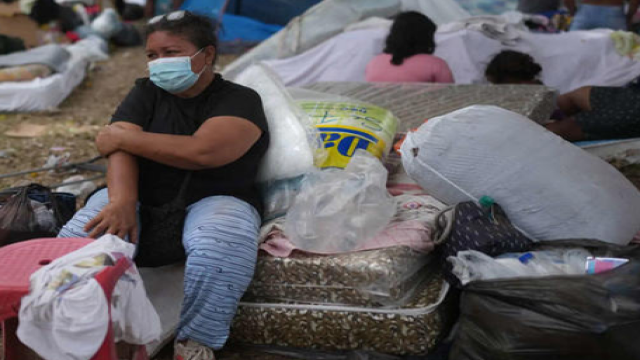
In La Guaira, dozens of multistory seaside residential towers and hotels were completely flattened into compressed layers of concrete. Over 16,000 citizens have been treated for severe injuries, while more than 44,000 individuals have been rendered homeless, forced to sleep on the streets or crowd into improvised emergency tent camps.
The critical 72-hour international window for locating survivors trapped deep beneath structural voids has long closed. While isolated miraculous rescues occurred earlier in the week, foreign deployments are preparing to return home.
To mark the transition from active rescue to heavy machinery cleanup, Interim President Delcy Rodríguez hosted an official ceremony on Saturday, presenting medals of honor to departing international task forces and their canine search units. Highly specialized urban search-and-rescue squads from the Los Angeles County, Florida, and Virginia fire departments confirmed they are packing up equipment to fly out this weekend after extensive radar searches yielded no further signs of life.
"A profound grief is gripping our people," Rodríguez stated during the presentation. "Families still hold out hope of finding loved ones alive—people who have lost absolutely everything."
Despite the formal ceremonies, intense public anger is mounting across the country. Many displaced families have openly condemned the executive branch's response as slow and highly disorganized. In the critical hours directly following the structural collapses, everyday citizens were left to dig through jagged rebar and concrete with their bare hands and civilian motorcycles before organized state assistance arrived.
President Rodríguez—who assumed executive control of the country in January—has fiercely defended her administration's management of the crisis. She noted that a unified emergency command moved 4,000 personnel into the disaster zones instantly, a rescue force that has since swelled to 19,000 military and civil protection workers.
Rodríguez explicitly blamed what she termed politically motivated "media laboratories" for intentionally weaponizing early logistics problems to fabricate a narrative of state collapse.
The long-term recovery process will severely test an oil-exporting nation already crippled by decades of hyperinflation, political stalemates, and deteriorating public health utilities.
| Economic Impact Metric | UN / World Bank Initial Estimate |
| Total Direct Physical Damage | $6.7 Billion |
| Percentage of National GDP | ~6.0% |
| Completely Destroyed Buildings | 189 large-scale structures |
| Uninhabitable Homes | 28,300+ residential units |
A major logistical bottleneck remains at Maiquetía International Airport in La Guaira, the main aviation hub serving Caracas. The runway and terminal buildings sustained deep structural cracking during the Mw 7.5 mainshock. While the government has partially reopened small sections of the tarmac exclusively for inbound military cargo and humanitarian aid flights, all international commercial operations remain completely suspended.
The administration stated it is currently collaborating with foreign architectural partners to draft an airport restoration blueprint, which is expected to be unveiled next week.
For ordinary survivors, the larger economic and political arguments matter little compared to the immediate, agonizing task of retrieving their dead. Throughout La Guaira, heavy excavators have begun to knock down unstable facades, but family members frequently block the machinery to search for remains.
In one flattened sector, Víctor Colivert stood guard directly beside a black forensic body bag containing the remains of his young nephew, which had just been pried from a collapsed masonry wall. Fearing the body would be permanently lost or misidentified within overloaded temporary morgues, Colivert and his relatives successfully blocked emergency workers from moving the remains.
"If I have to go to China, to wherever, I am not leaving him alone," Colivert said, refusing to leave the perimeter. "I am going with him."
END/WD/RH/