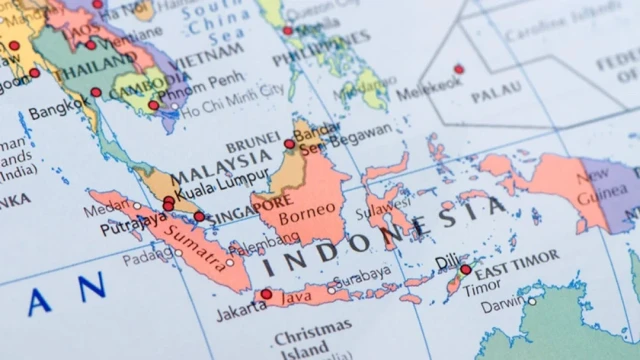
May 06 (V7N)- Indonesia’s economy expanded by 5.6 percent year-on-year in the first quarter of 2026, surpassing both government and market expectations, the national statistics agency (BPS) announced Tuesday. The figure was stronger than the 5.4 percent growth recorded in the final quarter of 2025.
BPS chief Amalia Adininggar Widyasanti said household expenditure was the biggest driver of growth, while government spending surged more than 21 percent compared to a year earlier. President Prabowo Subianto’s administration is targeting growth of eight percent by 2029, powered by high public spending.
However, analysts cautioned against over-optimism. Gareth Leather of Capital Economics warned that Prabowo’s “shift towards more populist and interventionist policymaking” could undermine fiscal discipline and investor confidence.
Indonesia faces mounting challenges from Middle East war-driven oil price hikes. Although an oil producer, it remains a net importer and heavily subsidizes domestic fuel. Every $1 increase in global oil prices adds about 6.8 trillion rupiah ($400 million) to the state budget. Jakarta’s 2026 subsidy plan was based on $70 per barrel, but prices have surged past $100, while the rupiah has weakened beyond 17,400 per dollar.
The government has sought alternatives, striking oil deals with Russia and exploring supplies from Africa, the US, and Venezuela. Economy Minister Airlangga Hartarto recently said Indonesia could withstand the price shock for up to 10 months without cutting subsidies.
Concerns remain that maintaining subsidies could push the fiscal deficit above the 3 percent ceiling, further pressuring the currency. The central bank pledged Tuesday to continue market interventions to stabilize the rupiah.
On the inflation front, BPS reported April’s year-on-year rate at 2.42 percent, the lowest so far this year. Still, the World Bank last month lowered Indonesia’s 2026 growth projection to 4.7 percent, down from 4.8 percent forecast in October.
END/WD/RH