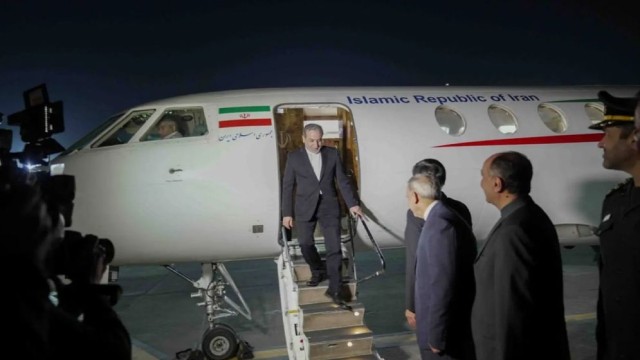
Islamabad, Apr 25 (V7N) — Iranian Foreign Minister Abbas Araghchi arrived in the Pakistani capital late Friday night, marking the start of a critical three-nation diplomatic tour aimed at addressing regional instability and the ongoing conflict involving the United States and Israel. Following his consultations in Islamabad, Araghchi is scheduled to travel to Muscat, Oman, and Moscow, Russia, to coordinate with regional partners. While Iranian state media initially characterized the visit as bilateral in nature, international observers view the trip as a pivotal step toward resuming direct negotiations to resolve the maritime standoff in the Strait of Hormuz and the broader regional war.
In a parallel move, the White House confirmed that a high-level U.S. delegation, led by Special Envoy Steve Witkoff and presidential advisor Jared Kushner, is departing for Pakistan tomorrow morning. The delegation is tasked with engaging in a second round of peace talks, following an initial set of discussions earlier this month that ended without a definitive agreement. The U.S. representatives are expected to meet with Pakistani intermediaries and potentially their Iranian counterparts to discuss terms for a ceasefire and the lifting of the current naval blockade on Iranian ports, which has significantly disrupted global energy flows.
The White House also addressed the notable absence of Vice President J.D. Vance from this specific mission, explaining that he will remain in Washington to monitor the negotiations in real-time. According to administration officials, Vance remains deeply involved in the strategic process and will be providing continuous input as the talks progress in Islamabad. This coordination ensures that the executive branch maintains a unified front while allowing the Vice President to manage domestic responsibilities and oversight of the broader national security apparatus during the high-stakes summit.
President Donald Trump, Secretary of State Marco Rubio, and the full National Security Team are reportedly maintaining a constant vigil over the situation from the United States. Administration spokespeople have indicated that the U.S. leadership is prepared for a rapid escalation of diplomatic presence if the situation on the ground demands it. The White House concluded its statement by signaling that all senior officials, including the President himself, remain ready to travel to Pakistan if a breakthrough becomes imminent or if direct executive intervention is required to finalize a peace deal.
END/SMA/AJ