Tehran, Mar 22 (V7N) – Iran’s military capabilities have come under intense global scrutiny, with growing speculation over whether the country is nearing the development of an intercontinental ballistic missile (ICBM).
The debate has intensified following reports of missile launches targeting the joint US-UK base at Diego Garcia, located roughly 4,000 kilometers from Iran. Such a distance exceeds the known operational range of Iran’s current missile arsenal, raising questions among military analysts.
Questions Over Range and Capability
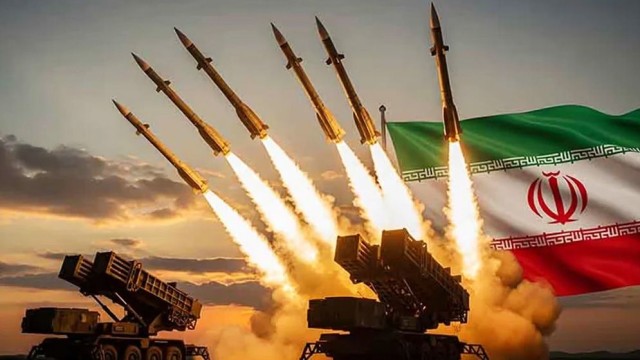
According to available data, Iran’s longest-range missiles—such as the Qadr, Emad, Khorramshahr, and Sijjil—have an estimated maximum range of around 2,000 to 2,500 kilometers. This allows Tehran to target most of Israel and parts of the Middle East, but not intercontinental distances.
Military experts note that striking a target as far as Diego Garcia would typically require ICBM-level capability—technology currently possessed by only a handful of global powers.
Recent Missile Incident
Reports suggest that Iran launched two missiles toward Diego Garcia. One reportedly failed mid-flight, while the other was intercepted by air defense systems. Analysts believe such attempts could indicate experimental testing rather than fully operational capability.
However, uncertainty remains regarding how far the failed missile might have traveled without interception, leaving room for speculation about Iran’s true technological progress.
Testing Challenges and Limitations
Developing an ICBM requires multiple successful tests, something Iran has not publicly demonstrated. Ongoing sanctions, economic constraints, and strict international surveillance have limited Tehran’s ability to conduct such large-scale testing programs.
Experts also point out that both the development and deployment of ICBMs are extremely costly, making it difficult for Iran to rapidly scale such capabilities even if progress has been made.
Global Implications
If Iran successfully develops an operational ICBM, it would mark a major shift in regional and global security dynamics. Large parts of Europe, Africa, and Asia, along with several US military bases in allied countries, could potentially fall within its strike range.
For now, analysts caution that while the recent developments are significant, there is no confirmed evidence that Iran has fully achieved intercontinental missile capability. The situation, however, remains fluid and closely monitored worldwide.
END/SMA/AJ