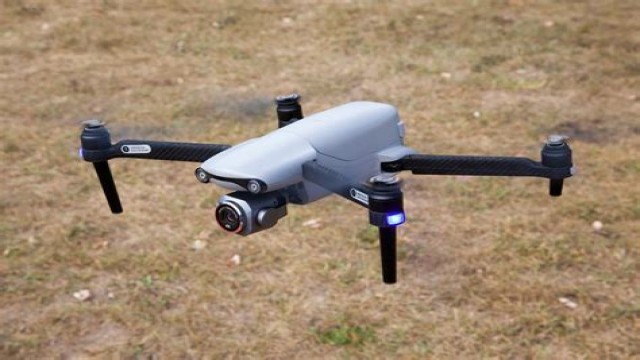
KYIV, Feb 24 (V7N) — As the war in Ukraine drags into its fifth year, drones have completely transformed the front line, moving from experimental tools to the dominant force in modern combat. What began with conventional tank maneuvers four years ago has evolved into a high-tech "kill zone" stretching up to 20 kilometers deep, where constant aerial surveillance makes survival nearly impossible for large groups or slow-moving vehicles. According to Ukraine’s Defense Minister, these unmanned systems are now responsible for up to 80 percent of all battlefield damage, rendering traditional artillery and heavy armor increasingly vulnerable.
The evolution of drone control has sparked an intense technological arms race centered on connectivity and electronic warfare. Initially reliant on radio signals, drones frequently fell victim to jamming and interception. In response, Russian forces have deployed drones controlled by ultra-thin fiber-optic cables that are immune to electronic interference, leaving frontline areas draped in literal webs of wire. Meanwhile, Ukrainian units have pioneered the use of Starlink terminals on drones to maintain stable satellite connections over long distances, though recent restrictions on unauthorized terminals have disrupted operations for both sides.
To counter the sheer volume of low-cost "suicide" drones, traditional air defenses are being overhauled to avoid the massive cost of firing million-dollar missiles at cheap commercial devices. Ukraine has turned to "drone-on-drone" warfare, developing specialized interceptor craft designed to ram or shoot down enemy UAVs mid-air. On the ground, soldiers now rely on protective nets over roads and anti-drone "cages" on vehicles, while machine guns serve as a desperate last resort against the swarms that hum constantly overhead.
The integration of Artificial Intelligence marks the next frontier, with engineers racing to equip drones with "terminal guidance" capabilities. This technology allows a drone’s onboard AI to take full control during the final seconds of flight, ensuring a hit even if the operator loses the signal due to jamming. While experts like former Google CEO Eric Schmidt suggest that full autonomy is still developing, the shift toward "drones first, people second" is already a reality. These AI-enhanced systems are designed to bridge the gap in accuracy that human operators face under heavy electronic pressure.
Beyond offensive capabilities, drones have taken over essential logistical roles to limit human exposure in the "kill zone." Unmanned ground drones are now frequently used to ferry supplies to isolated outposts and evacuate wounded soldiers from areas where traditional ambulances would be instantly targeted. This shift has forced infantry to operate in smaller, faster teams that move only when the sky appears clear. Despite this automation, soldiers on the ground maintain that physical presence remains the ultimate decider of territory, as a position is only truly captured when a flag is planted by human hands.
As the conflict continues, the lessons learned on the Ukrainian plains are being closely monitored by military powers worldwide. Recent incursions of Russian drones into European airspace have prompted Western allies to study Kyiv’s rapid innovations in interceptor tech and jamming. With the war showing no signs of slowing, the "drone chapter" of military history is being written in real-time, proving that the future of defense lies in the ability to out-innovate the enemy’s software as much as their hardware.
END/WD/RH