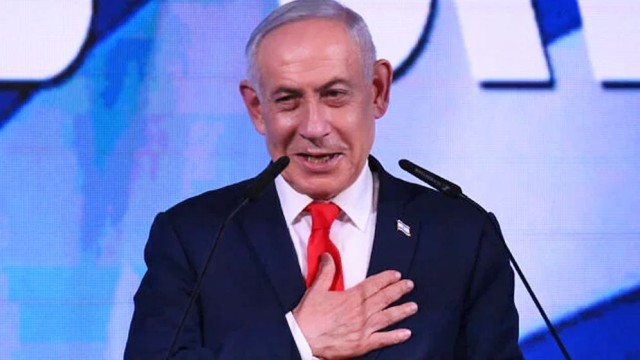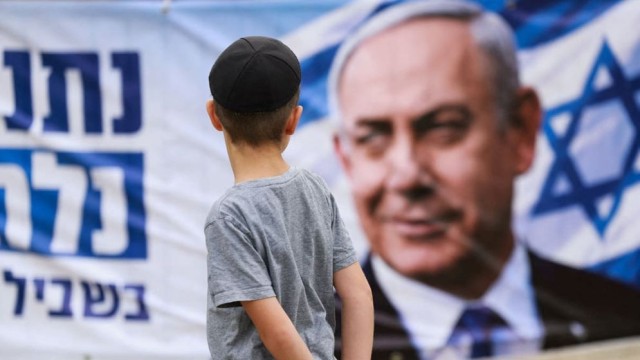
Exit polls from Israel’s three major television channels—Channels 11, 12 and 13—projected that Netanyahu’s coalition could secure between 50 and 51 seats in the 120-member Knesset, while Jewish-led opposition parties could win between 51 and 52 seats.
Neither bloc is projected to reach the 61 seats required to form a government independently, leaving the country facing another potential period of political uncertainty.
The remaining 18 seats could go to two Arab-led parties, the Joint List and Ra’am, according to the projections. The two parties currently hold a combined 10 seats. If the exit poll figures hold, their representation in parliament would increase substantially.
However, forming an alternative government could prove difficult. Three of the four Jewish-led opposition parties have reportedly ruled out forming a government alongside Arab-led parties, potentially complicating efforts to secure a parliamentary majority.
Likud Projected to Remain Largest Party
Exit polls suggest Netanyahu’s Likud party could win between 24 and 25 seats, down from the 32 seats it secured following the 2022 election.
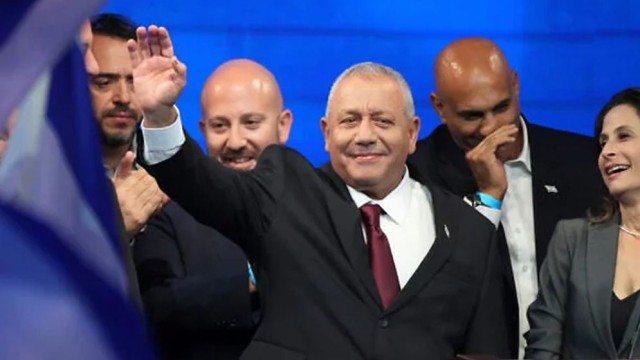
The party led by Netanyahu’s principal rival, Gadi Eisenkot, is projected to win between 21 and 23 seats. Although it could fall behind Likud in individual seat numbers, the broader opposition bloc may have an advantage in the overall distribution of seats.
Other projections suggest Yesh Atid could secure 12 to 13 seats, while the Joint List could win around 11. Meretz is projected to receive 9 to 10 seats, and Yisrael Beiteinu could secure 7 to 8.
Ra’am is expected to win around seven seats. Shas could obtain 6 to 8 seats, while United Torah Judaism is projected to win 6 to 7. The far-right Otzma Yehudit party could secure 6 to 7 seats, with the Religious Zionist Party projected to win six.
Several smaller parties are expected to struggle to cross the 3.25 percent electoral threshold.
Other television networks have produced more favourable projections for Netanyahu. Channel 14 projected 62 seats for his coalition, compared with 40 for the opposition and 18 for Arab parties. Pro-Netanyahu outlet i24 News projected 55 seats for his coalition, while Channel 16 forecast 53.
The varying projections underline the uncertainty surrounding the final outcome.
Opposition Faces Challenge in Forming Government
Following the release of the exit polls, Eisenkot described the projections as a vote of no confidence in Netanyahu’s government.
He said the results reflected a lack of confidence among a majority of Zionist voters and Israeli citizens in Netanyahu and the government that was in power during the October 7, 2023, Hamas-led attack on Israel.
In a post on X, Eisenkot described the projected outcome as a victory for what he called Israel’s “responsible Zionist majority.” He pledged to work to replace Netanyahu’s government and establish a government committed to universal military conscription.
However, the opposition faces significant challenges in assembling the necessary support. One possible route would involve reaching an agreement with Arab-led parties, including the Joint List and Ra’am, or securing their abstention during a parliamentary confidence vote.
Yisrael Beiteinu leader Avigdor Liberman and Yamina leader Naftali Bennett have previously pledged not to form a government dependent on Arab-party support. Eisenkot has also made statements casting doubt on the prospect of an alliance with the Joint List or Ra’am.
A national unity government involving parties from both political camps has also been discussed by analysts, although opposition parties have pledged not to cooperate with Netanyahu or ultra-Orthodox parties.
Yair Golan, leader of The Democrats party, said his party was prepared to work with all partners to form a government. He described the projected result as a historic opportunity for political change.
Arab-Led Parties Could Gain Greater Influence
The projected gains for Arab-led parties have drawn considerable attention amid the potential parliamentary deadlock.
Ra’am leader Mansour Abbas told Channel 12 that representatives from both political camps had contacted him. He indicated that his party was open to joining a government led by Eisenkot, while acknowledging that the projected seat distribution did not yet provide a clear path to a majority.
Under the projections cited in the report, the anti-Netanyahu bloc and Ra’am together could command 59 seats, two short of the 61 needed to form a government.
At the Joint List headquarters, supporters celebrated after exit polls projected that the party could secure 10 to 11 seats. Chants opposing Netanyahu and far-right National Security Minister Itamar Ben-Gvir were also reported.
The campaign of Netanyahu’s Likud party and Ben-Gvir’s Otzma Yehudit party reportedly contributed to increased support for Arab-led parties, analysts suggested, after campaign rhetoric portrayed those parties as a national security threat.
High Voter Turnout Amid Political Uncertainty
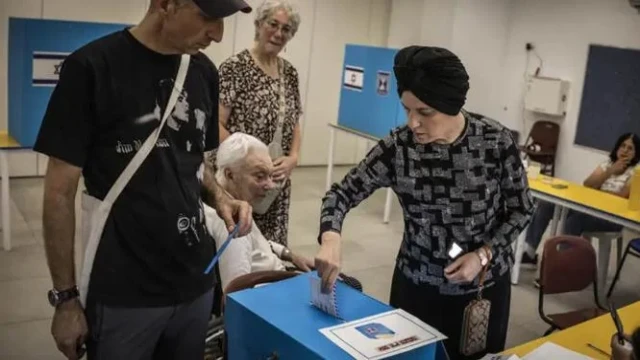
Voter turnout reportedly exceeded 77 percent, the highest level in 25 years. Vote counting began on Tuesday night and continued into Wednesday, with official results expected to be released in stages.
Exit polls can differ from final results, and the final distribution of seats will determine which political leader has the best chance of forming a government.
If neither Netanyahu nor an opposition candidate can secure sufficient parliamentary support, Israel could face another election. In that scenario, Netanyahu would remain caretaker prime minister until a new government is formed.
The election has therefore left Israel facing a potentially prolonged political negotiation, with the final outcome dependent on official results and whether parties are willing to reconsider their positions on coalition arrangements.
END/SMA/AJ