
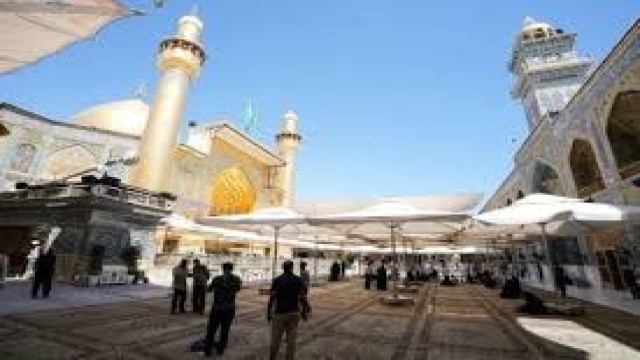
MAY 4 (V7N) - The ongoing US-Israeli strikes on Iran have severely impacted Iraq's religious tourism industry, with a sharp decline in the influx of pilgrims from Iran, Lebanon, the Gulf states, India, Afghanistan, and other regions. The conflict has especially hit the holy cities of Najaf and Karbala, which rely heavily on religious tourism for economic stability.
Harmoush, a longtime shop owner near Najaf’s golden-domed mausoleum of Ali, warned of the impending economic ruin for many in the area. Ali’s shrine is one of the most revered sites for Shia Muslims, attracting millions of pilgrims each year. Harmoush explained that the crisis has left shop owners unable to pay rent and taxes, cab drivers without passengers, and laborers struggling to find work.
The hotel sector, a major pillar of religious tourism, has been hit hard, with many hotels forced to close. Abu Ali, a hotel owner in Najaf, shared the struggle of keeping his business afloat, having laid off five employees and left just one to tend to nearly 70 empty rooms. "How can I pay salaries if there is no work?" he lamented.
Saeb Abu Ghneim, head of Najaf's hotel association, confirmed the devastating impact on the hospitality industry, with 80 percent of the city’s 250 hotels now closed. Over 2,000 hotel employees have either been laid off or placed on unpaid leave. Most of Najaf's religious tourists are from Iran, followed by Lebanese visitors, who are also trapped at home due to the ongoing conflict.
Before the crisis, 28-year-old Moustafa al-Haboubi could hardly manage the throngs of pilgrims exchanging foreign currency. Now, he spends his days scrolling through his phone, waiting for customers that never come. "We barely receive one or two customers," he said. "There are no pilgrims now, Iranian or otherwise."
Despite a fragile ceasefire taking effect on April 8 and the reopening of Iraq's airspace, the situation remains bleak. Some local pilgrims have visited the sacred sites during weekends, but the flow of international visitors has almost completely dried up.
Karbala, located 80 kilometers north of Najaf, has also seen a dramatic decrease in pilgrim numbers, with the situation described as a "catastrophe" by Israa al-Nasrawi, head of Karbala’s tourism committee. The city's once-bustling corridors between the golden shrines of Imam Hussein and his brother Abbas are now nearly deserted, with most visitors being local Iraqis.
The war has slashed the city's tourist numbers by around 95 percent, forcing hundreds of hotels and pilgrim tour companies to close. Akram Radi, a tour company operator with 16 years of experience, explained that his company, which once hosted up to 1,000 visitors a month, is now operating at just 10 percent of its previous capacity. "I might have to close and look for another job," he said, reflecting the dire situation.
Religious tourism has long been a significant part of Iraq's non-oil economy, and the current crisis threatens to decimate this sector. As shopkeepers, hotel owners, and tour operators face mounting losses, the broader economy of cities like Najaf and Karbala is on the brink of collapse, adding to the already dire economic situation caused by years of conflict. If the situation does not improve soon, these cities could face long-term economic devastation.
END/WD/RH/












Comment: