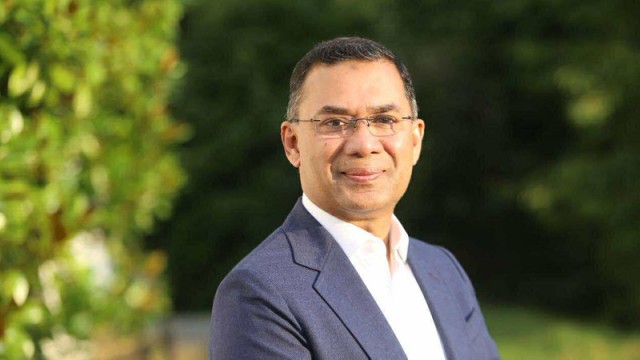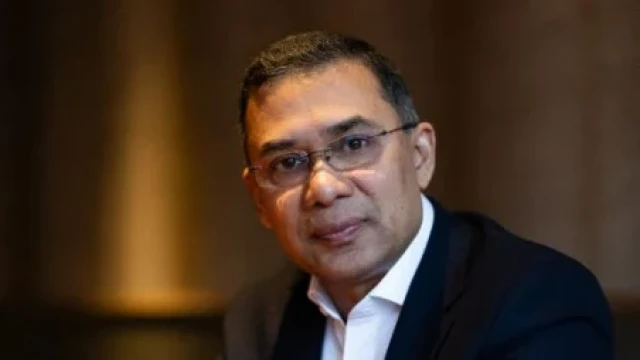
NEW YORK, Sept 22 (V7N) — Bangladesh Prime Minister Tarique Rahman begins a packed diplomatic schedule in New York on Tuesday as world leaders gather for the 81st session of the United Nations General Assembly, with his first address to the UNGA expected to highlight Bangladesh’s democratic transition, climate vulnerability, the prolonged Rohingya crisis, sustainable development and the country’s priorities in a changing global order.
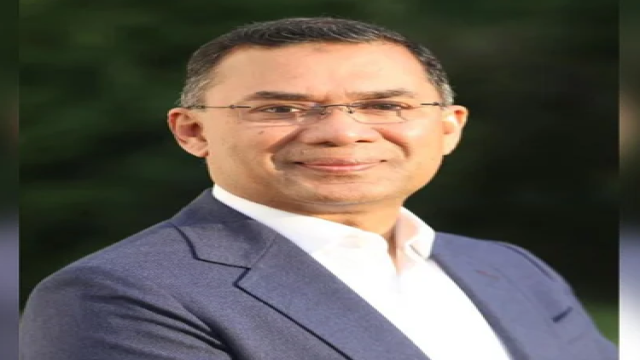
The Prime Minister arrived in New York on Monday to lead a 26-member Bangladesh delegation to the annual high-level gathering. His maiden address to the General Assembly is scheduled for September 24, marking his first appearance at the UNGA as head of Bangladesh’s government.
The 81st UNGA, whose high-level week runs from Sept. 18 to 28, brings world leaders to New York amid major international challenges, including armed conflicts, climate-related risks, economic uncertainty and growing debate over the future of multilateral cooperation. The official UN theme for the session is “Restoring Trust, Managing Transformation: A United Nations That Delivers for All.”
A busy opening day
Tarique Rahman’s formal programme begins on Tuesday with a welcome breakfast hosted by UN Secretary-General António Guterres for heads of state and government.
He is then scheduled to join other world leaders at the opening of the General Assembly’s high-level proceedings. In the evening, he will attend a reception hosted by US President Donald Trump for heads of state and government and their spouses.
The opening day will provide an opportunity for Bangladesh to engage with a broad range of world leaders as the UN seeks renewed international cooperation on peace, development, climate action and other global challenges.
Rohingya crisis high on Bangladesh agenda
The Rohingya crisis is expected to remain one of the central issues of Bangladesh’s diplomatic efforts during the visit.
On September 23, Tarique Rahman is scheduled to attend a Bangladesh-hosted side event on the crisis, where he will seek stronger international support for the earliest possible repatriation of Rohingyas to Myanmar.
Bangladesh has consistently maintained that the sustainable resolution of the crisis lies in the safe, voluntary, dignified and sustainable return of the displaced Rohingyas to their homeland.
The issue has placed a continuing humanitarian and economic burden on Bangladesh, which has been hosting a large Rohingya population for years.
Climate vulnerability and sea-level rise
Climate change will be another major theme of Bangladesh’s UNGA engagements.
The Prime Minister is scheduled to participate in a high-level meeting on “Climate Action and the Just Transition” on September 23.
On September 24, he is expected to deliver opening remarks at a high-level meeting addressing the existential threats posed by sea-level rise.
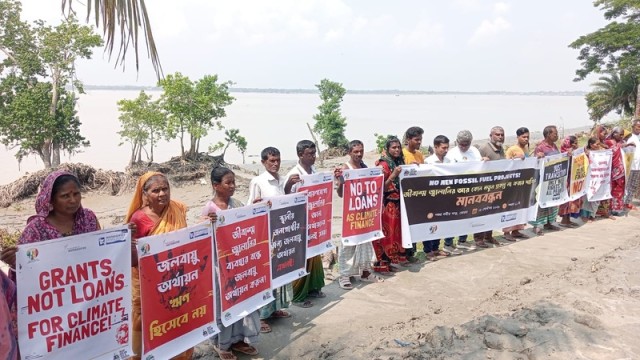
At the meetings, Bangladesh is expected to emphasize the need for greater climate finance, adaptation support, technology transfer, action on loss and damage and climate justice.
For Bangladesh, one of the world’s most climate-vulnerable countries, the issue carries particular importance as rising sea levels, extreme weather and other climate-related impacts threaten communities, agriculture, infrastructure and livelihoods.
First UNGA speech as prime minister
Tarique Rahman is scheduled to address the UN General Assembly’s General Debate on September 24.
According to Bangladesh officials, his speech is expected to present the country’s outlook on democracy, rule of law and accountability, global peace and security, climate change, sustainable development, economic cooperation, youth and women’s empowerment, education and health.
The speech is also expected to address the Rohingya crisis, equitable access to modern technology and reform of the multilateral system.
His appearance carries additional significance for Bangladesh because Foreign Minister Dr Khalilur Rahman is serving as President of the 81st UN General Assembly.
Tarique Rahman will also become the third member of his family to address the UN General Assembly. His father, Ziaur Rahman, addressed the Assembly in 1980, while his mother, former Prime Minister Khaleda Zia, first addressed the General Assembly in 1993 and subsequently participated in UNGA proceedings on several occasions.
Bilateral diplomacy
Beyond the General Assembly, the Prime Minister is scheduled to hold a series of bilateral meetings with foreign leaders.
The planned meetings include talks with the Crown Prince of Kuwait and the prime ministers of Croatia, Bhutan, Thailand, Pakistan and Haiti.
Discussions are expected to cover bilateral political and economic relations, trade and investment, development cooperation, the Rohingya crisis and other matters of mutual interest.
Tarique Rahman is also scheduled to meet UN Secretary-General António Guterres, the president of the European Council, the president of the World Bank Group, the UN secretary-general’s special envoy on Myanmar, the UN high commissioners for refugees and human rights, and the president of the International Peace Institute.
Economic diplomacy in New York
The Prime Minister’s New York programme will also include an economic diplomacy component.
He is expected to meet senior representatives of major business and technology organisations, including Meta, as well as representatives connected with Wall Street.
The discussions are expected to focus on Bangladesh’s investment environment and opportunities in manufacturing, infrastructure and technology, along with skills development, human-resource development and the creation of quality employment opportunities for young people.
For Dhaka, such engagements offer an opportunity to present Bangladesh not only as a recipient of development cooperation but also as a potential destination for investment, technology partnerships and expanded international trade.
Maternal and newborn health
Bangladesh will also host a high-level side event focusing on maternal and newborn health and midwifery on September 24.
Tarique Rahman is scheduled to attend the event as chief guest, where he is expected to outline government initiatives and future plans for improving maternal and child healthcare.
The programme will also highlight the importance of skilled and professionally trained midwives in reducing risks associated with pregnancy and childbirth and improving healthcare outcomes.
A broader international backdrop
Bangladesh’s UNGA diplomacy is unfolding against a difficult international backdrop.
The 81st session is bringing nearly 130 heads of state and government to New York, while the UN agenda is being shaped by wars and humanitarian crises, climate pressures, technological change and questions about the effectiveness and future direction of multilateral institutions.
Against that backdrop, Bangladesh is expected to use the General Assembly and its accompanying diplomatic meetings to reinforce its positions on climate action, development, international cooperation and the Rohingya crisis.
For Tarique Rahman, however, the week carries an additional domestic and diplomatic significance: it will be his first opportunity as prime minister to present Bangladesh’s priorities directly to the international community from the UN’s main global platform.
END/SMA/AJ/