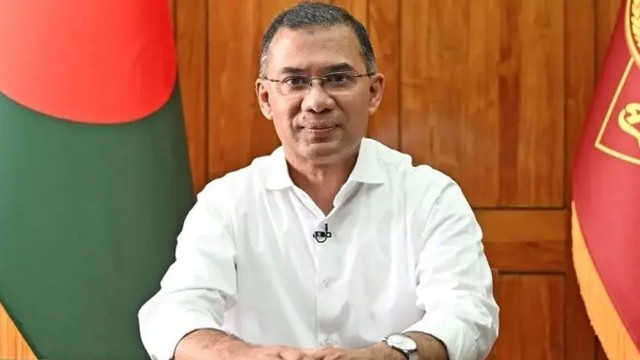
Dhaka, Dec 09 (V7N) — BNP Acting Chairman Tarique Rahman has said that the fight against corruption in Bangladesh will be difficult after years of mismanagement, but insisted that change is possible with honest leadership and public support.
He made the remarks in a post published on his verified Facebook account on Tuesday, marking International Anti-Corruption Day.
In his statement, Tarique Rahman said corruption has crippled Bangladesh at every level of society.
“You do not have to go far to understand how corruption is destroying people’s lives,” he wrote. “Talk to a graduate searching for a job based on merit, a farmer waiting months for a basic government service, the family of a young man suffering in a hospital, or entrepreneurs forced to pay bribes just to keep their businesses running.”
He said corruption is the root cause behind rising food prices, poor quality education and the lack of public safety, describing it as a force that has “suffocated the daily lives of millions of people.”
Tarique Rahman noted that the struggle against corruption is not new, and International Anti-Corruption Day serves as a reminder of both the challenge and periods of progress. He claimed that Bangladesh made tangible advances in curbing corruption primarily during BNP-led governments.
Referring to former President Ziaur Rahman, Tarique Rahman said he focused on restoring discipline in the administration, improving government services and liberalising the economy, which, he argued, reduced irregularities and abuse of power.
He further stated that during the tenure of Prime Minister Begum Khaleda Zia, modernization of state institutions began through new procurement policies, stronger financial laws, improved audit mechanisms and clearer oversight. He highlighted the establishment of the Anti-Corruption Commission (ACC) in 2004 as a major milestone, calling it an independent body free from government interference. According to him, international institutions such as the World Bank and the Asian Development Bank recognised this step as a significant move toward accountability.
Citing a Transparency International Bangladesh (TIB) survey, Tarique Rahman said corruption indicators improved between 2002 and 2005, noting that “people themselves said corruption had decreased.”
He listed several reforms carried out under BNP leadership, including:
-
Strong financial management through budgetary control, audits, banking reforms and anti-money laundering laws
-
Transparent government procurement based on competitive tendering
-
Opening of key sectors such as telecommunications, media and aviation to competition
-
Decentralisation of power to make administration more accountable and less arbitrary
Claiming that BNP has a consistent record in reducing corruption, Tarique Rahman outlined the party’s future anti-corruption agenda. These include ensuring the independence of institutions such as the judiciary, ACC, Election Commission and civil service; enforcing full transparency through open tenders, asset declarations and real-time audits; reforming police and justice systems; expanding e-governance to reduce bribery opportunities; protecting whistleblowers; promoting moral education; and strengthening digital financial monitoring with strict parliamentary oversight.
Concluding his post, Tarique Rahman said that although the battle against corruption will be difficult after prolonged mismanagement, Bangladesh’s history shows that meaningful change is achievable.
“If the people entrust us with responsibility,” he said, “BNP is ready to lead that fight again.”
END/SMA/AJ