Rangamati, Nov 21 (V7N) – The historic Rajban Vihara in Rangamati has celebrated the golden jubilee of its 50th annual Kathina Chibar Dana festival, highlighting a remarkable Buddhist tradition in which sacred robes are made within just 24 hours through collective effort and spiritual devotion.
Around 800 women took part in the extraordinary process, transforming raw cotton into thread, thread into fabric and finally weaving the fabric into robes. More than 200 traditional weaving stations, locally known as bein, operated throughout the night as thousands of Buddhist devotees and pilgrims gathered from the three hill districts and other parts of Bangladesh.
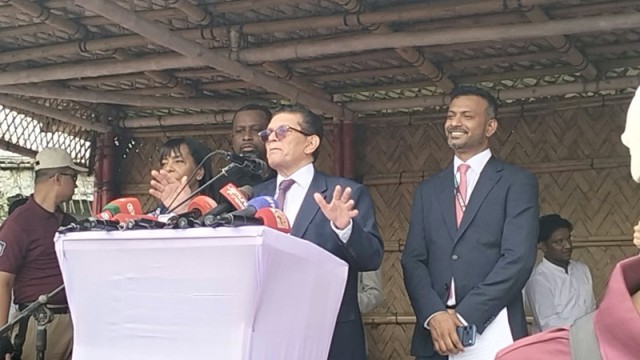
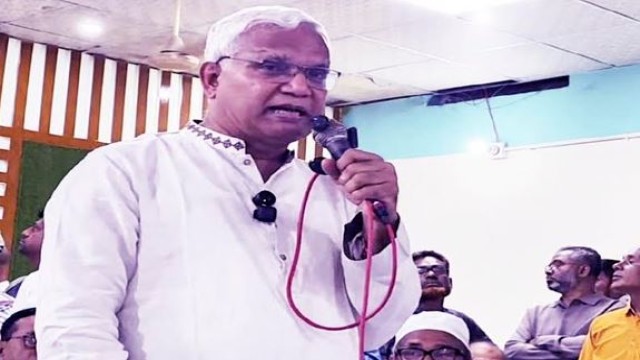
The festival was held on Friday, November 20, at Rajban Vihara. Birendra Mir Mohammad Helal Uddin Ahmed, State Minister for Chittagong Hill Tracts Affairs, attended as the chief guest. Special guests included Rangamati MP Advocate Dipen Dewan and Rangamati Hill District Council Chairman Dipan Talukder Dipu.
Among others present were District BNP General Secretary Advocate Mamunur Rashid Mamun, Hill District Council member and former student leader Faruk Ahmed Sabbir, political leaders and senior government officials.
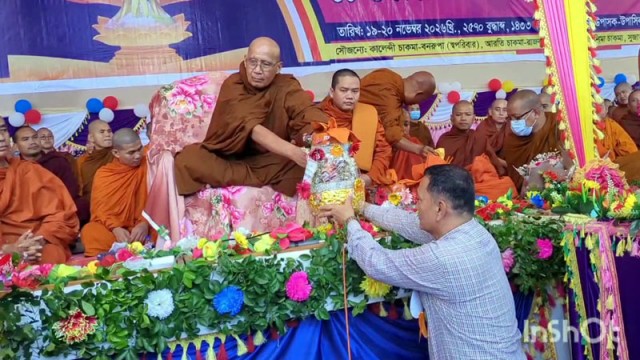
This year's celebration carried special significance as it marked the 50th anniversary of the Kathina Chibar Dana festival at Rajban Vihara. The monastery grounds were filled with a festive atmosphere, with religious sermons, Buddhist prayers, observance of the Five Precepts, robe weaving and offerings drawing devotees throughout the day.
The two-day programme began on Thursday with the participating weavers observing the Five Precepts and the inauguration of the weaving hall. Venerable Prajnalankar Mahasthavir, residential chief of Rajban Vihara, formally opened the hall. The robe-making process began with Jyoti Roy, a member of the Chakma royal family, spinning thread on a traditional spinning wheel.
According to Buddhist tradition, the practice of making and offering a robe within 24 hours dates back to Mahaupasika Visakha, who is said to have introduced the tradition by preparing a robe for Gautama Buddha. The annual Kathina Chibar Dana festival is observed in accordance with this tradition. Rajban Vihara has been celebrating the festival continuously since 1976.
The 24-hour robe-weaving process remains one of the festival's main attractions. More than 200 weaving stations were set up across the monastery grounds, where approximately 800 women worked together to produce thread from cotton, dye and dry it, and weave the fabric on traditional looms. The work continued day and night without interruption to complete every stage within the stipulated time.
For Buddhists, Kathina Chibar Dana is more than a religious celebration. It represents generosity, morality, sacrifice, restraint and communal harmony. The collective participation of women in preparing the robes adds a distinctive dimension to the occasion.
Devotees from remote areas of the three hill districts, along with visitors from different parts of the country, turned Rajban Vihara into a major gathering of Buddhist faith and culture.
Venerable Prajnalankar Mahasthavir, Vice-President of the Upasak-Upasika Executive Council Nirupa Dewan and its General Secretary Amiya Khisa highlighted the religious significance of the festival, its arrangements and the participation of devotees.
Meanwhile, law enforcement personnel were deployed inside and around the monastery to ensure the safety of pilgrims and visitors. Additional Superintendent of Rangamati District Police Mohammad Zahidul Islam briefed on the overall preparations and security arrangements.
The festival reached its culmination after 24 hours of continuous devotion and collective effort, with the completed robes dedicated and offered to the Buddhist monastic community. The golden jubilee celebration at Rajban Vihara thus became more than a religious observance, emerging as a remarkable gathering of the hill region's heritage, culture and communal harmony.
END/AMR/SMA/