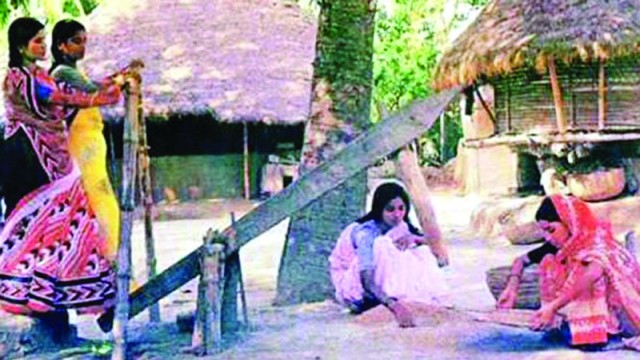
Rajshahi, Feb 2 (V7N) — The rhythmic sound of the traditional wooden pestle, or ‘dheki,’ once a familiar part of rural Bengal’s dawn, is gradually disappearing as modern machinery replaces this age-old instrument. Once an indispensable tool in villages, the dheki was used for everything from husking paddy to preparing lentils, rice, and various other staples.
Beyond its functional role, the dheki was a symbol of rural life, family bonding, and women’s labor. Village women would gather to operate the pestle together, sharing stories, laughter, and companionship. The process of pounding rice and lentils created both sustenance and a social connection. The rice and lentils processed in the dheki were used to make traditional delicacies such as puli, bhapa, patisapta, fried treats, and chitei, with the aroma wafting through entire neighborhoods.
However, the advent of mechanized rice and grain processing has rendered the dheki nearly obsolete. Field visits to Charghat upazila revealed that in earlier times, every household had a dheki, and its sound could be heard late into the night, especially during festivals when families welcomed relatives and guests.
Local residents lament the loss of the tradition. Phuljan Bewa, 117, of Khorddgobindpur village in Sardah Union, said, “Rice ground using the dheki was far more nutritious and flavorful than machine-processed rice. Modern methods lack that authentic taste.” Nabachi Begum of Palashbari village added, “We used to wake up only to the sound of the dheki. Today, we see it only on television.”
Young residents, like Hasan Ali of Poravita village in Nimapara Union, have never seen the traditional tool in use. While a few households in remote areas still retain dhekis, experts and locals agree that the tradition is on the verge of extinction. What was once an emblem of rural culture is now remembered mostly as a story of the past.
The dheki, once central to daily life and communal harmony in Bengal’s villages, now survives primarily in memories, folklore, and the few remaining households that preserve the tradition.
END/MRA/SMA/