Rajshahi, Aug 30 (V7N) — Farmers in Rajshahi are optimistic as the country’s traditional “golden fibre”, jute, has recorded a good yield and is fetching favourable prices in local markets this season.
Favourable weather conditions and close attention from farmers have contributed to increased production across the district. With both yield and market prices showing encouraging trends, farmers are hopeful of better returns this year.
According to the Department of Agricultural Extension (DAE) and local sources, jute has been cultivated to varying degrees in all nine upazilas of Rajshahi district this season.
A total of 18,399 hectares of land have been brought under jute cultivation, with a production target of 49,000 metric tonnes. In 2025, jute was cultivated on 17,305 hectares, producing 48,677 metric tonnes.
The figures indicate an increase in both cultivated area and expected production compared with the previous year.
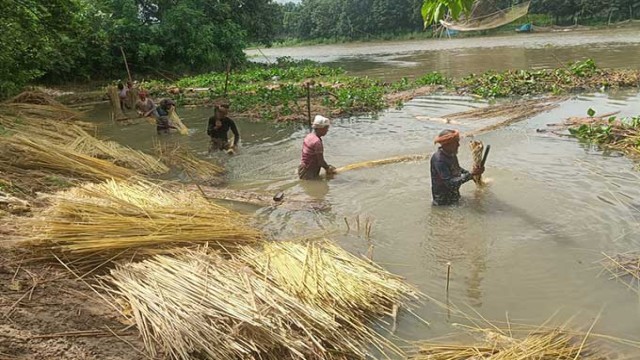
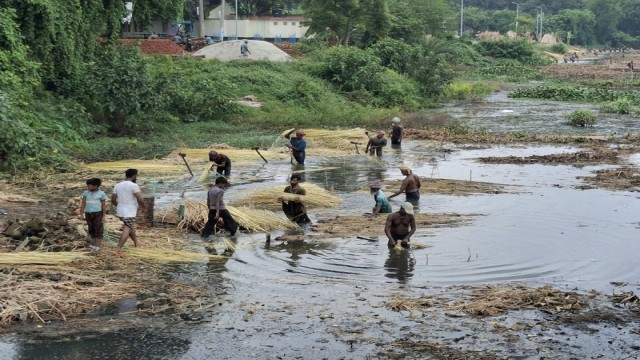
Jute harvesting, retting and fibre extraction are now nearing completion across the district.
According to the latest agricultural department data, harvesting has already been completed on around 82 per cent of the cultivated land. About 48,200 metric tonnes of jute have been produced from the harvested fields.
Officials expect total production to exceed the initial target once harvesting is completed on the remaining 18 per cent of the cultivated land.
Jute prices have also been encouraging compared with previous years. At present, one maund (40kg) of jute is selling for between Tk 4,000 and Tk 4,300 in local markets.
Based on the expected total production and current market prices, jute sales in the district could generate around Tk 548.82 crore this season, providing a significant boost to the rural economy.
Mohammad Shafiqul Islam, a jute farmer from Monigram area of Bagha upazila, said he had been disappointed by relatively low prices last year.
“This year, thankfully, both the yield and the market price are good. We are selling jute for more than Tk 4,000 per maund. After covering production costs, we are still making a good profit,” he said.
Abdul Matin, a farmer from Mohanpur upazila, said favourable weather had made retting and washing jute relatively hassle-free this year.
“The current market price has helped us greatly. After meeting our family expenses, we hope to save some money this year,” he said.
He added that farmers had faced some difficulties at the beginning of the season because of a lack of rainfall, but subsequent rainfall benefited the crop.
Jute produced in Rajshahi is not limited to meeting local demand. After supplying the local market, the fibre is sent to major jute-product manufacturers in different parts of Bangladesh.
Following processing, various jute products are also exported to international markets, contributing to the national economy.
Agriculture officials believe jute cultivation in Rajshahi could expand significantly in the coming years if government support, timely availability of quality seeds and fertilisers, and favourable market prices continue.
Mita Sarker, additional deputy director (Crops) of the Rajshahi District Department of Agricultural Extension, said 18,399 hectares had been brought under jute cultivation in the district this year, with a production target of 49,000 metric tonnes.
She said that in 2025, jute was cultivated on 17,305 hectares and production stood at 48,677 metric tonnes.
“Jute is currently selling for around Tk 4,300 per maund. Based on the current price, there is a possibility of around Tk 549 crore in revenue from jute sales this year,” she said.
She added that after meeting local demand, the jute is being supplied to various companies producing jute-based products.
END/MRA/SMA/