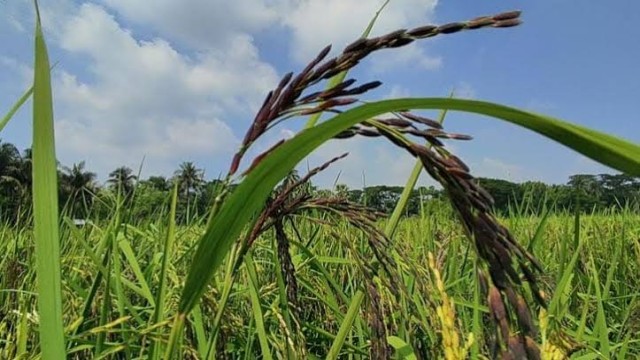
Rajshahi, Oct 27 (V7N) – Farmers in Rajshahi’s Durgapur upazila have begun cultivating black rice for the first time on an experimental basis, opening up new possibilities for crop diversification and higher farm incomes.
The unusual rice variety, known for its dark-coloured grains and nutritional properties, is being grown on small plots as farmers and agricultural officials assess its yield, market potential and commercial viability.
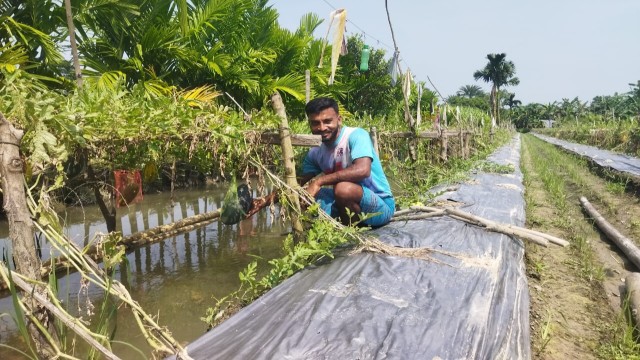
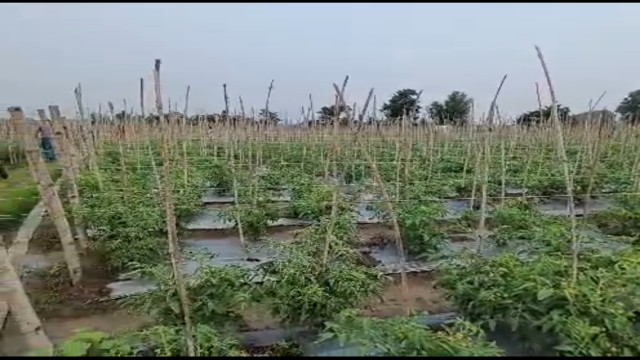
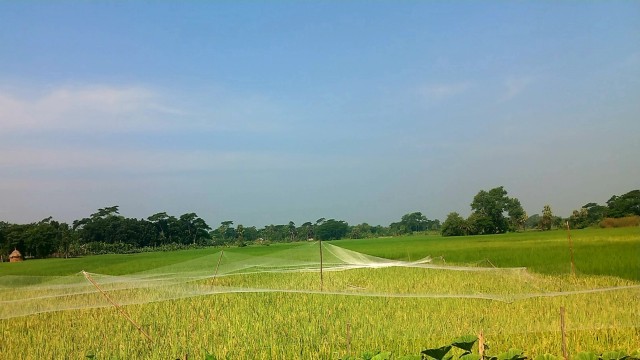
According to the upazila agriculture office, Sohan, a young entrepreneur from Debipur village in Durgapur municipality, has cultivated black rice on 16 kathas of land. Meanwhile, farmer Abu Taleb of Pali village in Maria Union has planted the crop on two and a half bighas.
The initiative has drawn interest from other local farmers, some of whom are considering cultivating the variety if the initial trials prove successful.
The local agriculture department has been providing technical advice on crop management, pest and disease control, harvesting and marketing. Officials hope the experiment will help introduce a profitable alternative to conventional rice varieties.
Abu Taleb said he had limited his initial cultivation to two and a half bighas because black rice was unfamiliar to farmers in the area. If yields and market prices meet expectations, he believes the crop could generate substantial returns and encourage others to follow suit.
Sohan said he had taken up black rice cultivation to learn about a new crop with promising market prospects. He plans to expand production if the harvest proves satisfactory.
Another farmer, Sobhan Ali, said concerns remained over yields and marketing because the variety was new to the area. However, he believes it could become an attractive alternative if farmers can secure favourable prices.
Farmers estimate that black rice could yield around 16 to 18 maunds per bigha. At a selling price of Tk 4,000 per maund, gross revenue could reach Tk 64,000 to Tk 72,000 per bigha. Actual returns will depend on the final yield, production costs and market conditions.
Field officer Rafiqul Helali said farmers were receiving practical guidance on crop care, pest and disease management and harvesting. Local rice trader Habib Mia said black rice had a distinct group of buyers, but a reliable market was essential for the crop to expand commercially.
Durgapur Upazila Agriculture Officer Sahana Parvin Laboni said the initiative was intended to diversify local agriculture. Sub-Assistant Agriculture Officers Firoz Ahmed, responsible for the municipal block, and Muminuzzaman, responsible for the Pali block, are directly monitoring the fields. The department will assess the harvest before deciding whether to encourage cultivation on a larger scale.
Black rice owes its dark purple or black colour to anthocyanins, antioxidant compounds found in the grain. Its nutritional profile has attracted interest among health-conscious consumers in different markets.
Mohammad Nasir Uddin, deputy director of the Department of Agricultural Extension in Rajshahi, described the initiative as a positive development for local agriculture. He advised farmers to expand cultivation gradually after evaluating yields and market demand.
Dr Moha. Farid Uddin Khan, a professor in the Department of Economics at Rajshahi University, said the crop’s long-term commercial success would depend not only on its price but also on processing facilities, product shelf life and a stable marketing system.
END/MRA/SMA/