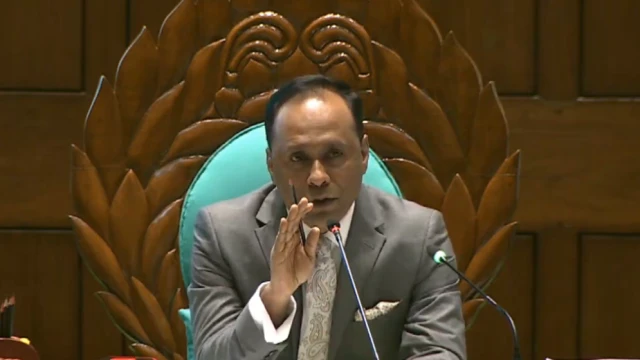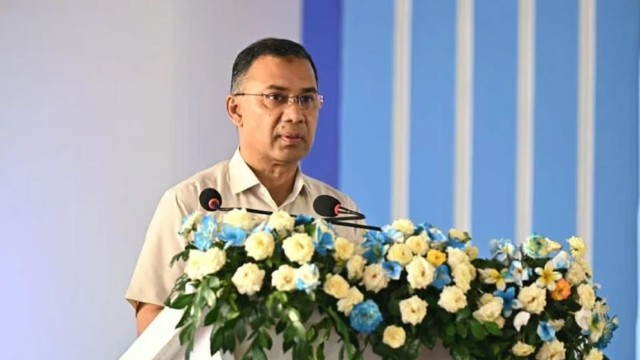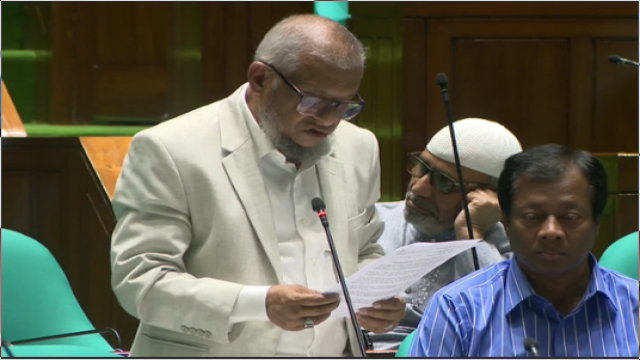
Sangsad Bhaban, Nov 1, (V7N) – The government has taken a long-term plan for 2026-2030 to develop skilled manpower, explore new overseas employment markets, expand existing ones and ensure safe migration, Expatriates' Welfare and Overseas Employment Minister Ariful Haque Choudhury told parliament on Wednesday.
"The government has made overseas employment, increasing remittance inflows and ensuring the welfare of migrant workers its key priorities," the minister said in response to a call attention notice on matters of urgent public importance under Rule-71 of the Rules of Procedure raised by ruling party lawmaker from Pabna-5 constituency Shamsur Rahman Shimul Biswas.
Ariful said the government had undertaken various initiatives to diversify overseas employment destinations and address challenges arising from the ongoing Middle East crisis.
Despite a slight decline in worker migration compared to 2025, Bangladesh received $30.79 billion in remittances during January-October 2026, up from $26.70 billion in the corresponding period of 2025, an increase of nearly $4.1 billion.
The minister said worker migration increased to Singapore by 62 percent and Japan by 53.5 percent during the period. Bangladesh also sent workers to emerging destinations, including Malta, Serbia, Belarus and Moldova.
Highlighting efforts to reopen closed labour markets, he said the government had reopened Malaysia's labour market following the Prime Minister's visit to the country. The government also plans to send 10,000 workers to Malaysia free of cost. The minister said the government had taken steps to reopen Bahrain's labour market, which has remained closed since 2018, while diplomatic engagement continued to expand employment opportunities in other countries.
A Bangladesh-Qatar Joint Committee meeting held in Dhaka on May 18, 2026, identified demand for skilled electricians, plumbers, air-conditioning technicians and welders. Qatar agreed to arrange training in five technical training centres in Bangladesh to meet the demand.
He said Bangladesh signed two memorandums of understanding with South Korea in March for sending general and seasonal workers and signed another agreement with Japan last month. The government has also sent draft MoUs to 14 countries, including Thailand, Russia, Serbia, Oman, Fiji, Malta, Spain, Austria and Albania, to develop alternative labour markets.
Regarding skills development, the minister said the Bureau of Manpower, Employment and Training (BMET) operates 104 technical training centres and six Institutes of Marine Technology, offering 55 short and long-term trade courses. The government is providing training in eight foreign languages, including Japanese, Korean, English, Arabic, German, Italian and Chinese. A total of 14,504 people received language training between January 1 and October 31 this year.
Training programmes have also incorporated Fourth Industrial Revolution technologies, artificial intelligence-supported welding solutions, 3D printers and driving simulators. Courses in graphic design and freelancing have also started.
The minister said a project to introduce new vocational courses, including heavy equipment operation, caregiving, hotel housekeeping, food production, front office management and cooking, was under process. Under the EU-Bangladesh Talent Partnership project, 10 training centres are providing instruction in 12 trades to prepare skilled workers for employment in Italy. He said the government had also launched an online portal for Italian employers to facilitate recruitment and ensure safe migration.
Under the Japan Cell initiative, the government aims to send 100,000 skilled workers to Japan over five years through language and technical training. The BMET has signed two MoUs with Japanese organisations, while the Japan Foundation is supporting language training. The minister said the government was also strengthening Korean language training and preparation for the Employment Permit System (EPS) examinations and coordinating with local governments in South Korea for seasonal worker recruitment.
Regarding Mauritius, he said 2,991 Bangladeshi workers had gone there in 2026. The ministry had invited the Mauritian labour minister to visit Bangladesh and requested the finalisation of a proposed MoU.
On Malaysia, the minister said the government had started sending workers through the Bangladesh Overseas Employment and Services Limited (BOESL) without recruitment costs. So far, it had received demand for 568 workers. Against 120 positions, 409 candidates applied, and 300 were initially selected through a lottery.
The minister expressed hope that the initiatives would help address the challenges in the overseas employment sector, expand job opportunities and increase the country's remittance earnings.