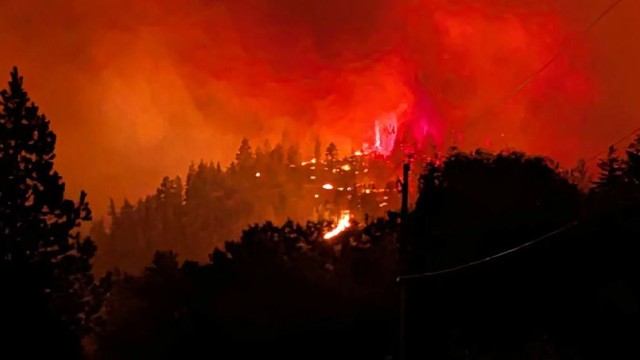
British Columbia, Aug 09 (V7N) – Wildfires in western Canada have rapidly expanded, prompting emergency measures and the evacuation of more than 20,000 people in British Columbia.
According to The New York Times, the fires had spread across more than 9,000 hectares by Saturday (August 8), with several highways in the affected areas closed as authorities battled the flames.
British Columbia Premier David Eby declared a state of emergency as more than 100 wildfires were reported across the province. About half of them were considered out of control amid extreme heat, strong winds and prolonged drought.
Authorities ordered the evacuation of Summerland, a community of around 12,000 residents, on Friday night. Approximately another 8,000 people in nearby Peachland and surrounding areas were also instructed to leave their homes and move to safer locations.
Authorities have not yet confirmed the number of homes destroyed by the fires.
Premier Eby said some residents had become trapped by the rapidly advancing flames and had to be rescued. Search-and-rescue teams were also working behind the fire lines to determine whether anyone remained stranded in affected areas.
“People have lost their homes. Many people have been displaced. Others are waiting to hear from their loved ones,” Eby said.
The Bald Range wildfire was first reported on Friday evening and spread rapidly. The blaze moved from the area near the small community of Foulds toward Summerland, intensifying concerns among local residents and emergency services.
Record-breaking heat across Canada and the United States in recent months has further aggravated the wildfire situation. Prolonged extreme temperatures have dried vegetation and forests, creating conditions conducive to rapid fire spread.
Meanwhile, large wildfires have also been reported this month in Washington state, south of British Columbia. Smoke from those fires has contributed to worsening air quality across parts of the region.
With numerous fires still active and weather conditions remaining challenging, emergency authorities continue to focus on evacuations, firefighting operations and locating residents who may remain in danger.
END/SMA/AJ