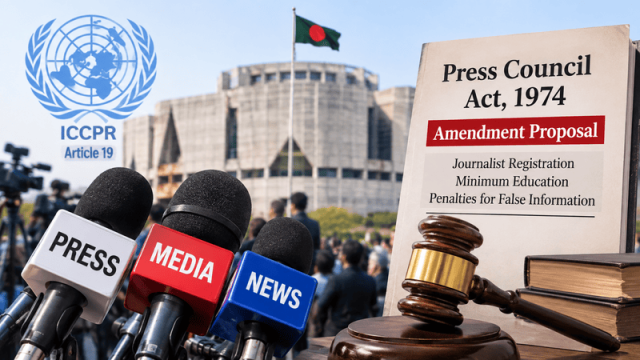
New York, Nov. 13 (V7N) – The government's proposal to introduce journalist registration, minimum educational qualifications and penalties for publishing false or misleading information through amendments to the Press Council Act, 1974, has brought renewed attention to the balance between professional accountability and freedom of expression under international human rights standards.
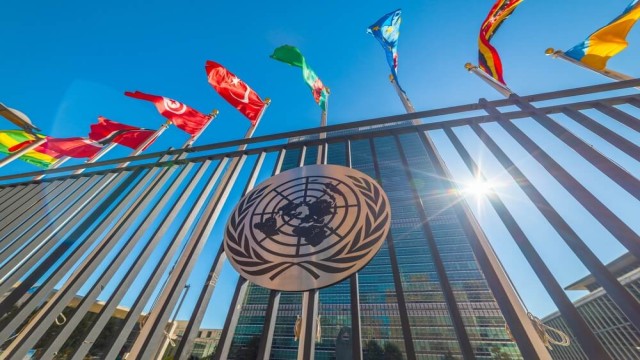
The proposed reforms seek to strengthen the Press Council by giving it authority to register journalists, establish an online database of recognised media professionals and take action against alleged violations of journalistic ethics. However, provisions relating to compulsory registration and restrictions on journalistic activities would need careful examination against Bangladesh's international obligations, particularly Article 19 of the International Covenant on Civil and Political Rights (ICCPR).
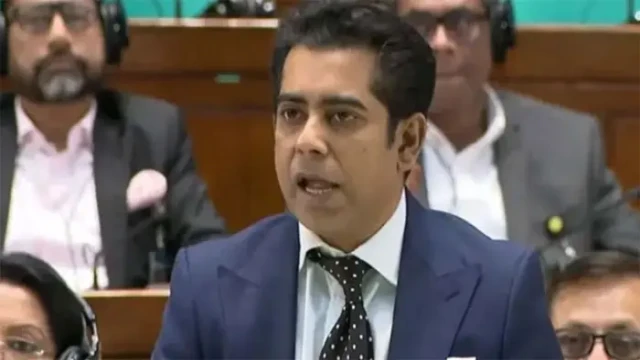
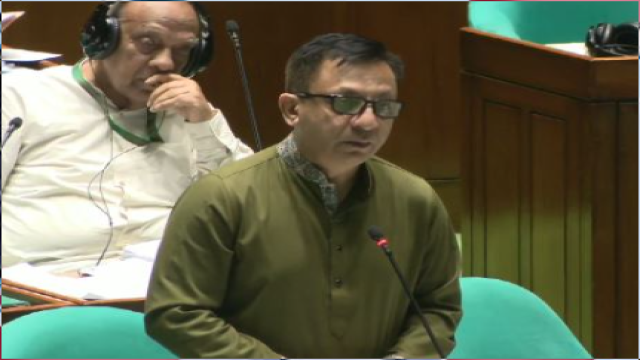
Information and Broadcasting Minister Andalib Rahman outlined the proposals in a written reply to a parliamentary question from independent lawmaker Sultana Jesmin on Thursday (November 12).
According to the minister, the proposed amendments could empower the Press Council to determine minimum educational qualifications for journalists, introduce a registration system modelled on the Bar Council and maintain an online database of professional journalists.
The proposals also include fines and other specific penalties for editors, publishers and journalists found to have violated professional codes of conduct, including through the publication of false, harassing or misleading reports. The council could also be authorised to initiate investigations into allegations involving rumours, fake news, hate speech and other violations of journalistic standards.
State Minister for Information Yaser Khan Chowdhury, responding to a supplementary question from BNP lawmaker Zainul Abdin Faruk, said the government was consulting journalists' organisations, including the Dhaka Reporters Unity (DRU), Bangladesh Federal Union of Journalists (BFUJ) and Dhaka Union of Journalists (DUJ), on plans to establish a database of professional journalists.
He said journalists' organisations were better placed to propose criteria for determining who should be recognised as a journalist. He also stated that it would not be appropriate for the government to decide who could enter a profession or how people should express their views.
What international law says
Article 19 of the ICCPR recognises everyone's right to freedom of opinion and expression. This includes the freedom to seek, receive and impart information and ideas through any media and regardless of frontiers.
The article allows certain restrictions on freedom of expression, but only when they are provided by law and necessary to protect the rights or reputations of others, national security, public order, public health or morals.
The requirements mean that restrictions must have a clear legal basis, pursue a legitimate purpose and be necessary and proportionate. The existence of false or misleading information alone does not automatically justify restricting expression under international law.
Bangladesh is a state party to the ICCPR, making these standards relevant to the assessment of proposed legislation affecting freedom of expression.
UN Human Rights Committee's position on journalist registration
A particularly relevant international standard is the UN Human Rights Committee's General Comment No. 34, adopted in 2011, which explains the application of Article 19 of the ICCPR.
Paragraph 44 states that journalism is a function shared by a wide range of actors, including full-time professional reporters and analysts, bloggers and people engaged in self-publication through print, online and other platforms.
The Committee specifically states that general state systems of registration or licensing of journalists are incompatible with Article 19, paragraph 3.
It recognises limited accreditation arrangements only where they are necessary to provide journalists with privileged access to specific places or events. Such arrangements must be based on objective criteria and applied without discrimination.
This distinction is significant for Bangladesh's proposed reforms. A database maintained for professional or administrative purposes is not necessarily the same as a compulsory registration system that determines who is legally permitted to practise journalism. The legal implications would depend on whether registration remains voluntary or becomes a condition for working as a journalist.
UNESCO's framework for media development
UNESCO's Media Development Indicators (MDIs), endorsed by its International Programme for the Development of Communication in 2008, provide another important framework for assessing media-related policies.
The indicators examine five broad areas: regulation that supports freedom of expression and media pluralism; diversity and transparency in media ownership; the media's role in democratic discourse; professional capacity building and supporting institutions; and the infrastructure needed for independent and pluralistic media.
Under this framework, professional development, training and institutional accountability are important elements of a healthy media environment. At the same time, regulatory systems should contribute to freedom of expression and media diversity rather than undermine them.
The UNESCO framework therefore offers a basis for evaluating whether proposed journalist registration and qualification requirements would strengthen professional capacity while preserving media independence and pluralism.
Potential implications for Bangladesh's media sector
The proposed reforms could have implications for journalists working in different parts of the country, particularly local correspondents, community reporters, independent digital journalists and those who have gained professional experience without formal academic qualifications.
If minimum educational qualifications become a compulsory condition for practising journalism, experienced journalists without the prescribed certificates could face difficulties continuing their work.
Similarly, if registration becomes mandatory and the authority to grant or withdraw recognition rests with a government-controlled institution without adequate safeguards, concerns could arise over arbitrary exclusion and restrictions on independent reporting.
On the other hand, transparent professional standards, voluntary registration, training opportunities and effective mechanisms for addressing genuine ethical violations could contribute to better journalism and public trust.
The proposed provisions on penalties for false or misleading reporting would also require precise legal definitions and clear procedures. Vague or broadly interpreted terms could create uncertainty for journalists and media organisations, particularly when reporting on public officials, government decisions or matters of public interest.
An effective accountability mechanism would need to distinguish deliberate fabrication from factual errors, disputed interpretations, legitimate criticism and investigative reporting based on information that may later require correction.
The need for independent safeguards
International standards do not exempt journalists or media organisations from professional responsibility. Accuracy, verification, correction of errors, protection of sources and adherence to ethical standards remain essential to credible journalism.
However, the international framework makes a distinction between professional self-regulation and state control over who may perform journalistic work.
For Bangladesh, the key questions will include whether registration is voluntary or compulsory, whether educational qualifications are mandatory for entry into journalism, how the Press Council will be constituted, whether its decisions will be independent, and whether journalists will have access to transparent hearings and effective appeals.
The final assessment of the proposed amendments will depend on their actual wording and implementation. Their compatibility with international standards will require ensuring that efforts to improve professional accountability do not impose unjustified restrictions on freedom of expression, independent reporting and media pluralism.
END/SMA/AJ/