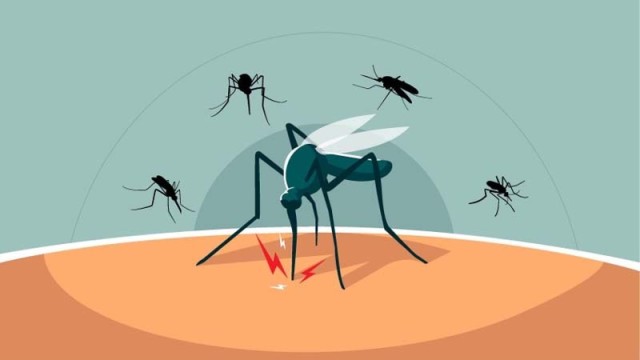
Rajshahi, Aug 19 (V7N) — The risk of dengue infection is rising in Rajshahi as Aedes mosquito breeding has increased significantly in several areas of the city during the monsoon season, while the number of dengue patients receiving treatment at Rajshahi Medical College Hospital has also increased.
An entomological survey conducted by the Rajshahi Divisional Office of the Directorate General of Health Services (DGHS) from August 3 to 10 found Aedes mosquito larvae in 24 of 75 houses surveyed in five areas of the city.
The House Index stood at 32 per cent. Larvae were also found in 46 of 68 water-holding containers examined, producing a Container Index of 67.65 per cent.
The survey was conducted in Kajihata, Chandipur, Uparbhadra, Namobhaddra and Hazrapukur areas. The Breteau Index was recorded at 61.33, significantly above the World Health Organisation’s threshold of 20 associated with a high risk of dengue transmission.
A total of 685 mosquito larvae were collected from potential breeding sites during the survey. Of these, 505 were identified as Aedes albopictus, 86 as Aedes aegypti and 94 as other mosquito species.
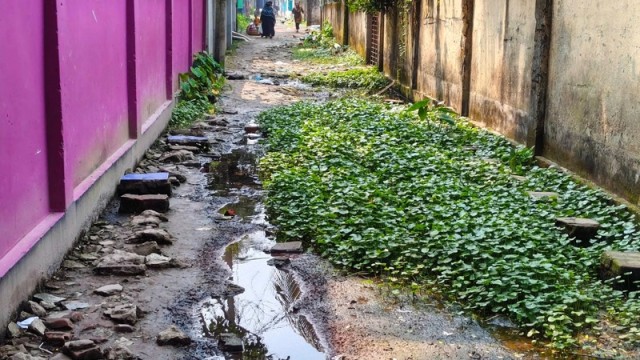
The breeding sites included flower vases, plastic and ceramic tubs, earthen and tin containers, discarded coconut shells, cement tubs, drums, waterlogged floors, paint buckets and plastic buckets.
The latest findings represent a substantial increase from a survey conducted in May. At that time, Aedes larvae were found in 15 of 75 houses, giving a House Index of 20 per cent. Of the 52 water-holding containers examined, 23 contained larvae, resulting in a Container Index of 44.23 per cent. The Breteau Index was 30.66.
The latest Breteau Index of 61.33 is almost twice the May figure, while both the House Index and Container Index have also increased.
District Entomologist Umme Habiba said health officials had been observing an increase in mosquito larvae and adult mosquitoes in different parts of the city for years.
“Larvae have been found in various common household items capable of holding water,” she said.
Meanwhile, dengue cases at Rajshahi Medical College Hospital have also increased. Hospital records show that only one dengue patient was receiving treatment on June 13, while the number rose to nine by July 30.
The number increased further in August, reaching 13 patients on August 6, 23 on August 8, 26 on August 9 and 30 on August 10. One dengue patient died at the hospital on August 11.
On August 14, eight new patients were admitted while six were discharged. Nine more dengue patients were admitted on August 15. On August 16, seven new patients were reportedly admitted, while 13 patients recovered. A total of 27 patients were undergoing treatment at the hospital at that time.
Dr Tanzilul Bari, in-charge of the dengue ward at Rajshahi Medical College Hospital, said dengue cases generally increase during this period of the year.
“There has been a slight increase in the number of patients at the hospital this year, but the situation is not abnormal so far,” he said.
A DGHS survey in 2025 found Aedes mosquito larvae in 57.33 per cent of households across five wards of Rajshahi city. The same survey found that 97 per cent of dengue patients receiving treatment at Rajshahi Medical College Hospital had contracted the virus locally, suggesting ongoing local transmission.
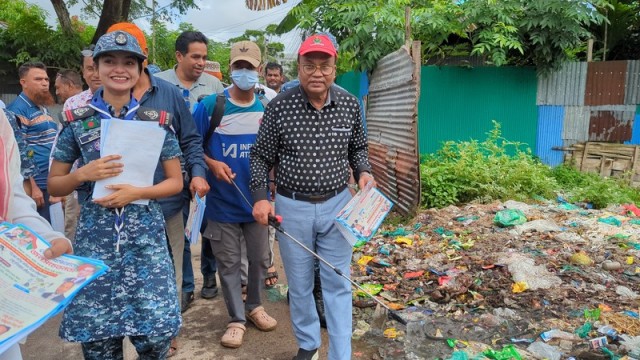
Rajshahi City Corporation Chief Conservancy Officer Sheikh Md Mamun Dollar said dengue could not be completely eliminated but preventive measures were continuing.
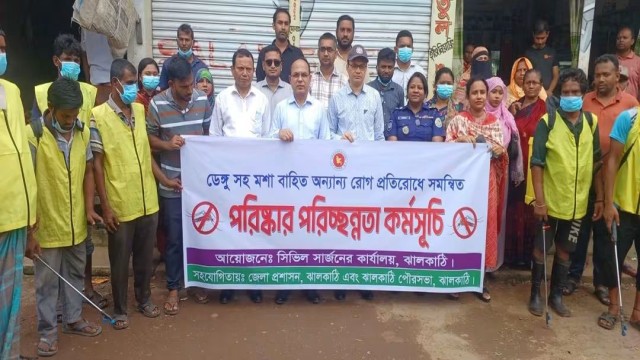
“Cleaning drives are being conducted in every ward, alongside public awareness campaigns,” he said.
Health officials and city authorities have urged residents to regularly remove stagnant water from household containers and other potential breeding sites to reduce the spread of Aedes mosquitoes and the risk of dengue.
END/MRA/SMA/