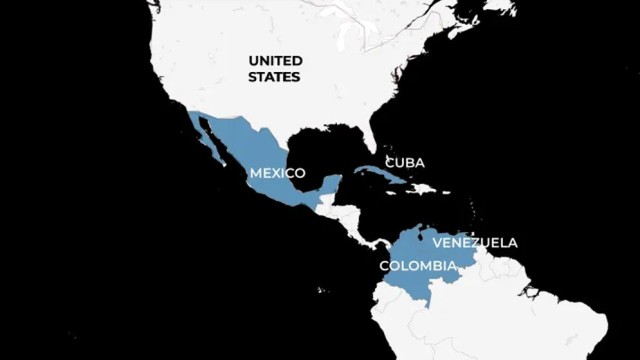
Washington, Jan 10 (V7N) — A sweeping US military operation against Venezuela has intensified concerns about Washington’s expanding role in Latin America, underscoring the massive disparity in military capability between the United States and its southern neighbours.
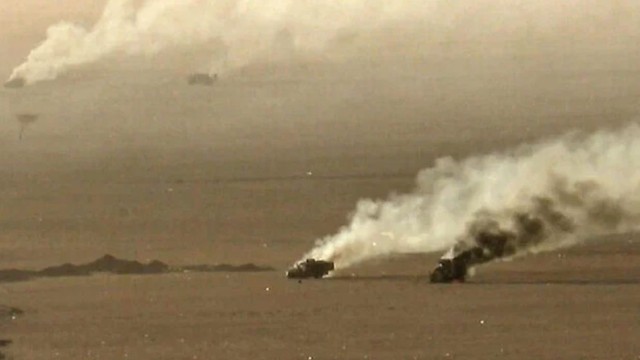
Last week, the United States launched a large-scale military strike inside Venezuela that resulted in the capture and removal of President Nicolás Maduro and his wife. They were flown to the US to face federal charges related to drug trafficking and alleged criminal activities, according to US officials. (Brookings)
The operation drew widespread international criticism, with several nations denouncing it as a violation of Venezuela’s sovereignty and international law. At a United Nations Security Council meeting, countries including Brazil, Cuba, Colombia and others labelled the intervention a “crime of aggression.” (The Guardian)
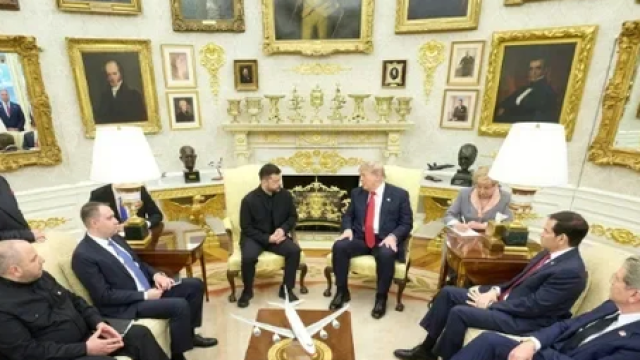
Following the Venezuelan intervention, US President Donald Trump warned that further action could be taken against other Latin American countries, including Colombia, Cuba and Mexico, if they fail to “correct themselves,” particularly regarding drug trafficking and security cooperation. (Reuters)
Huge Military Capability Gap
The recent developments have highlighted the vast difference in military strength between the United States and regional powers in Latin America:
-
The US maintains the most powerful military in the world, with a defense budget of approximately $895 billion in 2025, surpassing the combined military spending of the world’s next 10 largest spenders. (archive.vn)
-
According to the 2025 Global Firepower Index, the strongest Latin American militaries rank far below the United States:
-
Brazil — 11th globally
-
Mexico — 32nd
-
Colombia — 46th
-
Venezuela — 50th
-
Cuba — 67th
These nations also lag in personnel, aircraft, tanks, naval assets and defense spending. (archive.vn)
-
In contrast, the US deploys advanced naval and air forces capable of executing complex operations with minimal domestic opposition, reflecting its unmatched conventional warfare dominance.
Regional Reactions and Future Risks
Latin American governments have reacted strongly. Many have condemned the Venezuelan strike as a threat to regional stability and sovereignty, urging diplomatic solutions. Some leaders, including Mexico’s president, have called for closer coordination with the United States to address security issues, even as they express concern over military threats. (Reuters)
However, none of these countries possess the military strength to confront the United States in conventional terms, a reality underscored by recent events.
END/SMA/AJ