Dhaka, Nov 3, (V7N) – Minister for Women and Children Affairs and Social Welfare Prof Dr AZM Zahid Hossain said Tuesday that national plans are being enriched and made more effective to align with the demands of the times.
He noted that the election manifesto was formulated under the leadership of Prime Minister Tarique Rahman, placing the highest priority on the aspirations of the people, and that the government is currently working tirelessly to implement it.
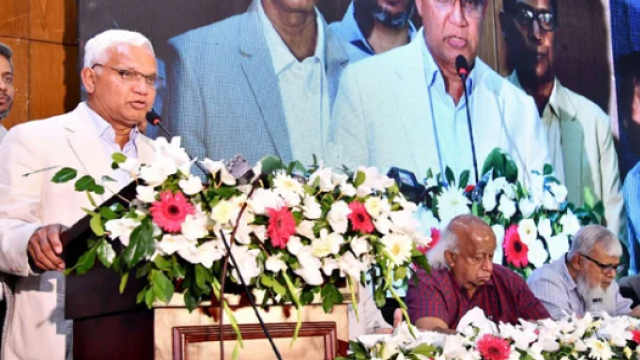
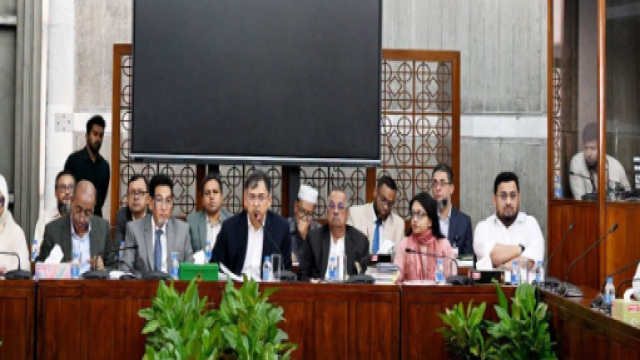
The minister made these remarks while addressing a discussion at a hotel in the capital as the chief guest. The discussion was organised to mark the release of the World Bank report titled "Demographic Change in South Asia: From Tailwinds to Headwinds for Development."
State Minister for Planning Md Junaid Abdur Rahim Saki was present at the meeting as a discussant. Chairman of the Power and Participation Research Centre (PPRC) Dr Hossain Zillur Rahman, Executive Director of the Centre for Policy Dialogue (CPD) Dr Nazneen Ahmed and World Bank's Regional Practice Director (People) for South Asia Cem Mete were also present. The event, moderated by Jean Esmir, World Bank Division Director for Bangladesh and Bhutan, was attended by senior World Bank officials, eminent economists, researchers and high officials from various ministries and departments.
Dr Zahid emphasised that one of the primary objectives of the present government is to ensure the empowerment of women. With this goal in mind, the government is issuing "Family Cards," designating the eldest woman in a five-member household as the head of the family. This support will assist women in managing their families' daily expenses and ensuring a quality education for their children, while also empowering them to become entrepreneurs, a contribution that will play a significant role in the growth of the national GDP.
He noted that, historically, families in the country have not maintained a formal "family tree." Through the introduction of "family cards," a structured family tree containing precise data for each household will be created for building national development planning.
The Minister further stated that the present government has allocated about Taka 1.43 lakh crore across various sectors under its social safety net programmes. To protect future generations from the risks of malnutrition, the government provides allowances to women during the 1,000-day maternity period. Additionally, to foster self-reliance, women are provided with "seed money" and essential resources following their completion of income-generating training programmes.
He mentioned that, with the "demographic dividend" in mind, the government has secured the highest-ever budgetary allocation for the education sector. Alongside formal education, priority is being placed on the skill development of the younger generation.
He added that, in addition to promoting the well-being of individuals with special needs, the government will also provide specialised training to their parents to assist them in the care and comprehensive support of their children.
Md Junaid Abdur Rahim Saki stated that the government has adopted a "life-cycle-based protection strategy" to build an inclusive and humane state. This approach informs policymaking by prioritising the health and nutrition of newborns from their very first day, while also ensuring social security and dignity for senior citizens. He explained that the government is strengthening the social safety net for the marginalised and economically disadvantaged populations not only by expanding its horizontal reach to include more individuals, but also by deepening its vertical impact through increased allowance amounts, improved quality of support and enhanced benefits. Collectively, these efforts serve to eliminate inequality and ensure sustainable social and economic parity.
At the meeting, experts stated that the number of young and working-age people in South Asia will begin to decline after 2034. Furthermore, the region is projected to rapidly transform into an aging society by 2049, well before it can achieve the level of economic prosperity seen in wealthier nations. They emphasised that to avert this major crisis of aging before becoming affluent, it is urgent to take immediate action: generating large-scale employment, increasing women's participation in the workforce, developing a skilled human resource base and strengthening healthcare and social security systems for the elderly.
end/aj/rh/