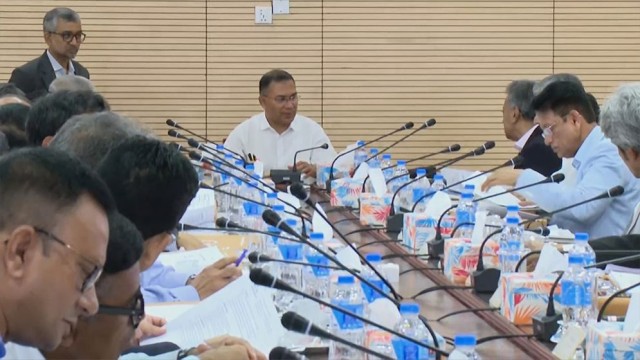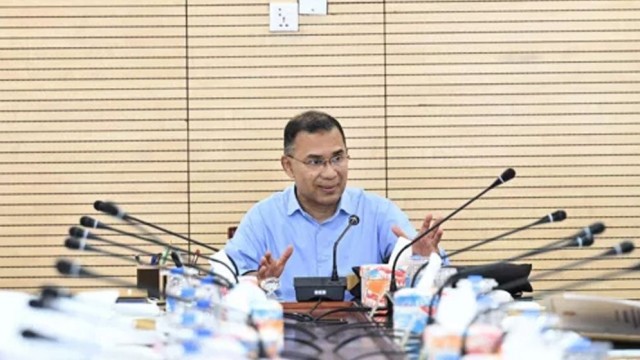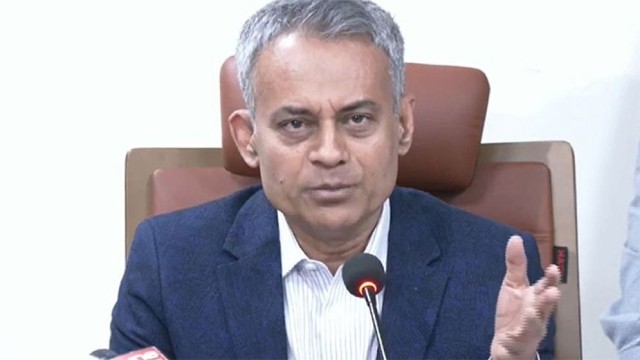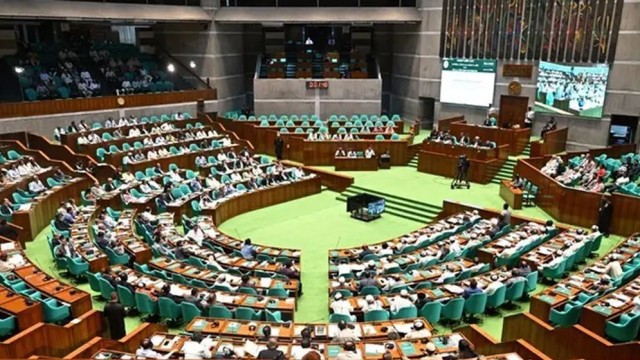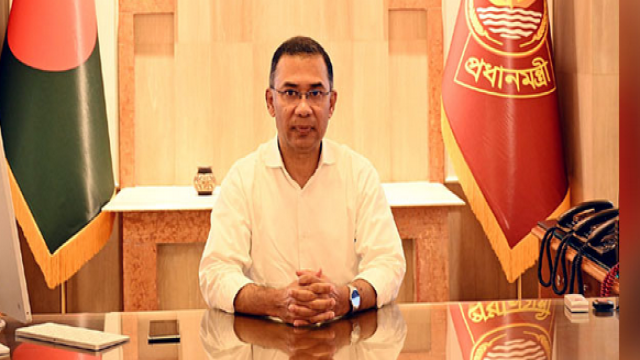
SANGSAD BHABAN, June 17 (V7N)— Prime Minister Tarique Rahman told the Jatiya Sangsad on Wednesday that the government has launched extensive plans to counter climate change, with a strong focus on the water resources sector. Responding to a starred question from Tangail-6 MP Md Robiul Awal, he said combating climate change was a priority in the current government’s election manifesto, prompting multifaceted programs to address its impacts.
The Prime Minister described Bangladesh as one of the world’s most disaster-prone nations due to its geography, high population density, vast river networks, and long coastline. He noted that climate change is intensifying cyclones, storm surges, floods, flash floods, river erosion, droughts, heavy rainfall, lightning, heatwaves, and salinity intrusion — all of which threaten livelihoods, agriculture, infrastructure, the environment, and the economy.
Among key initiatives, Rahman cited the Padma Barrage Project, approved on May 13 at a cost of Tk 34,347 crore. The first phase aims to boost dry-season flow in the Padma River, revive connected river systems, curb salinity in the south, restore the Sundarbans’ ecological balance, improve drainage, reduce waterlogging, expand irrigation, and enhance water security. The project is also expected to generate 113 MW of hydropower and add 0.45% to GDP growth.
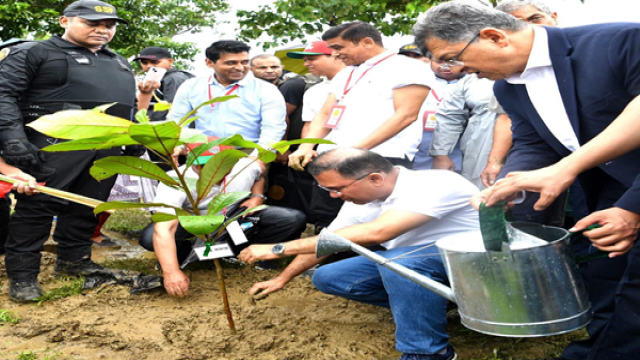
Other measures include a nationwide program to excavate and re-excavate rivers, canals, and water bodies to increase surface water use and improve irrigation, drainage, and the environment. The government also launched a five-year plan to plant 25 crore trees, alongside annual tree fairs and a three-month tree plantation campaign at national, divisional, district, and upazila levels.
Rahman said the Bangladesh Climate Change Trust is prioritizing research, training, and extension to tackle climate risks. Plans include developing rural natural reservoirs in coastal districts for rainwater conservation and safe drinking water, plus programs focused on climate adaptation, secure livelihoods, and economic inclusion for vulnerable groups like women, children, and fishermen. Efforts will also strengthen embankments, cyclone shelters, and early warning systems.
Looking ahead, Bangladesh is preparing a National Adaptation Plan Investment Roadmap with ADB support and drafting its Third Nationally Determined Contributions (NDC 3.0) to cut emissions. Targets include meeting 25% of electricity demand from renewables by 2035, building four Waste-to-Energy plants and 26 Integrated Landfill and Resource Recovery Facilities, and afforesting 100,000 hectares in coastal, island, and degraded areas. The government has also drafted a carbon market framework under Article 6 of the Paris Agreement and shifted disaster management from relief-based to risk-reduction, earning global recognition. Digital forecasting, community alerts, the Cyclone Preparedness Programme, and IVR-based grassroots information systems are being expanded.
END/WD/RH