Rajshahi, May 16 (V7N) – Today marks the observance of the historic Farakka Long March Day, a significant event in Bangladesh’s movement for fair water sharing from transboundary rivers.
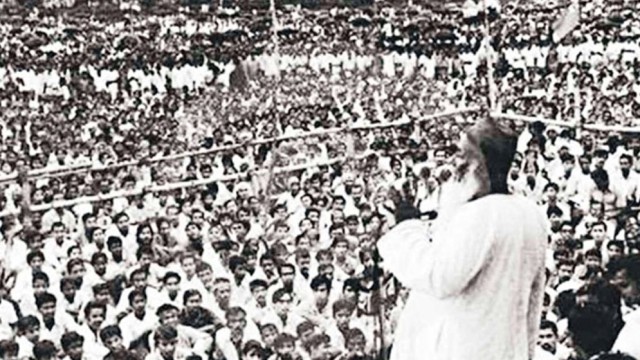
On this day in 1976, thousands of people from across the country gathered at Rajshahi Madrasa Maidan at the call of veteran political leader Maulana Abdul Hamid Khan Bhashani. The massive procession later marched toward Kansat in Chapainawabganj in protest against India’s unilateral withdrawal of water through the Farakka Barrage.
The movement became one of the strongest public demonstrations in Bangladesh’s history demanding a fair share of river water. Observers say no similar mass mobilization on the water-sharing issue has been witnessed before or since.
Concerns Over Water Crisis Continue
At the time, Bangladesh’s northwestern region was facing severe environmental stress and growing desertification due to reduced water flow in the Ganges-Padma river system.
Although Bangladesh and India later signed a 30-year water-sharing agreement in 1996 regarding the Farakka issue, critics and water experts continue to argue that Bangladesh has not consistently received its expected share of water.
Background of the Farakka Barrage
India constructed the Farakka Barrage in 1975 at Manoharpur, about 18 kilometers from the Bangladesh border. The barrage diverts water from the Ganges River toward the Hooghly River system inside India.
As a result, water flow in Bangladesh’s Padma River declined significantly, affecting river navigability, agriculture, fisheries and the overall ecological balance in several regions of the country.
The Farakka issue remains one of the most sensitive and long-standing topics in Bangladesh-India relations, particularly concerning transboundary water management and environmental sustainability.
END/SMA/AJ