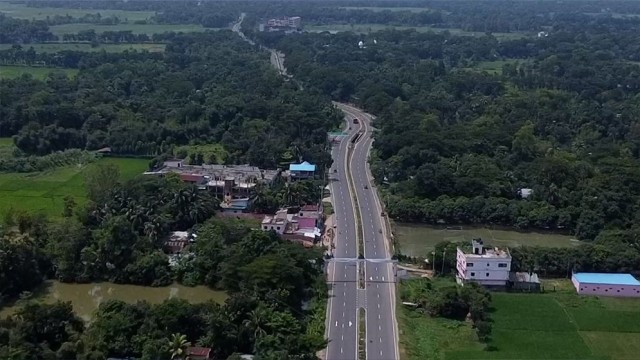
Chittagong, Sep 02 (V7N)- Police have adopted a technology-driven strategy to combat criminal and terrorist activities in the remote hills and forests of Raojan, Rangunia and Fatikchhari in Chittagong.
Under the new plan, advanced surveillance drones equipped with thermal technology will be deployed to locate suspected criminals hiding in difficult-to-reach hilly and forested areas. Police also plan to install artificial intelligence-powered facial recognition cameras at key locations to track identified suspects.
A proposal has been sent to the ministry seeking approval to establish four Armed Police Battalion (APBN) camps at Kadalpur in Raojan, Sarbhatta and Betagi in Rangunia, and Kanchannagar in Fatikchhari. Each camp is expected to have a police platoon equipped with heavy weapons to enable rapid operations in remote areas.
Police said criminal activities have increased in the remote hills and forests of the three upazilas since August 24. Several incidents, including killings and public displays of firearms, have been reported. Law enforcement agencies have also faced resistance and attacks during operations in the areas.
Chittagong District Superintendent of Police Masud Alam said APBN personnel receive specialized training in the use of heavy weapons and undergo semi-military or paramilitary training.
He said deploying APBN teams in the remote areas would allow law enforcement agencies to respond more quickly and help improve the overall law and order situation.
Masud Alam said thermal surveillance drones would provide high-resolution, long-distance monitoring of the hilly and forested areas. The technology would help police identify the movements and possible locations of suspects before launching operations, while also improving the safety of law enforcement personnel.
According to police and intelligence sources, information and photographs of several suspected criminal groups operating in Rangunia and surrounding areas have been collected. Police are planning to install more than 100 AI-powered facial recognition cameras at around 20 strategic locations to monitor the movements of identified suspects.
When a person already identified by police comes within the range of the cameras, the AI system would analyze the person's face and send an alert, along with location information and an image, to designated police personnel.
Police hope the system will allow them to obtain information about suspects' movements more quickly and help coordinate operations to apprehend them.
Masud Alam said AI-based software would make it possible to track the movements and activities of identified individuals. He expressed hope that the technology would significantly strengthen surveillance and improve the effectiveness of operations against criminal groups.
END/SMA/AJ