Habiganj, Aug 29 (V7N) — Tea workers in the plantations of Madhabpur and Chunarughat upazilas of Habiganj remain firm in their demand for a daily wage of Tk 500. They have been observing a two-hour work stoppage every day for the past eight days as part of their movement.
The programme is being observed in 18 tea gardens in Chunarughat upazila as well as several other plantations. Labour leaders said they would announce tougher programmes if their demand was not met.
Tea workers allege that they have faced various forms of deprivation and exploitation since the establishment of the plantations. They say it is impossible to meet a family’s expenses on a daily wage of just Tk 187 amid soaring prices of essential goods.
They are therefore demanding that their daily wage be increased to Tk 500 in line with the rising cost of living.
Workers said their daily wage was increased by Tk 50 to Tk 187 in 2022 following a sustained movement. Recently, tea garden owners proposed a further 5 per cent wage increase. However, the workers rejected the proposal and have continued their movement demanding a daily wage of Tk 500.
Khairun Akter, a woman labour leader at Chandpur Tea Garden in Chunarughat, said tea workers had been working hard in the plantations for generations.
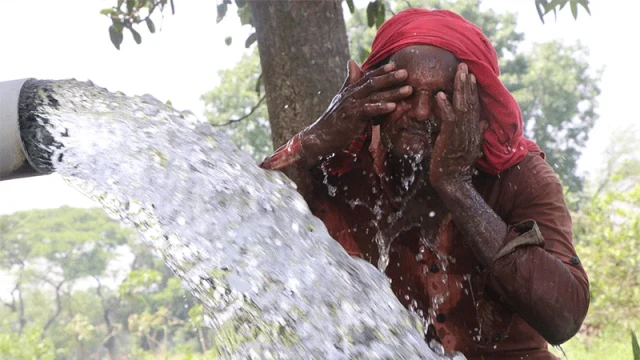
“Tea workers have been working tirelessly in the gardens for decades. Despite working in scorching heat and rain, they are not receiving fair wages. Prices of essential commodities have increased significantly, yet a worker receives only Tk 187 for a full day’s work. How can a family survive on such a small amount?” she asked.
She also said tea workers were supposed to receive facilities including education, healthcare, housing, safe drinking water and medical services, but in many plantations such services existed only on paper.
“As a result, the living conditions of workers are becoming increasingly difficult. Our movement will continue until our legitimate demands are implemented,” she said.
At Chandpur Tea Garden, Khairun Akter is leading the movement alongside Gita Rani Kanu, Mohan Rabidas, students, young people and other workers.
Tea garden owners, however, have presented a different view regarding the workers’ demands. They said the tea industry was currently facing multiple challenges and many plantations were incurring losses every year.
They said production costs had risen sharply, with the cost of producing one kilogramme of tea exceeding Tk 200–300 in many cases, while tea prices in the market had not increased proportionately. Costs have risen across almost every area of production, including gas, electricity, fertiliser, pesticides, transportation and machinery.
Shamsul Islam Bhuiyan of Baikunthapur Tea Garden said the plantation had been suffering losses every year.
“The amount of bank loans is also increasing. As the price of our produced tea is not reaching the expected level, it has become increasingly difficult to operate the garden,” he said.
Sohag Mahmud, manager of Noapara Tea Garden, said their factory had remained closed for nearly two years due to a financial crisis.
“Although the factory has now resumed operations, we are unable to produce tea at full capacity. We are also unable to secure bank loans. Regular load-shedding caused by problems with electricity supply is another challenge,” he said.
Former general secretary of the Bangladesh Tea Workers’ Union Ram Bhajan Kairi said the demand for a daily wage of Tk 500 was reasonable.
“Tea workers perform hard labour in the plantations despite scorching heat and rain. Yet their wages are extremely low compared with the work they do. It is essential to determine workers’ wages in line with current market prices,” he said.
Labour leaders said the movement, including work stoppages, would continue until fair wages were ensured.
They warned that if the issue was not resolved quickly through negotiations, the movement could intensify further in the coming days.
END/MMA/SMA/