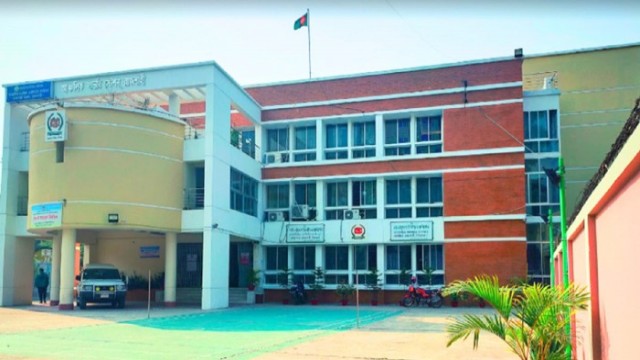
Rajshahi, July 27 (V7N) — The temporary suspension of Rajshahi Regional Election Officer Md. Anichur Rahman over alleged irregularities in the outsourcing recruitment of 143 employees has sparked debate over accountability within Bangladesh's Election Commission, as official documents indicate the recruitment process was conducted under written directives and approvals from the Election Commission Secretariat and other central authorities.
The controversy emerged after allegations circulated on social media and YouTube claiming that newly recruited workers had each paid between Tk 70,000 and Tk 80,000 in bribes and that appointments were made without written or oral examinations. Following the allegations, the Election Commission (EC) Secretariat suspended the regional election officer and initiated departmental proceedings.
However, an examination of official records obtained by this correspondent shows that every major stage of the recruitment process—from policy approval to contract award—was carried out under decisions made at the central level.
According to government documents, on June 23, 2026, the Election Commission Secretariat instructed all regional election offices across the country to recruit outsourced personnel. The directive, signed by Senior Assistant Secretary Nazmul Kabir (Memo No. 17.00.0000.016.11.015.21-315), authorised the recruitment process.
On the same day, the Bangladesh Public Procurement Authority (BPPA), under the Ministry of Planning, granted special approval to use the Direct Procurement Method (DPM) instead of the standard electronic Government Procurement (e-GP) system. The directive instructed officials to complete the entire recruitment process by June 30.
The following day, June 24, the Secretariat formally approved the evaluation committee through another official memorandum. Tender invitations were issued on June 25, the evaluation committee met and submitted its recommendations on June 27, and on June 29 the Election Commission Secretariat approved the committee's recommendation and awarded the contract to KSF Trade Limited. A formal agreement with the company was signed the same day.
Under the contract, KSF Trade Limited was tasked with supplying 143 outsourced personnel for election offices across the Rajshahi region, including five drivers, 69 cleaners and 69 security guards.
Separate instructions issued by the Election Commission Secretariat required priority to be given to existing outsourced workers. In accordance with that directive, a list of 137 existing workers was provided to the contractor. After the company submitted the final list of 143 personnel, appointments were completed in phases during the first week of July.
The allegations surfaced only after several social media and YouTube reports claimed that each recruit had been charged between Tk 70,000 and Tk 80,000 in exchange for employment.
However, documents reviewed during this investigation contain approvals, evaluation reports, contract awards and procurement records, but no official evidence supporting allegations of bribery. No banking records, documented financial transactions or other direct evidence of illegal payments were found. Likewise, the online reports making the allegations did not publish independently verifiable documentation supporting their claims.
The absence of documentary evidence does not determine whether the allegations are true or false. Election Commission officials say the matter remains under investigation.
On July 21, the Election Commission Secretariat formed a three-member inquiry committee to investigate the allegations of financial irregularities. According to an official order signed by Deputy Secretary (Discipline) Salahuddin Ahmed, Joint Secretary (Administration and Finance) D.M. Atikur Rahman was appointed convener of the committee, which has been directed to submit its findings within five working days.
A review of the available documents indicates that the recruitment process involved multiple institutional actors, including the Election Commission Secretariat, the evaluation committee, the Bangladesh Public Procurement Authority and the contracted service provider.
Despite this multi-layered approval process, administrative action has so far been taken only against the regional election officer, raising questions over whether accountability will extend to all levels involved in decision-making.
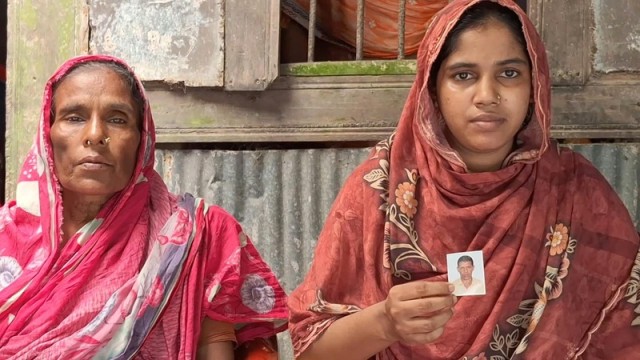
Several outsourced employees interviewed by this correspondent denied paying any money for their appointments.
Ismail Hossain, an outsourced driver at the Chapainawabganj District Election Office, said he had been employed through outsourcing since 2016 and simply collected his new appointment letter from the contractor in July. He said neither he nor anyone else was asked to pay money.
Faruk Hossain, a cleaner at the Boalia Thana Election Office, said he was originally recruited through an oral interview in 2023 and was reappointed under the 2025 policy, which gives priority to experienced outsourced workers. He also denied making any payment.
Sabbir Hossain, another cleaner at the Rajpara Thana Election Office who joined in 2023, gave a similar account, saying existing workers had been retained instead of recruiting new personnel and that no money had been exchanged.
KSF Trade Limited Managing Director Md. Shamim Hossain said the company merely implemented instructions issued by the Election Commission and did not prepare its own recruitment list.
"The list of personnel was supplied by the Election Commission, and the contract was executed accordingly," he said.
Rejecting allegations that the company accepted bribes, he added that if any individual had collected money without the company's knowledge, the organisation could not be held responsible.
Suspended Regional Election Officer Md. Anichur Rahman also denied any wrongdoing, saying the recruitment process strictly followed government rules and procurement regulations.
"The appointments were made based on the recommendations of the evaluation committee, and no violation of laws or regulations occurred during the process," he said.
When contacted, Joint Secretary D.M. Atikur Rahman, who heads the investigation committee, declined to comment on the allegations while the inquiry remains ongoing.
"It would not be appropriate to comment before the investigation is completed. We expect the report to be submitted next week," he said.
The investigation is expected to determine whether any financial irregularities occurred, whether bribery allegations can be substantiated and, if misconduct is established, where responsibility ultimately lies.
For now, the official records reviewed by this correspondent show that the recruitment process was conducted under written directives from the Election Commission Secretariat, special approval from the Bangladesh Public Procurement Authority, recommendations of the evaluation committee and final approval from the Secretariat itself.
The central question now is whether accountability for a centrally approved, multi-stage recruitment process should rest solely with a regional official, or whether the investigation will examine the roles of every authority involved in the decision-making chain.
END/MRA/SMA/