Dhaka, Nov 12 (V7N)- The Information Commission has introduced a 100-day plan to raise public awareness of the right to information and strengthen the institution, with initiatives including information fairs at universities and educational institutions, hearings on pending complaints, and training programmes for journalists, content creators and politicians.
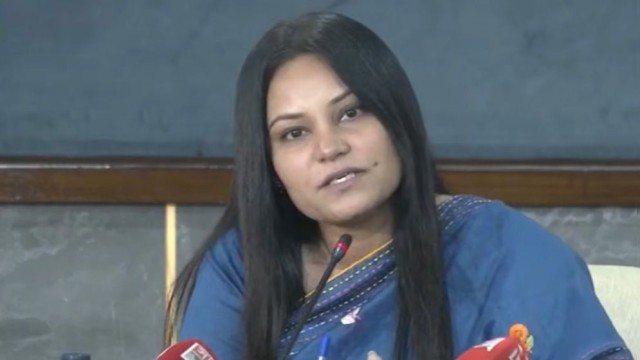
Chief Information Commissioner Professor Dr Nahrin Islam Khan announced the plan at a press briefing at the Information Commission building in Agargaon, Dhaka, on Thursday afternoon.
She said that although the Information Commission had been operating for the past 17 years, it had failed to play a significant role in promoting democratic practices. She called on everyone to offer constructive criticism of the commission's activities and stressed the need to make the institution better known to the public.
Dr Nahrin said the commission aimed to build public awareness of people's rights and make it easier for citizens to understand those rights and learn how to exercise them. She added that the institution's doors were open to everyone.
As part of the 100-day plan, information fairs will be organised at three public and four private universities. The commission also plans to hold similar events at different schools next week. The fairs will explain in simple language how people can exercise their right to information.
The Chief Information Commissioner said the commission had received 1,117 complaints so far, with hearings scheduled to begin on November 16. Training programmes will also be arranged for journalists, content creators and politicians.
She said initiatives were being taken to inform citizens about how public money is collected and spent. The commission wants government, semi-government, autonomous and foreign-aided private institutions to publish relevant financial information on their respective websites.
The commission has also taken steps to strengthen information disclosure policies at universities. Universities that already have such policies have been asked to publish the required information in accordance with them, while those without policies have been advised to formulate them.
Addressing the issue of the commission's neutrality, Dr Nahrin said it would function as an independent and impartial institution rather than work on behalf of either the government or the public.
She stressed that the commission's neutrality would be maintained even under a democratically elected government, adding that a strong Information Commission would help strengthen the country's democratic progress.
END/SMA/AJ