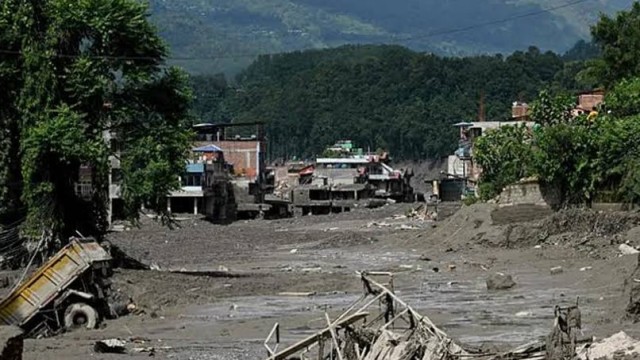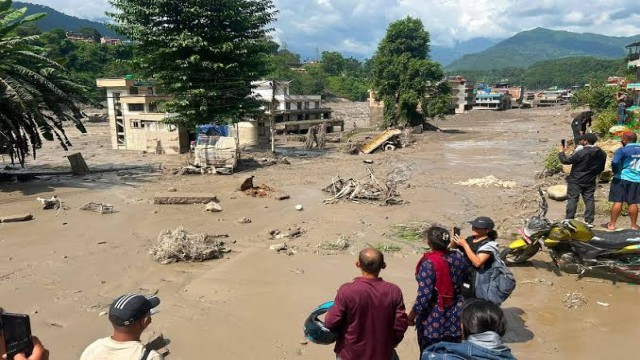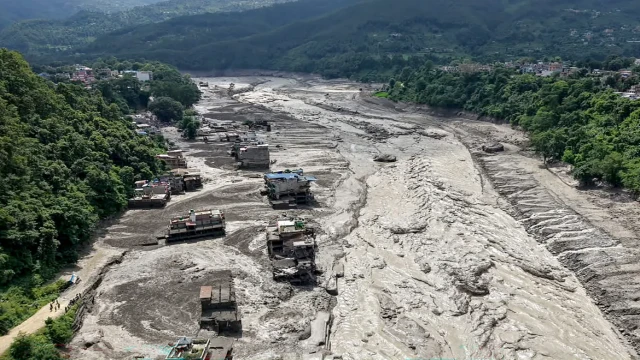
Kathmandu, Aug 27 (V7N) — At least 95 people have been killed and hundreds of others remain missing after devastating flash floods swept through Nepal’s mountainous Rasuwa district along the border with China’s Tibet on Wednesday.
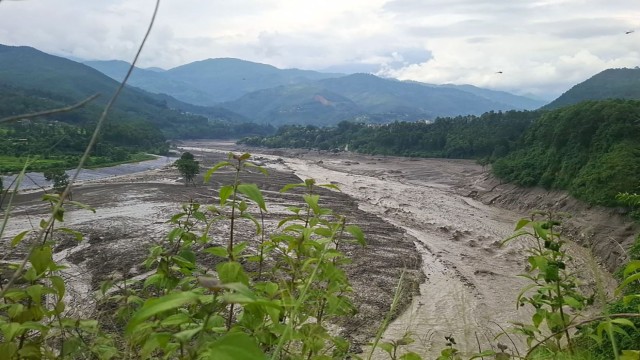
The disaster sent a massive surge of water, mud and rocks through settlements and infrastructure along the Bhote Koshi River, destroying homes, roads, bridges and power facilities. Authorities have warned that the death toll could rise as rescue teams continue searching for survivors and those still unaccounted for.
Verified video footage showed a huge wall of mud and debris rushing through the affected area within seconds, forcing people to flee for safety. Several structures were overwhelmed by the sudden torrent.
The worst-hit areas include Syapru Besi and Timure in Rasuwa district. Officials have urged residents living along the Bhote Koshi River to move to safer, higher ground because of the continuing risk of flooding and further landslides.
The Nepal Tourism Board said 403 tourists remained unaccounted for following the disaster. Of them, 341 were foreign nationals and 62 were Nepali citizens. Indian nationals formed the largest group among the missing foreign tourists, with 133 reported unaccounted for, followed by citizens of the United States, Australia, the United Kingdom, Canada and Malaysia.
Earlier figures from the Tourism Board had put the number of missing travellers at 384, including 291 foreign nationals. The numbers have continued to change as authorities verify information from tour operators and families.
The flash flood also affected downstream areas, including parts of Nuwakot and Dhading districts. The Bhote Koshi River, which originates in Tibet, flows into Nepal before joining the Trishuli River system.
The disaster caused extensive damage to transport and energy infrastructure. Roads and bridges were swept away, while several hydropower and transmission facilities were damaged, complicating rescue operations and cutting off access to some affected areas.
Nepal’s Prime Minister Balendra Shah ordered the deployment of rescue and relief teams, police and the military to the affected areas. Authorities have been working to evacuate people from vulnerable locations and search for those missing.
Rescue operations have been hampered by damaged roads, high river levels and the difficult mountainous terrain. Helicopters and other emergency resources have been deployed as authorities assess the scale of the destruction.
The cause of the disaster is still being assessed. Nepalese officials have suggested that an earthquake may have triggered an avalanche or landslide, which could have blocked the Lhende River before a sudden release of water contributed to the flooding. Reuters reported that the disaster involved a massive collapse of mud and rock into a river, while experts and authorities continue to investigate the precise sequence of events.
The disaster also caused severe damage on the Chinese side of the border. A mudslide struck the Gyirong area of Tibet, with Chinese authorities reporting deaths and hundreds of people missing. Roads, communications and electricity supplies were disrupted in the region.
Authorities in both Nepal and China have warned of further casualties and extensive property damage as search and rescue operations continue.
The tragedy has also raised concerns about the safety of people travelling through the region, which is an important route for tourists and pilgrims heading towards Tibet, including the Mount Kailash area.
Rescue teams are continuing their operations, while officials work to establish the identities of those killed and locate hundreds of people who remain missing.
END/WD/SMA/