East Nusa Tenggara, Aug 18 (V7N)- A 39-year-old Indonesian woman gave birth to her fourth child inside a hospital room that was shaking during a powerful 7.7-magnitude earthquake in eastern Indonesia.
Maria Florida Nogo Kelen, who lives near the earthquake's epicenter in the Negeri Sembilan region, underwent emergency surgery after complications developed during her pregnancy. The earthquake struck East Nusa Tenggara province on Saturday, causing widespread damage to homes, buildings and bridges.
Maria was nearly two months away from her expected delivery date. Doctors decided to perform an emergency caesarean section because continuing the pregnancy could have put her life at serious risk.
The situation inside the hospital was extremely difficult. The building continued to shake intermittently, while electricity supplies were unstable. With normal medical facilities disrupted, doctors were forced to carry out the surgery using torchlight.
“I was not afraid during the surgery. I had to stay healthy for my children. That's why I had courage,” Maria said.
Her doctor, Yona Sara Pardede, said the medical team had little choice but to proceed despite the dangerous conditions.
“We were also scared as humans. The surgery was difficult because the baby was small. I prayed to God, please help us. We didn't even have a ventilator,” she said.
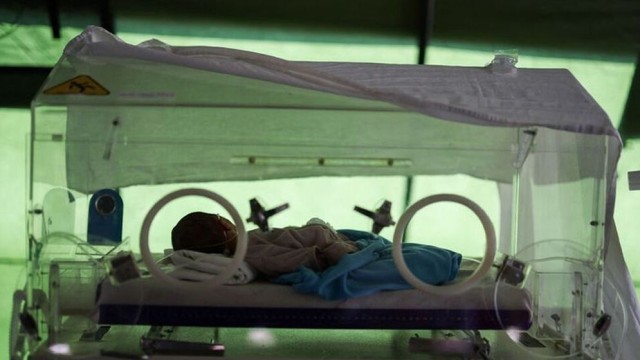
The baby girl was eventually delivered safely, weighing only 1.3 kilograms. The family named her Gempa, after the Indonesian word for “earthquake,” in memory of the extraordinary circumstances surrounding her birth.
Maria later suffered a hemorrhage following the delivery but survived.
“I am very grateful to the doctors. Even when the room was shaking, they did not abandon us,” she said.
The earthquake has caused extensive destruction across East Nusa Tenggara. Authorities said at least 54 people have died in the province since Saturday, making it the country's worst disaster since 2022.
Medical workers have been treating injured people in temporary tents after hospitals and other facilities were damaged. Rescue teams continued searching for people who may have been trapped under debris, while relief supplies were being transported to affected areas by air.
Many residents have remained outside their homes because of fears of further aftershocks. People sheltering in temporary camps have also reported shortages of clean water and food.
Despite surviving the disaster and the difficult emergency delivery, Maria said she considers herself fortunate that both she and her newborn daughter survived.
END/SMA/AJ