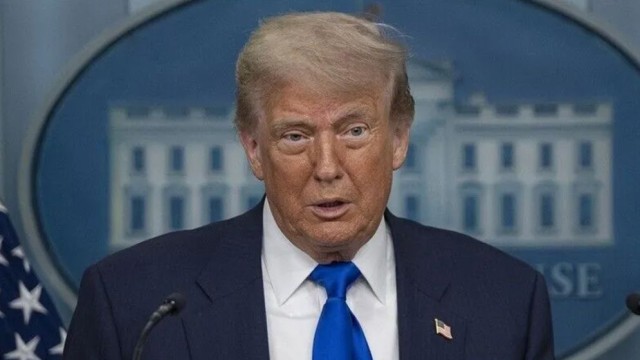
Washington, Aug 18 (V7N) — US President Donald Trump has refused to extend an interim memorandum of understanding (MOU) with Iran that expired after 60 days, instead calling on Tehran to surrender and claiming that the United States has “complete control” over the strategically vital Strait of Hormuz.
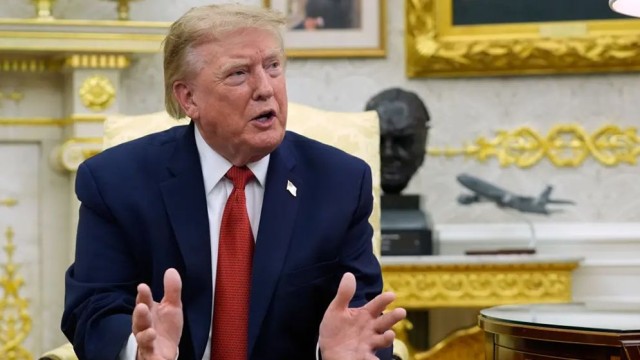
Speaking to reporters in the Oval Office on Monday (August 17), Trump said he did not see the possibility of reaching a necessary agreement with Iran and that Washington had no plans to extend the existing arrangement.
The interim agreement was signed in June with the aim of ending the conflict between the United States and Iran and paving the way for a long-term settlement. However, the 60-day period has expired without the two sides reaching a permanent agreement.
Trump also issued a tougher message to Tehran in an interview with Fox News, calling on Iran to surrender and “raise the white flag.” At the same time, he said an indirect line of communication with Iran remains open.
Iran, however, maintains that the agreement has effectively become meaningless following US attacks and alleged violations of its terms. Tehran has accused Washington of failing to fulfill its commitments, while the United States has blamed Iran for the collapse of the arrangement.
Hormuz tensions deepen
Meanwhile, Iran has been discussing alternative arrangements with Oman to restore normal navigation through the Strait of Hormuz, a key route for global energy supplies.
A significant portion of international oil and energy shipments normally passes through the waterway. However, shipping activity has fallen sharply amid the ongoing conflict, raising concerns about global energy supplies and prices.
Trump has also warned Oman over its efforts to facilitate an alternative arrangement with Iran. In a Fox News interview, he threatened military action if Oman obstructs US efforts to reopen the Strait of Hormuz, although he did not clearly define what would constitute such “obstruction.”
The latest developments have further increased tensions in the Middle East. While Iran and Oman are pursuing diplomatic efforts to restore navigation through the strategic waterway, Washington's increasingly hard-line position and Trump's threats of military action have added further uncertainty to the situation.
The disruption in the Strait of Hormuz is also continuing to raise concerns in international energy markets, particularly over the security of global oil supplies.
END/SMA/AJ