PARUN, Afghanistan, July 21, (V7N)– Rescuers were struggling to reach residents trapped under mud and boulders in eastern Afghanistan on Tuesday, after a major flood tore through Nuristan province, killing at least 23 people, with around 100 others still unaccounted for, according to the national disaster agency and the provincial governor's office.
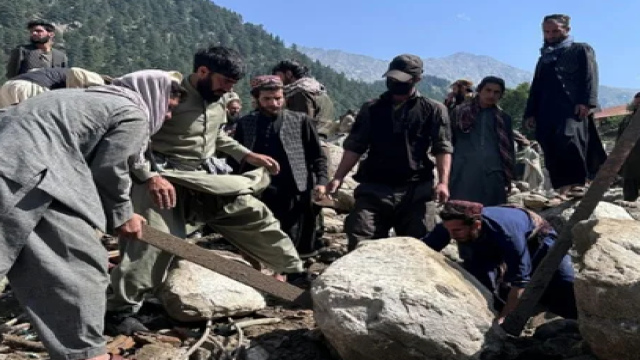
An AFP journalist saw dozens of people gathered in remote Parun, the provincial capital, using wooden poles and their bare hands to search for the missing. Farid Gul Zaheer, a 34-year-old pharmacist who was injured while trying to flee up the mountain, said he had "never witnessed such a dangerous flood. It felt like there was an earthquake, and I heard children and people screaming."
A bulldozer was of limited use in clearing debris in Parun, where the flood buried multiple shops and brought huge boulders that smashed into buildings. Parun's mayor and other government employees were among the missing, the governor's office said.
Zakirullah Zaki, manager of the Spogmai Hotel—still standing but surrounded by destruction—said it felt like "an act of God struck us. The rest of the hotels, markets, and shops were completely destroyed." His missing younger brother was later found.
Juma Khan Nayel, communications chief for the Afghan Red Crescent Society, described a "devastating situation" with water rising to unprecedented levels. Volunteers have been deployed with shovels, providing food, water, and tents for those whose homes were destroyed. Afghanistan's defence ministry said the military had been deployed to support relief efforts, while the UN said it was assessing the disaster.
Zaheer said he had "lost everything" and that "everyone is traumatised, they didn't sleep all night." The flooding has also affected neighbouring Pakistan, where 12 people were killed, according to Khyber Pakhtunkhwa's provincial disaster agency. Over 200 people died in flooding and rain that hit both countries between March and April.
Afghanistan is particularly vulnerable to climate change, and floods have increased, according to the head of the country's environmental protection agency. Mawlavi Mati-ul-Haq Khalis said this month that environmental problems "have severely affected the Afghan people and have contributed to a humanitarian crisis in the country."
end/wd/rh/