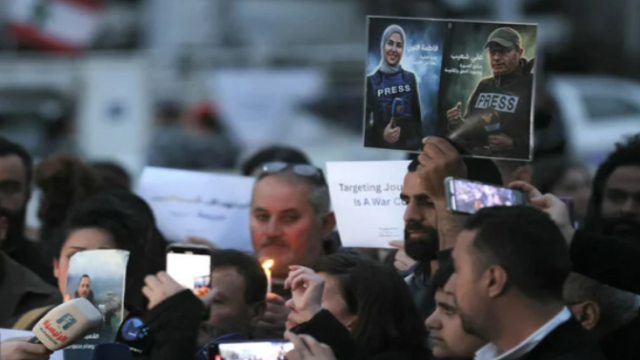
MAR 29 (V7N) - On Saturday, an Israeli airstrike killed three journalists in southern Lebanon, including Ali Shoeib, a prominent reporter for Hezbollah’s Al Manar network. The deaths have sparked outrage in Lebanon, with authorities condemning the attack as a "war crime."
The Israeli military confirmed the killing of Shoeib, accusing him of being part of Hezbollah’s operations while posing as a journalist. The military claimed that Shoeib had been actively helping Hezbollah by revealing the locations of Israeli Defense Forces (IDF) personnel in southern Lebanon.
The attack occurred as the Middle East war entered a new phase, with Hezbollah launching rockets into Israel in retaliation for the killing of Iran's Supreme Leader, initiating the current conflict. Israel’s response has included large-scale airstrikes across Lebanon and a ground offensive in the southern region. Lebanese authorities have reported at least 1,189 deaths since the start of the war.
Shoeib, who had covered Israeli attacks on Lebanon for decades, was killed along with Fatima Ftouni of Al Mayadeen and her brother, a cameraman, in the Jezzine area. Both Al Manar and Al Mayadeen confirmed the deaths. Lebanon’s President, Joseph Aoun, strongly condemned the killings, calling them a "blatant crime" and a violation of international norms protecting journalists in wartime.
Prime Minister Nawaf Salam and Information Minister Paul Morcos also criticized the attacks, stating they amounted to a breach of international humanitarian law and a war crime. The UN and other international bodies have also expressed concern over the targeting of journalists, who have been killed and injured in previous rounds of conflict between Israel and Hezbollah.
END/WD/RH/
This strike follows a similar attack earlier this month, where Al Manar's political programs director Mohammad Sherri was killed in central Beirut. Previous conflicts have seen several journalists targeted, including AFP’s Issam Abdallah and other reporters in 2023-2024.
Further Strikes and Casualties in South Lebanon
On the same day, Israeli airstrikes hit southern Lebanon, killing nine paramedics, according to Lebanon’s Health Minister, Rakan Nassereddine. Among those killed were four medics from Hezbollah's Islamic Health Committee and five from the Amal movement's Risala Scouts, both of whom were on rescue missions. Since the conflict began, at least 46 paramedics and other healthcare workers have died due to Israeli attacks in Lebanon.
Additionally, Israeli airstrikes targeted towns and villages in southern Lebanon, including residential areas and a fuel station in Nabatiyeh. The Lebanese army reported the death of a soldier in an airstrike on Deir Zahrani, while other civilians were killed by Israeli gunfire near the town of Henniyeh.
In retaliation, Hezbollah claimed responsibility for targeting Israeli military positions near the town of Taybeh, which lies along the Litani River, near Israel's border. Hezbollah also claimed to have struck Israeli forces in Debel, a predominantly Christian town, where some civilians remain despite ongoing hostilities.
The war has now reached a critical stage, with Israeli forces pushing north toward the Litani River and plans to establish a buffer zone up to 30 kilometers (20 miles) inside southern Lebanon. The conflict has escalated tensions in the region, with calls for immediate international intervention to prevent further loss of life.