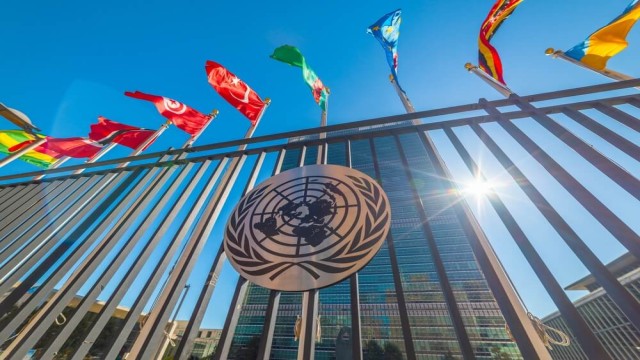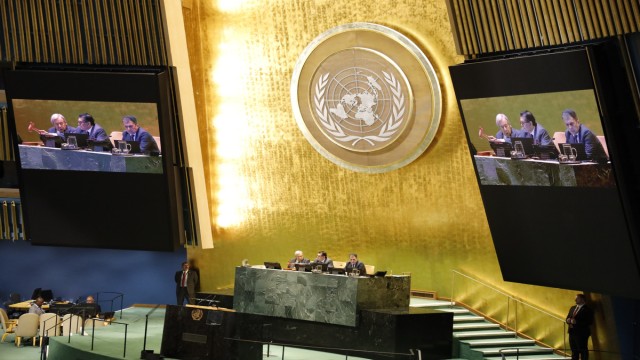
New York, Sept. 9 (V7N) - The United Nations General Assembly has opened its 81st session at UN Headquarters in New York, bringing together the Organization’s 193 Member States for a new year of multilateral diplomacy amid conflicts, humanitarian crises, climate emergencies, economic inequality and growing geopolitical tensions.
The 81st session officially opened on September 8, 2026, and will continue until September 7, 2027. The high-level General Debate is scheduled to take place from September 22 to 26 and on September 28, when world leaders and senior representatives will address the Assembly.
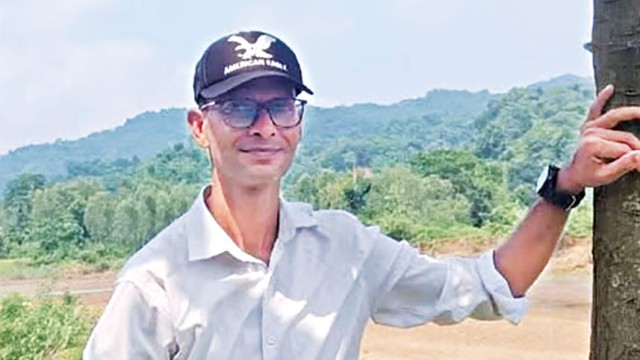
The session is being led by Dr. Khalilur Rahman of Bangladesh, who was elected President of the 81st session on June 2, 2026. He became the first Bangladeshi to serve as President of the UN General Assembly. The presidency was elected from the Asia-Pacific Group in accordance with the established regional rotation.
The central theme of the session is “Restoring Trust, Managing Transformation: A United Nations That Delivers for All.” The theme reflects the Presidency’s emphasis on rebuilding confidence in multilateral institutions while addressing major global transformations and ensuring that the UN delivers meaningful results for people and countries.
President’s priorities
In his programme for the 81st session, President Khalilur Rahman has outlined six interconnected pillars: silencing the guns and amplifying voices; ensuring that no one and no country is left behind; protecting the planet and advancing the Pact for the Future; strengthening rights and protection; promoting innovation with inclusion; and reimagining the UN as an institution serving “We the Peoples.”
Speaking at the opening of the session on September 8, Rahman said his principal commitment was to work to restore trust in the United Nations, emphasizing that confidence in the institution is essential for effective collective action. The Presidency has placed diplomacy, dialogue, consensus-building and international cooperation at the centre of its programme.
Rahman has also stressed the need for a more effective and responsive multilateral system capable of addressing conflicts, development challenges, climate change, technological transformation and inequalities. His vision seeks to connect peace, development, human rights and international cooperation rather than treating them as separate global challenges.
Secretary-General warns of mounting global challenges
UN Secretary-General António Guterres, addressing the opening of the 81st session, congratulated President Rahman and pledged his full support for his leadership.
Guterres welcomed the theme of the new Presidency, saying that rebuilding trust in the multilateral system is one of the defining challenges of the present time. He highlighted the need for stronger international cooperation at a moment marked by conflicts, divisions and the risk of nuclear escalation.
The Secretary-General also pointed to persistent poverty and inequality, worsening climate disruption, slow progress toward the Sustainable Development Goals, record-level displacement and increasing humanitarian suffering. He warned that funding for aid and development is being reduced while the institutions of the multilateral system are facing increasing pressure.
Guterres further raised concerns over the governance of artificial intelligence, noting that the technology offers enormous opportunities but also carries serious risks without appropriate governance and transparency, including regarding its environmental impact. He also expressed concern that international law and human rights are too often violated without accountability.
Despite the challenges, Guterres said he remained hopeful about the role of the General Assembly as a place where the world’s most difficult problems can be confronted through diplomacy, dialogue and cooperation.
He pointed to the Pact for the Future and the UN80 Initiative as important frameworks for action, solutions and institutional reform, saying that the work of the General Assembly will be crucial to turning those commitments into practical results.
Key issues before the 81st session
The 81st session comes at a critical moment for the international community. Among the major issues scheduled for high-level consideration are sustainable development, climate action and a just transition, rising sea levels, pandemic prevention and preparedness, the right to development, racial discrimination and the elimination of nuclear weapons.
The Assembly will also continue discussions on international peace and security, humanitarian crises, human rights, poverty and inequality, sustainable development, technological change and reform of the multilateral system.
The General Debate, scheduled to begin on September 22, is expected to provide a major platform for heads of state and government, foreign ministers and other senior representatives to present their countries’ positions on the most pressing international challenges.
A pivotal session for the United Nations
The opening of the 81st session comes as the United Nations approaches a period of major institutional and geopolitical challenges. The organization is seeking to strengthen international cooperation at a time when wars, humanitarian crises, climate-related emergencies, economic pressures and declining public trust are testing the effectiveness of multilateral institutions.
For Bangladesh, the session carries particular significance as Dr. Khalilur Rahman presides over the General Assembly, placing a Bangladeshi diplomat at the centre of the UN’s principal deliberative body.
As the session progresses, the General Assembly will provide a continuing forum for negotiations, high-level meetings and international dialogue aimed at finding collective responses to global challenges.
The overarching message from the opening days is clear: restoring trust, strengthening multilateral cooperation and ensuring that the United Nations delivers practical results for all will be central to the work of the 81st General Assembly.
END/SMA/AJ/