Mongla, Sept 04 (V7N) — A cyberbullying and blackmail case involving a woman beautician in Mongla has once again exposed a growing and deeply troubling problem in Bangladesh: the use of social media to harass, intimidate, defame and blackmail individuals, particularly women.
Police have arrested a man who allegedly presented himself as a journalist after a complaint was filed over a series of allegedly offensive and defamatory Facebook posts and videos targeting a woman beautician in Mongla, Bagerhat.
The case, however, is about more than one arrest. It highlights a wider question facing Bangladesh's increasingly digital society: how can victims of online abuse obtain protection and justice when social media can turn a personal attack into a public campaign within minutes?
Mongla case puts cyber abuse in the spotlight
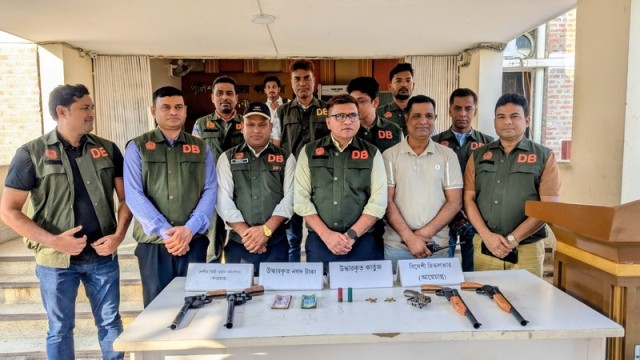
According to the case statement and police, the accused, Reza Masud alias Masud Rana, 40, was arrested during an operation in the Singapore Market area of Mongla municipality on September 2. He was subsequently sent to jail through the court on September 3.
Police said the arrest followed a case filed after the Bagerhat court directed Mongla Police Station to record the complaint under the relevant provisions of Bangladesh's cyber law.
The complainant, Md Al-Amin, alleged that the principal accused had identified himself as a journalist and had repeatedly published offensive and allegedly defamatory material about his sister, Kazi Keya, who runs a beauty parlour in Mongla.
Two other people have also been named as accused in the case.
According to the complaint, the accused allegedly used two Facebook pages to publish offensive comments and posts targeting Kazi Keya and other people in Mongla. The complainant further alleged that the posts were used to exert pressure and make demands for money or other concessions.
Police said their preliminary investigation found evidence supporting the allegations and that efforts were continuing to apprehend the other accused.
Mongla Police Station Officer-in-Charge Atikur Rahman said the arrested man had also faced allegations at different times of threatening and blackmailing people through cyber platforms.
All allegations remain subject to investigation and judicial proceedings.
The case has attracted wider attention because local residents have alleged that other people, including women, may have experienced similar forms of online harassment. Those allegations require independent verification by investigators.
A wider national problem
The Mongla incident comes at a time when cyber-enabled abuse is becoming an increasingly visible concern in Bangladesh.
A recent Bangladesh Sangbad Sangstha report, citing research and police data, said more than 63 per cent of women in Bangladesh had experienced some form of online violence. It reported that women aged 18 to 30 accounted for nearly 74 per cent of victims in the cited findings, while Facebook and Messenger were identified as major platforms where harassment occurred. Reported forms of abuse included fake profiles, hacking, doxing, blackmail, sexual harassment and the non-consensual distribution of personal images and videos.
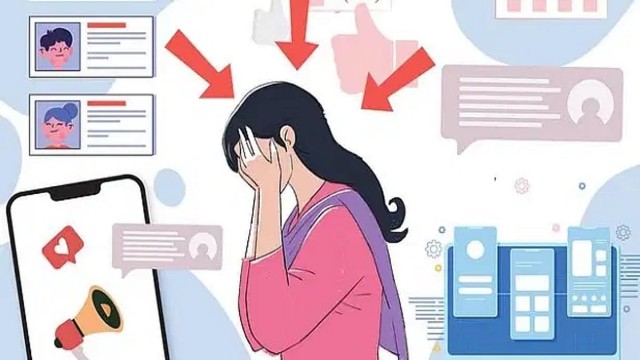
The figures illustrate why cyber abuse can no longer be treated simply as an online dispute. For victims, the consequences can extend into family life, employment, reputation, mental wellbeing and physical safety.
UN Women has also highlighted the scale of technology-facilitated violence against women in Bangladesh. In a 2026 report, the organisation said an unpublished study found that 66 per cent of surveyed women had received explicit or threatening messages on social media. UN Women has called for stronger prevention, better data collection, cooperation with technology companies and accountability for perpetrators.
When social media becomes a weapon
Cyberbullying does not necessarily require sophisticated hacking.
A fake account, manipulated photograph, defamatory post, threatening message or the repeated circulation of misleading information can be enough to damage someone's reputation.
In some cases, perpetrators allegedly collect personal information or images and then use the threat of publication to pressure victims into providing money or complying with demands.
Recent cases investigated by Bangladesh's Criminal Investigation Department demonstrate how such schemes can operate.
In January 2026, CID arrested a man accused of blackmailing a Bangladeshi woman living in the United States after allegedly obtaining private video material and threatening to distribute it. Investigators said the suspect had allegedly used a false identity and that the investigation was examining whether other women had been targeted.
In another case reported in April 2026, CID arrested a man accused of using a fake Facebook account to obtain private material and allegedly threaten a victim with its publication. Police said digital devices and SIM cards were recovered during the investigation.
In July, Dhaka Metropolitan Police also announced the arrest of five people over an alleged organised blackmail operation involving threats to release compromising material online.
These cases reveal a common pattern: technology is often not the cause of the abuse, but the tool through which intimidation, exploitation and extortion are carried out.
Women are particularly vulnerable
Technology-facilitated gender-based violence has emerged as a serious concern because online attacks can follow victims wherever they go.
A March 2026 investigation by The Daily Star examined the experience of women facing technology-facilitated abuse and highlighted difficulties survivors can encounter when seeking justice and support.
UN Women has similarly described online abuse as part of the wider spectrum of violence against women and girls, stressing the need for survivor-centred services and stronger institutional responses.
The problem is also not limited to women with public profiles.
A woman running a small business, a student, a teacher, a professional, a homemaker or a young social-media user can become a target.
Once harmful material is circulated, the victim may have little control over who sees it, copies it or republishes it.
That is why experts increasingly describe the issue as technology-facilitated violence rather than simply “Facebook trouble”.
Bangladesh's legal response
Bangladesh's legal framework has also evolved rapidly.
The government published the Cyber Security Act 2026 on April 15, 2026. The law specifically addresses a range of cyber-related offences and includes provisions dealing with blackmailing, sexual harassment, revenge pornography and sextortion through digital or electronic means.
Under Section 25, the law addresses the intentional transmission, publication, dissemination or threat to disseminate harmful digital material for purposes including blackmailing or sexual harassment.
The legal framework is continuing to develop. In July 2026, the ICT Division said a draft Cyber Security (Amendment) Act 2026 was under review, reflecting ongoing efforts to respond to emerging digital threats.
The changing legal environment demonstrates that cybercrime is no longer regarded as a marginal problem. But legislation alone cannot solve it.
At a roundtable in August 2026, experts and stakeholders warned that digital laws by themselves would not protect citizens unless authorities also addressed enforcement, accountability and platform responsibility.
What should a victim do?
Cybersecurity specialists and law-enforcement agencies repeatedly emphasise one principle: a victim should not remain silent.
The first priority should be personal safety and obtaining support from a trusted family member, friend, teacher, colleague or other responsible person.
Victims should also preserve evidence.
This may include:
- screenshots of posts, messages and profiles;
- the web address or username of the offending account;
- dates and times of communications;
- records of threats or demands;
- transaction records where money has been demanded or transferred; and
- copies of relevant emails, messages or other digital communications.
Evidence should be preserved carefully rather than repeatedly circulated among friends or posted publicly.
Victims should avoid responding to threats with threats of their own. They should also avoid paying a blackmailer simply because the perpetrator promises to stop. Instead, they should seek legal and law-enforcement assistance as quickly as possible.
UNICEF advises people experiencing cyberbullying to seek help from a trusted adult, report abusive material to the relevant platform and preserve messages and screenshots that may provide evidence.
For women facing cybercrime, Bangladesh Police operates Police Cyber Support for Women (PCSW), a specialised service intended to provide legal and technological assistance and to coordinate with appropriate police units. The police list the PCSW hotline as 01320000888 and the email address as [email protected].
The government Digital Literacy Center also advises victims to contact their nearest police station and provides information on cybercrime reporting channels, including emergency assistance through 999.
What should society do?
The responsibility for preventing cybercrime cannot rest solely on victims.
Families, schools, businesses, journalists, community leaders, law-enforcement agencies, technology companies and ordinary social-media users all have a role.
First, society must stop blaming victims.
When a woman's photograph, personal information or private communication is misused, the question should not be why she trusted someone. The question should be why someone chose to exploit that trust.
Second, people must stop amplifying harmful content.
Sharing an abusive post “to expose the offender” can unintentionally increase its reach and deepen the victim's suffering.
Third, social-media users should learn to distinguish journalism from anonymous pages and individuals who simply describe themselves as journalists.
The media profession carries ethical responsibilities. A Facebook page, profile or social-media account does not automatically become a legitimate news organisation merely because it uses the words “news”, “press” or “journalist”.
A 2026 investigation by Dismislab, published by Prothom Alo English, found that several Facebook pages were using the appearance and language of news organisations while publishing sexually aggressive and harassing content targeting women.
The Daily Star also reported in May 2026 that a number of Facebook pages presented themselves as media or news organisations while publishing content that objectified women for engagement and profit.
These developments raise a broader issue for journalism: the misuse of the identity of the press can damage not only individual victims but public trust in legitimate journalism itself.
The responsibility of platforms
Social-media platforms also have a crucial role.
When abusive material is reported, platforms should respond promptly, protect victims from further exposure and make reporting mechanisms accessible.
Bangladesh's government has recognised this challenge. In June 2026, the Home Minister told Parliament that the government was working on amendments intended to address harmful content, AI-generated deceptive media, fake identities and online harassment, while also seeking greater accountability from international technology platforms.
The emergence of artificial intelligence has added another layer of risk.
AI-generated or manipulated photographs, videos and audio can make false material appear convincing. This makes digital literacy, verification and rapid reporting increasingly important.
The role of journalists
There is another lesson from cases such as the Mongla incident.
Journalists have a responsibility not to become amplifiers of cyber abuse.
News organisations should verify allegations before publication, provide the accused an opportunity to respond where appropriate, protect the identity and dignity of vulnerable victims, and avoid reproducing harmful images or allegations merely because they are circulating online.
A cybercrime report should expose the alleged wrongdoing without becoming another vehicle for spreading the very material that harmed the victim.
Responsible journalism means separating allegations from established facts.
In the Mongla case, for example, the allegations against the arrested man should remain identified as allegations unless and until established through the legal process.
A warning for young people
Young people are among the most active users of social media and are therefore also exposed to cyberbullying, impersonation, manipulation and harmful content.
UNICEF has repeatedly warned that children and adolescents can face online bullying, exploitation and privacy violations. Its guidance encourages open communication with trusted adults, careful privacy settings and prompt reporting of abusive behaviour.
A 2025 UNICEF youth poll in Bangladesh, involving almost 29,000 respondents, found that misinformation was the leading reported source of stress on social media, while bullying and negative comments were also significant concerns.
Digital literacy therefore needs to become part of everyday education.
Young users should learn that an online conversation can leave a permanent digital trail, that strangers may not be who they claim to be, and that personal information should not be shared casually.
From individual cases to a national challenge
The Mongla case is therefore more than a local criminal investigation.
It is part of a much larger national conversation about privacy, dignity, women's safety, digital literacy, responsible journalism and accountability in the online environment.
The growing number of reported cases suggests that Bangladesh needs a coordinated response involving law enforcement, courts, technology companies, educational institutions, civil society and the media.
Police need adequate cyber-forensic capacity and trained personnel.
Victims need accessible reporting channels and survivor-centred support.
Courts need effective mechanisms to process cybercrime cases.
Technology platforms need responsive and transparent reporting and takedown systems.
Schools and universities need stronger digital-safety education.
And society needs to reject the culture of online humiliation in which personal attacks are treated as entertainment.
A safer digital Bangladesh
Cybercrime cannot be defeated simply by passing new laws.
It requires enforcement, awareness, accountability and a change in social behaviour.
The lesson from cases such as the Mongla investigation is clear: a social-media post can have consequences far beyond a computer screen or mobile phone.
A false allegation can damage a reputation.
A threat can create fear.
A blackmail attempt can disrupt a family.
A manipulated image can spread before the victim even knows it exists.
And repeated online harassment can cause profound psychological distress.
For that reason, victims should not be isolated or blamed. They should be supported, evidence should be preserved, complaints should be reported and investigations should be allowed to follow due process.
At the same time, those who misuse digital platforms to threaten, blackmail, harass or deliberately destroy another person's reputation must understand that the internet is not a law-free space.
Bangladesh's challenge now is to ensure that its laws, institutions and digital platforms move as quickly as the technology itself.
The ultimate goal should not merely be fewer cybercrime cases.
It should be a digital society in which women and men can use technology without fear, victims can seek justice without stigma, and social media becomes a tool for communication and opportunity rather than a weapon for intimidation and abuse.
END/AHS/SMA/