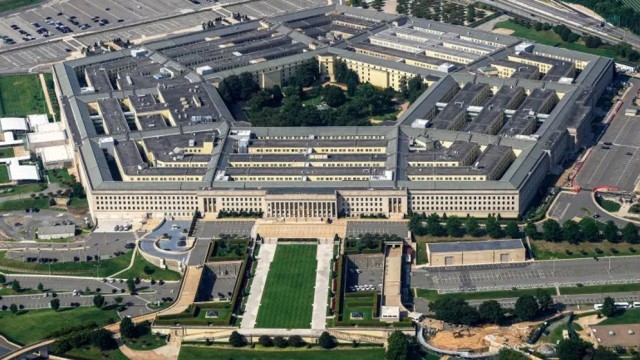
Washington, Jun 02 (V7N) — The United States Department of Defense, commonly known as the Pentagon, has barred journalists from entering its press office, marking the latest move in a series of measures that have restricted media access to military and government activities since President Donald Trump returned to the White House.
Acting Pentagon Press Secretary Joel Valdez announced on Monday that the press office has been redesignated as a Sensitive Compartmented Information Facility (SCIF), citing the presence of speechwriters who regularly work with classified government information.
According to Valdez, these officials require access to the Secret Internet Protocol Network (SIPRNet), a secure communications system used by the Pentagon for handling sensitive information. As a result, journalists will no longer be permitted to enter the office area.
He added that access to the Office of the Secretary of Defense for Public Affairs and the Pentagon press secretary’s office will now be granted only through prior appointments.
The decision follows earlier restrictions introduced by the Defense Department. In March, the Pentagon announced that news organizations would no longer be allowed to maintain office space within the building following a court ruling related to a lawsuit filed by The New York Times over revised press accreditation policies.
Under the new regulations, journalists working inside the Pentagon complex are also required to be accompanied by government escorts. The New York Times has challenged that policy in a separate legal case.
The move has drawn criticism from press freedom advocates and journalism organizations.
The National Press Club, one of the country's leading organizations representing journalists, condemned the decision, describing it as a troubling indication of increasing restrictions on media access.
National Press Club President Mark Schoff Jr. said that limiting journalists' access to the institutions they cover reduces transparency and public oversight.
“When journalists are removed from the institutions they cover, the public receives less information, less transparency and less accountability,” he said. “Any effort to restrict access to news gathering should raise concerns in a democratic society.”
The latest restrictions have intensified concerns among media organizations about press freedom and government transparency in the United States.
END/SMA/AJ