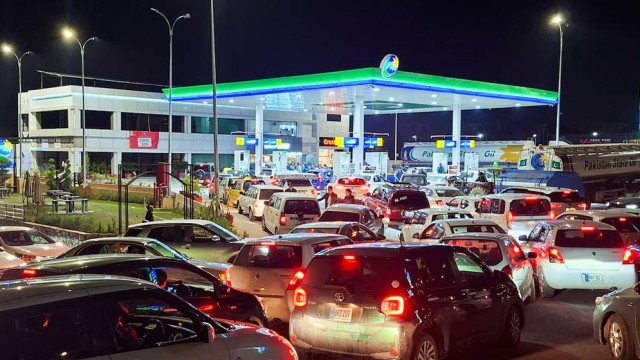
ISLAMABAD, Apr 03 (V7N) — Grappling with the severe economic fallout of the intensifying U.S.-Iran conflict, Pakistan has announced one of the largest fuel price increases in its history. On Thursday (April 2), the government raised petrol and diesel prices for the second time in less than a month, as the maritime blockade and volatility in the Strait of Hormuz continue to choke energy supplies.
The new rates, which represent a staggering jump in the cost of living, were justified by the administration as an "inevitable" response to the skyrocketing cost of crude oil on the international market.
The New Price Breakdown (Effective April 2, 2026)
The price adjustment has pushed fuel costs to unprecedented levels in Pakistani Rupees (PKR):
| Fuel Type | New Price (per Litre) | Increase (PKR) | Percentage Hike |
| High-Speed Diesel (HSD) | Rs 520.35 | + Rs 185 | 55% |
| Petrol (MS) | Rs 458.40 | + Rs 137 | 43% |
| Kerosene Oil | Rs 468.00 | + Rs 34 | — |
| Light Diesel Oil (LDO) | Rs 395.00 | + Rs 30 | — |
Note: This follows a previous hike on March 6, where petrol and diesel were already increased by Rs 55 per litre.
Government Justification
Energy Minister Ali Pervaiz Malik addressed the nation following the announcement, citing the direct impact of the Middle East war on global logistics.
-
Global Market Volatility: Malik stated that crude oil prices have gone "out of control" due to the conflict, making it impossible for the state to maintain previous subsidies without risking a total economic collapse.
-
Supply Chain Vulnerability: As a country heavily dependent on imports from Saudi Arabia and the UAE, Pakistan’s energy security is tied to the Strait of Hormuz. The ongoing military aggression in the region has caused significant disruptions to this vital shipping route.
Targeted Relief Measures
Recognizing the potential for civil unrest and the immense pressure on the working class, the government has proposed a "limited subsidy" plan. This framework aims to provide some relief to:
-
Low-income households and marginalized populations.
-
Farmers (essential for the upcoming harvest season).
-
Motorcyclists and the public transport sector to prevent a total standstill of the national economy.
Comparison with Regional Impact
The crisis in Pakistan mirrors the energy strain felt across South Asia. In Bangladesh, while petrol and diesel prices have been kept stable so far through government intervention, the price of 12kg LPG cylinders was increased by Tk 378 just yesterday. Analysts warn that if the war persists, further adjustments across all fuel categories may be unavoidable for all importing nations in the region.
The massive hike in diesel—often called the "engine of the economy"—is expected to trigger immediate inflationary spikes in food transportation and industrial production costs across Pakistan in the coming days.
END/SMA/AJ