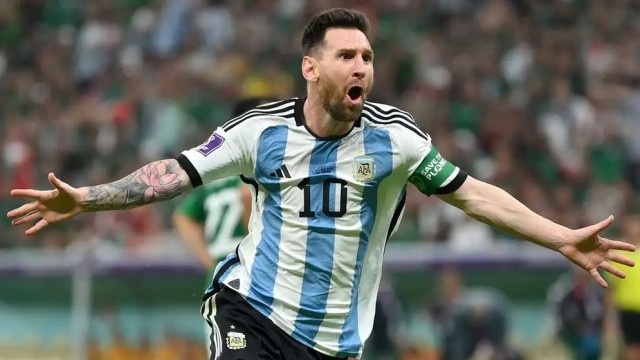
Buenos Aires, Jun 09 (V7N) – If Argentina successfully defends its FIFA World Cup crown in 2026, legendary captain Lionel Messi is expected to be at the center of the achievement once again.
At 38, Messi is preparing for what could be his sixth FIFA World Cup appearance, a milestone that would see him equal the record held by Cristiano Ronaldo and Mexico goalkeeper Guillermo Ochoa for the most World Cup participations.
Over the past two decades, Messi has transformed himself multiple times, evolving from a teenage winger into one of football’s most complete players. Unlike many stars whose influence fades with age, Messi has repeatedly adapted his style to remain among the game's elite.
The Argentine icon made his first-team debut for Barcelona in 2003 as a right winger. His dribbling ability and attacking creativity quickly caught the attention of teammates and coaches. Brazilian legend Ronaldinho famously predicted that Messi would one day become the world's best player.
A major turning point came in 2008 when then-Barcelona coach Pep Guardiola moved Messi from the wing into a central “false nine” role. The tactical shift revolutionized Barcelona’s attack and helped Messi dominate European football. His performance in Barcelona’s 6-2 victory over Real Madrid at Santiago Bernabéu in 2009 showcased a new version of the Argentine star, capable of controlling matches as well as scoring goals.
Between 2011 and 2013, Messi produced one of the most prolific scoring periods in football history, netting 96 goals in just 69 La Liga matches.
As Barcelona’s legendary midfield partnership of Xavi and Andrés Iniesta gradually departed, Messi reinvented himself once more. He dropped deeper into midfield, becoming the team's chief playmaker while continuing to contribute goals and assists.
His international career also experienced dramatic highs and lows. After suffering defeats in the 2014 FIFA World Cup final and the 2015 and 2016 Copa América finals, Messi briefly retired from international football. However, he returned stronger, adopting a more vocal leadership role.
That transformation paid off when Argentina ended a 28-year trophy drought by winning the 2021 Copa América, defeating Brazil in the final. The triumph paved the way for an even greater achievement at the 2022 FIFA World Cup in Qatar, where Messi led Argentina to global glory.
His memorable performances against Croatia in the semifinals and France in the final demonstrated not only his technical brilliance but also his maturity and leadership under pressure.
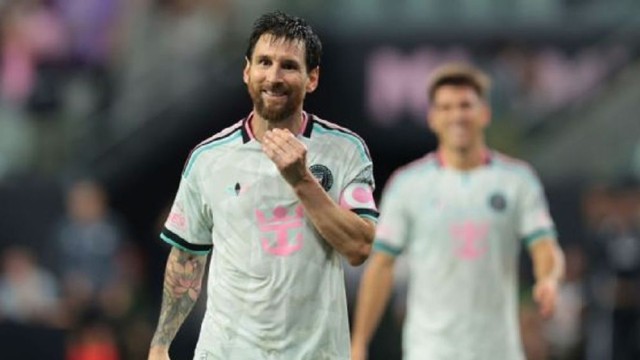
Now playing for Inter Miami, Messi runs less than he did in his younger years, but many analysts view this as a sign of football intelligence rather than decline. By conserving energy and reading matches effectively, he continues to influence games at crucial moments.
More than a collection of trophies and records, Messi’s career has become a story of continuous evolution—from teenage winger to false nine, from elite playmaker to World Cup-winning captain, and now to a veteran leader guiding Argentina’s pursuit of another historic World Cup triumph.
Source: BBC
END/SMA/AJ