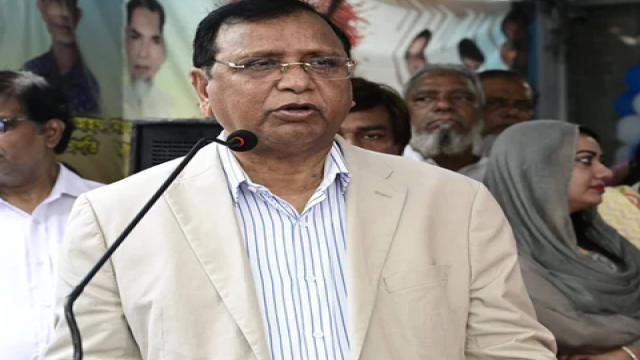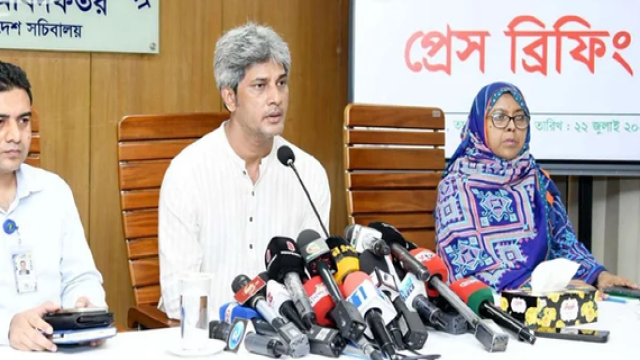
DHAKA, July 22, (V7N) – The government has undertaken a comprehensive set of measures to overhaul Bangladesh's public project implementation system by reducing delays, strengthening accountability, introducing a new policy for appointing project directors, revising construction rate schedules, and improving monitoring through digital platforms, said State Minister for Planning Md. Zonayed Abdur Rahim Saki today.
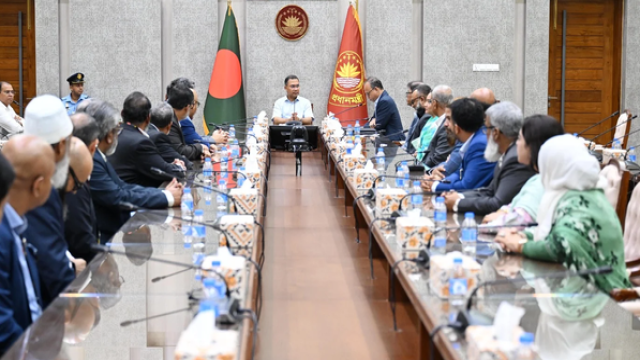
Briefing reporters after the ECNEC meeting, presided over by Prime Minister and ECNEC Chairman Tarique Rahman, the state minister said the initiatives aim to ensure faster implementation, prevent unnecessary expenditure, and make public investment more effective amid the government's priority on economic recovery.
The ECNEC meeting approved eight development projects involving a total estimated cost of Tk 14,041.21 crore. Another project on protecting areas in Bhola from Meghna River erosion was returned with observations and will be revised for the next meeting.
Saki said the Prime Minister reviewed every project in detail, issuing directives focusing on eliminating wasteful expenditure, improving financial discipline, and ensuring greater value for taxpayers' money. He noted that under the prevailing practice, projects often require one-and-a-half to two years after ECNEC approval merely to complete procedural formalities—a lengthy process that significantly affects ADP implementation and delays economic benefits.
The government is therefore preparing a comprehensive framework to simplify procedures, reduce bureaucratic delays, and ensure quicker execution. Ongoing projects are being reviewed through "re-scoping," where components may be expanded, reduced, added, or dropped based on relevance and priority, aligning all public investment with the election manifesto, five-year strategic framework, and long-term priorities.
Four Major Reform Initiatives:
1. Five-Year Strategic Development Framework: Already approved in principle by the NEC, awaiting formal approval as a national policy document.
2. Digital Dashboard: Will enable real-time monitoring of every development project.
3. Institutional Weakness Review: IMED has submitted a report identifying implementation bottlenecks. A draft policy for appointing Project Directors is being prepared, introducing transparent procedures, competency-based selection, and structured capacity-building. Training modules are already developed, with the reform package expected to be completed within 180 days.
4. Integrated Digital Platform: Extensive automation is being pursued across the Planning Division, IMED, BPPA, BBS, NBR, CAG, Bangladesh Bank, and ICT-related citizen databases.
Following the Prime Minister's directives, a high-level committee has held two meetings and is scheduled to meet again tomorrow to prepare revised rate schedules.
On accountability, Saki said a preliminary investigation report on the delayed Rupsha road construction project in Khulna was placed before the ECNEC meeting. The Prime Minister directed authorities to determine responsibility and take appropriate action against those found responsible.
Expressing optimism, the state minister said the government expects to complete major institutional reforms within six months. "Once implemented, the new system will substantially improve project implementation, strengthen public accountability, enhance ADP execution, and contribute to accelerating Bangladesh's economic recovery and sustainable development," he added.
END/