Dhaka, Oct 8 (V7N) – The Government of Bangladesh and the United Nations have launched a 30-month Joint Programme to support migrants and returnees to rebuild their lives with dignity and access the social support they need to recover and thrive.
The initiative brings together five UN agencies—the International Organization for Migration (IOM) , International Labour Organization (ILO) , UN Population Fund (UNFPA) , United Nations Children's Fund (UNICEF) , and UN Women—to respond to the medium-to-long-term reintegration needs of Bangladeshi migrants and returnees. Supported by the UN's Migration Multi-Partner Trust Fund (MPTF) , the programme will enhance social protection mechanisms and social inclusion, with a focus on vulnerable women, children, and crisis-affected migrants.
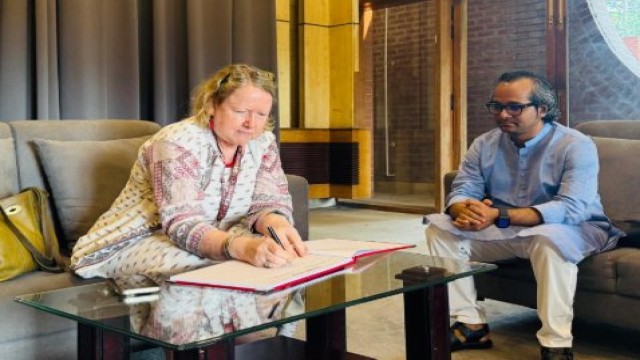
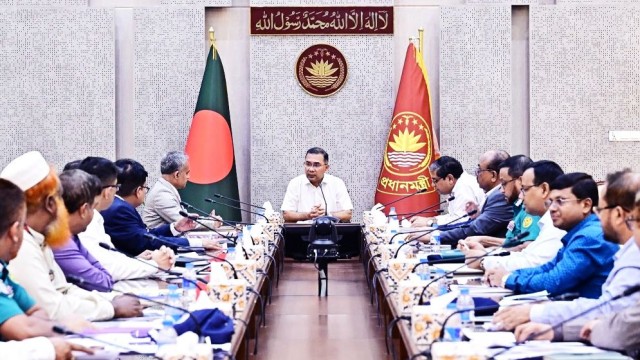
The agreement was signed today by Md Shahriar Kader Siddiky, Secretary of the Economic Relations Division (ERD), and Dr Laura Tomm Bonde, IOM Chief of Mission in Bangladesh. The Ministry of Expatriates' Welfare and Overseas Employment (MoEWOE) will implement the project as the lead government ministry.
Key officials present at the signing ceremony included A. K. M. Sohel (Additional Secretary and Chief of the UN Wing at ERD), Md Saiful Haque Chowdhury (Additional Secretary, Ministry of Expatriates' Welfare and Overseas Employment), and Dr Kazi Shahjahan (Joint Secretary of the UN Wing of ERD).
"Returnees and their families need services, opportunities, and systems that help them rebuild their lives and contribute to their communities," said Md Shahriar Kader Siddiky, Secretary, ERD. "This partnership will help strengthen that support through coordinated action by the Government and UN agencies." He focused on creating opportunities for returnee migrants and addressing women's vulnerabilities, reinforcing the need for a database and a mechanism to support returnee migrants for their livelihood with dignity. Shahriar reiterated the urgency of better coordination among government agencies, UN agencies, and CSOs for creating shared resources and effective partnerships for safe migration.
In her remarks, IOM Chief of Mission Dr Laura Tomm Bonde said, "Migration is not a linear process. Returning home should be the beginning of sustainable recovery for those in need with the necessary support structures in place." She added that "sustainable reintegration requires enhanced support on the individual, community, and structural levels. Through this Joint Programme, the UN will bring their expertise together to support the Government of Bangladesh to continue building a coordinated and migrant-centred reintegration ecosystem."
The Joint Programme will support government institutions and gender-responsive civil society organizations to identify vulnerable returnees and connect them with gender-responsive reintegration services. Key interventions include tailored reintegration planning, capacity building for service delivery, and piloting targeted programmes—such as labour market integration, financial literacy training, psychosocial support, community outreach, addressing discriminatory social norms, and enhancing district-level coordination.
More than 13 million Bangladeshis have travelled abroad for work since 2004, including over one million women, according to the Bureau of Manpower, Employment and Training (BMET). Upon returning home, many struggle to secure employment, access essential services, and cope with the psychological toll of their journeys. These challenges are particularly severe for those forced to return suddenly or in the wake of a crisis.
The programme contributes to Bangladesh's national goals on return and reintegration, as well as Objective 21 of the Global Compact for Safe, Orderly and Regular Migration on dignified return and sustainable reintegration. It also contributes to the 2030 Agenda for Sustainable Development, particularly Sustainable Development Goal 5 on Gender Equality, Goal 8 on Decent Work and Economic Growth, and Goal 10 on Reduced Inequalities.
end/aj/rh/