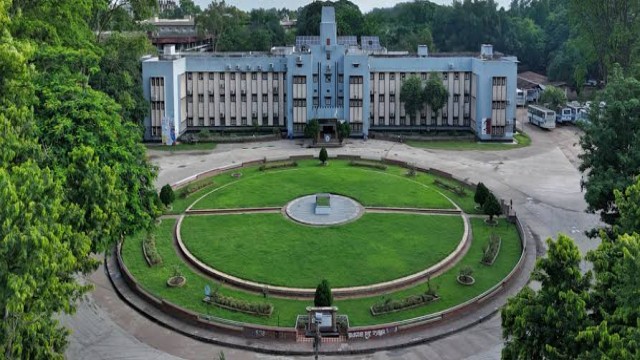
Rangamati, Oct 03 (V7N) – The Bangladesh Power Development Board (BPDB) has proposed a Tk 869 crore 97 lakh rehabilitation project to restore lost generation capacity at Units 4 and 5 of the Karnaphuli Hydroelectric Power Station in Kaptai, the country’s only hydropower plant.
The project aims to recover around 20 to 30 megawatts of generation capacity currently lost due to ageing equipment, structural damage and outdated control systems. If implemented, the two units are expected to regain their combined installed capacity of 100MW.
Each of Units 4 and 5 has a generation capacity of 50MW. However, the units currently generate around 35–40MW each, leaving 20–30MW of their combined capacity unused.
The proposed project is expected to be financed through Tk 656 crore 98 lakh in foreign loans, Tk 200 crore 58 lakh from the government and Tk 12 crore 40 lakh from BPDB’s own funds. A loan from the Japan International Cooperation Agency (JICA) is being considered for the foreign-financing component. The Preliminary Development Project Proposal has already been sent to the Planning Commission for in-principle approval.
Ageing Units Face Technical Problems
Units 4 and 5 were installed in 1988 and have been operating for decades. According to project documents, both units now face several technical problems, including damage to structural components, ageing foundations and obsolete control and protection systems.
The units’ rotor rim supporting structures have suffered damage, while ageing foundations have contributed to deformation of the stators and uneven magnetic forces. Their outdated control systems and difficulty in obtaining spare parts have also made maintenance increasingly difficult.
In 2017, a rotor rim supporting ledge of Unit 4 broke while the unit was operating, damaging the stator windings and causing a short circuit. Similar cracks were subsequently detected in Unit 5.
Toshiba, whose technology was used in the generators, recommended full rehabilitation. However, financial and logistical constraints prevented the complete overhaul from being carried out. Instead, partial repairs, including coil replacement and welding of damaged components, were undertaken to keep the units operational.
The BPDB made several attempts to undertake major repair and rehabilitation works. A government procurement record also shows that repair and material-supply work for the stators and rotor spokes of Units 4 and 5 was tendered in 2022.
Rehabilitation Plan
The proposed project includes the rehabilitation or replacement of major components of the generators and turbines. These include rotor rim supports, stator coils, rotor poles, insulation, turbine runners, shaft seals and bearings.
The project also proposes modernising the governor, automation, control, electrical, excitation and auxiliary systems to improve operational reliability and safety.
BPDB officials say the rehabilitation is necessary to prevent further deterioration, reduce the risk of major mechanical failures and restore the plant’s generation capacity. The current project plan envisages implementation from 2027 to 2029.
Karnaphuli Hydroelectric Power Station Manager Engineer Mahmud Hasan said the rehabilitation proposal was prepared in line with BPDB’s directives.
He said the project would help restore the two units’ full 100MW generation capacity while reducing the risk of major mechanical problems.
Greater Use of Kaptai Lake Water
Another objective of the rehabilitation is to make better use of water from Kaptai Lake during the monsoon.
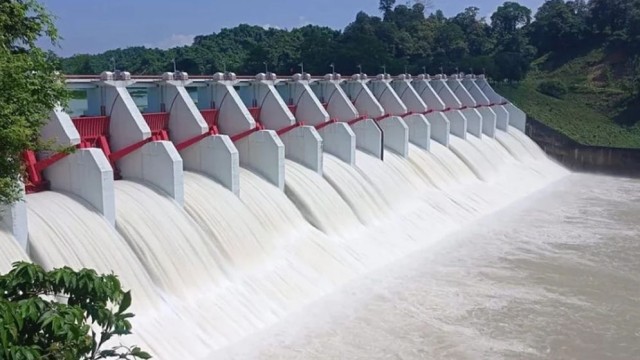
When the lake reaches its safe storage limit, excess water has to be released through the spillway. The authorities hope that improving the condition and efficiency of Units 4 and 5 will allow more of the available water to be used for power generation rather than being released without generating electricity.
Mahmud Hasan said effective water management was important for maximising the use of the country’s water resources.
The Kaptai plant has an installed capacity of 230MW across its five units. However, generation fluctuates significantly depending on the lake’s water level. In April 2026, for example, only one unit was operating amid a sharp decline in the lake’s water level.
The proposed rehabilitation therefore comes as part of efforts to preserve the existing hydropower infrastructure and make better use of its generation potential.
If approved and implemented, the project could restore the 20–30MW currently lost from Units 4 and 5 while improving their long-term reliability. Its implementation, however, will depend on project approval, financing arrangements and the subsequent procurement and construction process.
END/AMR/SMA/