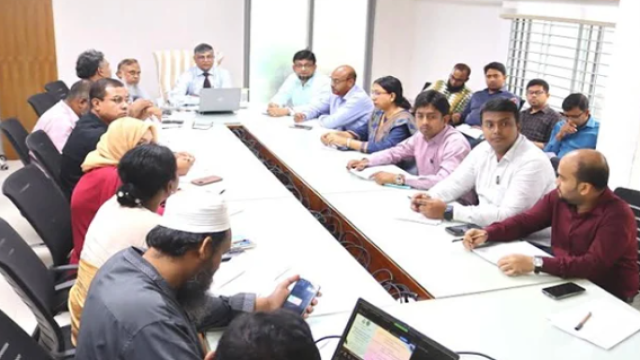
Khulna, Sept 24 (V7N) – Speakers at a pre-conference awareness workshop at Khulna Agricultural University (KAU) today stressed the need for research, innovation and technological collaboration to develop smart and sustainable agricultural systems to address the impacts of climate change.
The workshop, titled "Smart Agriculture for a Sustainable Future: Research, Innovation and Collaboration," focused on the potential of smart technologies, research and innovation in building a sustainable future for agriculture. KAU organised the workshop in collaboration with the Centre for Smart Village and Smart City Studies.
KAU Vice-Chancellor Prof Dr Md Asaduzzaman Sarker attended the programme as the chief guest, while university Treasurer Prof Dr Shamim Ahmed Kamal Uddin Khan was present as the special guest. Dr Mohammad Nazrul Islam chaired the event. Professor Dr Nazmul Siddiq of the School of Computer, Engineering and Intelligent Systems at Ulster University, UK, delivered the keynote presentation.
Speaking at the workshop, the VC underscored the importance of agriculture in addressing the growing impacts of climate change. He said climate change is posing new challenges to agricultural production, food security and the livelihoods of farmers. An integrated approach combining sustainable farming practices with modern technologies, research and innovation is essential to address these challenges, he added.
The workshop discussed the application of modern technologies in smart agriculture, including:
-
Artificial intelligence
-
Agricultural robotics
-
Data analytics
-
Automated farming systems
-
Smart irrigation
-
Crop health monitoring
-
Climate-resilient agricultural models
The workshop is part of preparations for an upcoming international conference on smart agriculture, bringing together researchers, academics, and practitioners from Bangladesh and abroad. Khulna Agricultural University, established in 2015, has been focusing on research and innovation to address the challenges facing agriculture in the southwestern region of Bangladesh, which is particularly vulnerable to climate change impacts such as salinity, waterlogging, and cyclones. The university has been collaborating with international institutions to develop climate-resilient crop varieties and smart farming technologies.
end/aj/rh/