Rangamati, Aug 30 (V7N) — Water levels in Kaptai Lake are rising rapidly due to heavy rainfall and an influx of water from upstream, flooding low-lying areas along the lakeshore and leaving residents waterlogged.
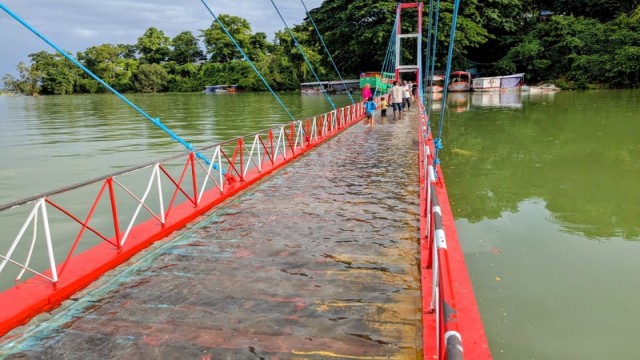
The rising water has also submerged Rangamati’s iconic Hanging Bridge, one of the district’s major tourist attractions. Around one foot of water has risen over the bridge deck, raising concerns about the safety of tourists using the structure.
As of Saturday afternoon, the water level of Kaptai Lake stood at 105.64 feet above mean sea level (MSL), against its maximum capacity of 109 feet MSL.
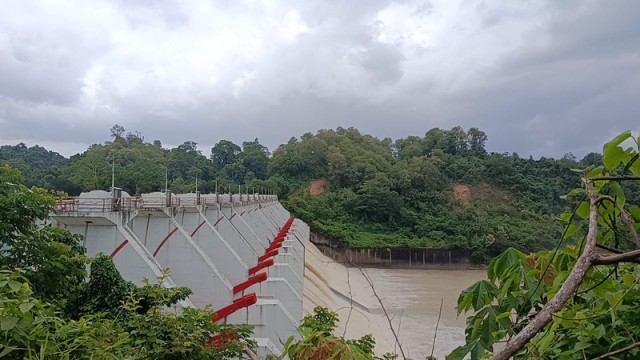
With the water level approaching the critical threshold, preparations are underway to release water through the spillway gates of the Kaptai Dam to manage the lake level and prevent flooding in upstream and downstream areas.
The Karnaphuli Hydropower Station authorities said 16 spillway gates at the Kaptai Dam may be opened by six inches each at around 10pm on Saturday. This would release approximately 9,000 cubic feet of water per second from the lake.
However, authorities are closely monitoring the lake’s water level, upstream inflow and overall rainfall situation. Depending on developments, the timing of opening the spillway gates may be brought forward or delayed.
If the inflow increases, the amount of water released through the gates may also be increased gradually, authorities said.
At present, electricity is being generated through all five units of the Kaptai Hydropower Station. The units are discharging approximately 32,000 cubic feet of water per second.
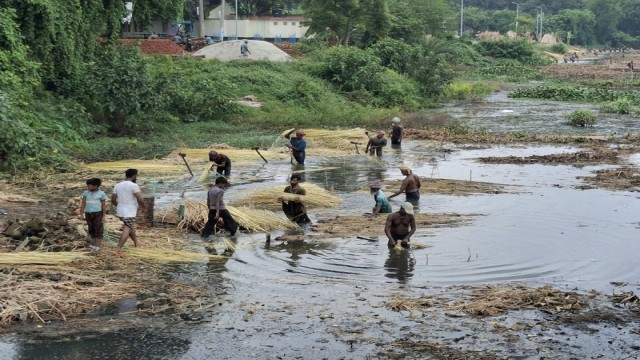
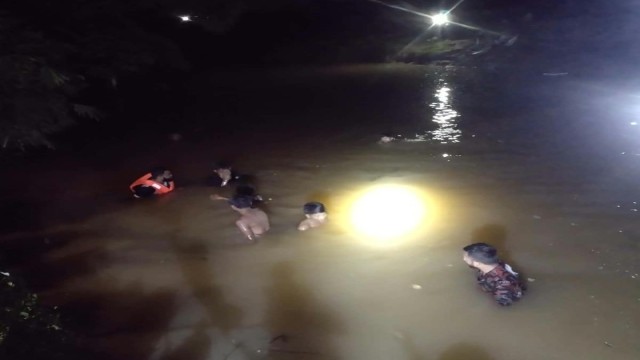
Meanwhile, rising water levels have already inundated several low-lying areas along the shores of Kaptai Lake.
Reports of flooding have come from low-lying areas of Baghaichhari and Langadu upazilas, as well as Bilaichhari and other areas. Water has entered homes and roads in some locations, increasing the suffering of local residents.
Residents fear the situation could deteriorate further if the lake level continues to rise, particularly in settlements located close to the lakeshore.
The most visible impact of the rising water has been seen at the Hanging Bridge in the Rangamati Tourist Complex area.
The 335-foot-long bridge, regarded as one of Rangamati’s principal tourist attractions and an iconic landmark, is now largely submerged, with around one foot of water covering sections of its deck.
Parts of the Hanging Bridge are submerged every year during the monsoon when the water level of Kaptai Lake rises. However, this year, the water has risen onto the bridge itself, prompting renewed concerns over tourist safety.
People involved in the local tourism industry said the Hanging Bridge is one of the main attractions for visitors to Rangamati. With the bridge submerged, many tourists travelling from distant areas are reportedly disappointed and returning without being able to visit it.
Local residents have called for warnings to be issued in the bridge area and, if necessary, for tourist access to be temporarily suspended in the interest of public safety.
The temporary closure or restricted access to the Hanging Bridge could also affect Rangamati’s tourism-dependent businesses. Hotels, motels, restaurants, tourist boat operators and other lake-based businesses could face losses if tourist numbers decline, local traders fear.
The continued rise in Kaptai Lake’s water level could also affect boat communications, fishing and the livelihoods of people dependent on the lake.
Meanwhile, relevant authorities are monitoring the lake’s water level, rainfall and upstream inflow. Depending on the overall situation, officials may adjust the volume of water released through the spillway gates while also giving priority to the safety of people living in low-lying areas around the lake.
END/AMR/SMA/