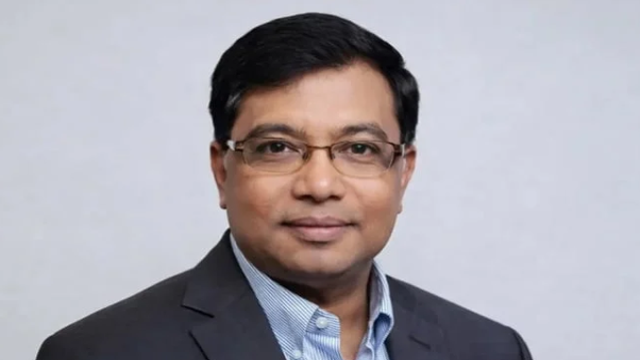
Savar, Aug 22 (V7N) – University Grants Commission (UGC) Chairman Professor Dr Mamun Ahmed today unveiled a plan to establish a 'Higher Education Academy' to provide institutionalised training for university teachers and develop academic and institutional leadership as part of a broader national agenda for transforming higher education in Bangladesh.
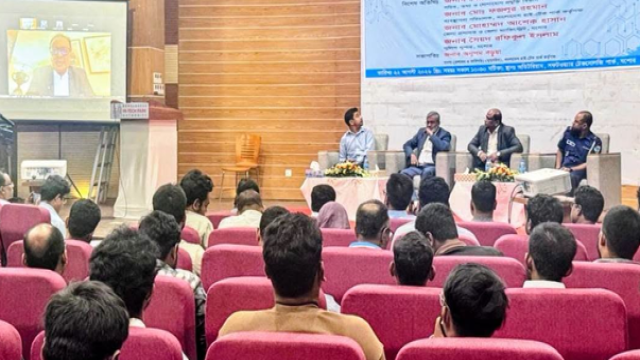
He presented the 'Transforming Higher Education in Bangladesh: A National Agenda for Sustainable Excellence (2026-2030)' at the concluding session of the two-day 'Vice-Chancellors' Dialogue: Shaping the Future of Higher Education' at BRAC CDM in Savar. Education Minister Dr A N M Ehsanul Haque Milon attended as the chief guest.
Professor Mamun said university teachers are at the core of higher education transformation, stressing the need for an institutional framework for faculty development, research capacity building, improvement of teaching and learning, and academic leadership.
"Just as there are training academies for public servants, we need an institutional training structure for the higher education sector as well," he said, adding that the proposed academy would provide training in education management, academic leadership, university administration, teaching and learning and higher education management. The UGC has already started working on the infrastructure and facilities required for the academy.
The UGC chairman also announced plans to expand PhD and postdoctoral opportunities for university teachers through collaboration with foreign universities, including joint programmes and structured assistance for living expenses. The UGC plans to establish an online research repository containing information on research conducted in Bangladesh to help identify research gaps and determine priority areas for future research funding.
Professor Mamun said a fellowship system would be introduced to facilitate faculty mobility between universities, allowing teachers from major-city universities to spend time teaching at universities outside major urban centres. Similar opportunities would be created for Bangladeshi academics working abroad to return and teach or conduct research at local universities.
"The UGC plans to establish a digital learning and innovation ecosystem across universities within the next two to three years, including high-speed internet, smart classrooms, smart libraries, digital student services, digital research infrastructure and digital administrative systems," he said, adding that digital connectivity would help reduce disparities between universities in Dhaka and those outside major cities.
The UGC chairman said the commission plans to develop a National Graduate Employment Framework to define the knowledge, skills and attributes graduates need to enter local and international job markets, covering subject knowledge, soft skills, digital literacy, communication, critical thinking, ethical values, workplace experience and leadership qualities.
Professor Mamun said Industry-Academia Advisory Boards would be established at universities to strengthen links with employers and industry, while curricula would be modernised in consultation with industry experts. The UGC also plans to introduce effective internships for students and gradually make them compulsory.
The commission plans to establish language centres in around 30 public and private universities without such facilities to promote third-language learning, enhancing graduates' employability and international opportunities. Universities would also be encouraged to organise year-round sports, cultural and extracurricular activities.
Professor Mamun said strengthening governance, institutional capacity and accountability would remain another major priority, including digital governance, improved quality assurance, updated recruitment and promotion policies and effective student support mechanisms. He also highlighted a proposal to establish a Higher Education Fund to provide additional resources.
"Whatever plans we make, university teachers remain at the core of the transformation. We have to put teachers, students, research and institutions at the centre of our efforts to achieve the desired transformation of higher education," he said.
The two-day dialogue was organised under the Higher Education Acceleration and Transformation (HEAT) Project of the UGC, bringing together vice-chancellors, policymakers, academics and experts to discuss the future of higher education in Bangladesh.
end/aj/rh