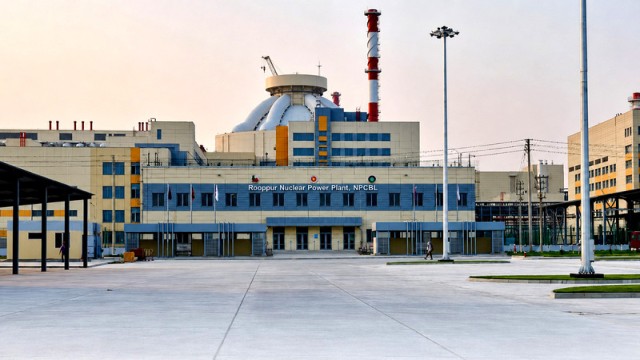
Pabna, July 25 (V7N) – The Nuclear Power Plant Company Bangladesh Limited (NPCBL) has said that recent media reports raising questions over the construction cost, equipment pricing and payment procedures of the Rooppur Nuclear Power Plant are based on a misunderstanding of the project's contractual and financial framework.
The state-owned project operator issued a detailed clarification, stating that the controversy arose from analysing isolated pieces of information without considering the complex contractual structure and financial arrangements of a nuclear power project.
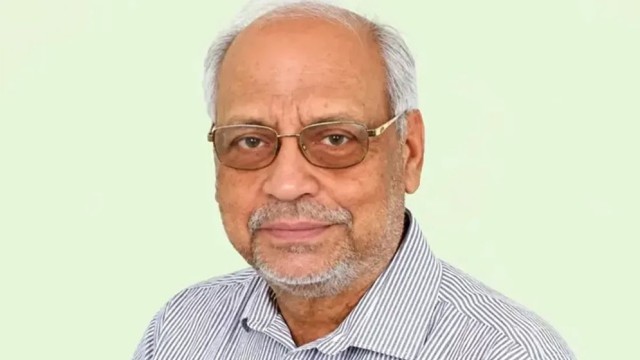
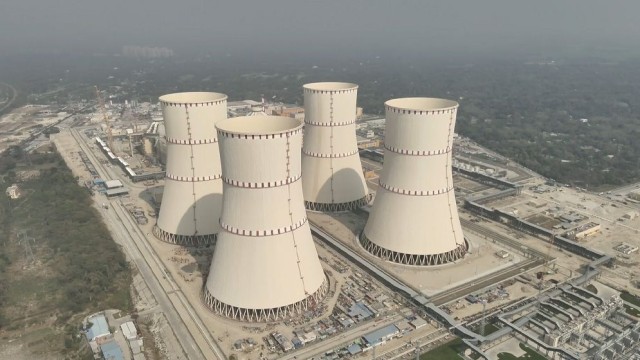
In a written statement issued on Friday, NPCBL Managing Director Dr Zahidul Hasan said Bangladesh’s first nuclear power plant has reached the final stage of preparation before operation. He described the project as a historic milestone for the country’s power sector, while emphasising that its planning, design, financing, construction, testing and commissioning processes are fundamentally different from conventional infrastructure projects.
Dr Hasan said the Rooppur project is being implemented under an Intergovernmental Agreement (IGA) signed between Bangladesh and the Russian Federation. Under the agreement, the Bangladesh Atomic Energy Commission (BAEC) and Russia’s JSC Atomstroyexport signed an Engineering, Procurement, Construction and Commissioning (EPCC) contract, while a separate Intergovernmental Credit Agreement (IGCA) was signed for project financing.
He clarified that the EPCC contract is not an agreement for purchasing or supplying individual equipment. Instead, it covers the complete design, construction, testing, commissioning and handover of a fully operational nuclear power plant.
The contract includes engineering design, safety assessments, equipment manufacturing, installation, system integration, commissioning, preparation of technical documents and training of plant operators.
According to Dr Hasan, the EPCC contract does not assign separate prices for individual components such as equipment, buildings, pipelines, construction works, installation or commissioning. Instead, a Whole Plant Contract Price has been determined for the entire power plant, with payments linked to specific project milestones.
He said presenting any milestone payment as the price of a particular piece of equipment, construction activity, supply item or commissioning work does not reflect the actual contractual structure of the project.
Regarding financing, Dr Hasan said 10 percent of the total project cost is being funded by the Bangladesh government, while the remaining 90 percent is being financed through a state loan from the Russian government.
He explained that the EPCC contract governs the technical implementation of the project, while the IGCA manages loan disbursement and financing procedures. Although the two agreements serve different purposes, both are integral parts of the same project.
Explaining the payment process, he said achieving a project milestone does not automatically allow BAEC to make payments to the contractor. First, the relevant milestone activities are verified according to the contract, followed by the signing of an Acceptance Document.
After approval, the milestone becomes eligible for financing under the credit agreement. The Russian Ministry of Finance then completes the disbursement process according to the provisions of the IGCA.
Dr Hasan stressed that milestone payments are not the prices of specific tasks, equipment, installation or commissioning activities. Rather, they are pre-agreed payments made upon successful completion of defined stages in the overall construction, installation, testing and commissioning process of the nuclear power plant.
He further said the VVER-1200 Generation III+ nuclear technology being used at Rooppur is an integrated and proprietary technology. The project follows internationally recognised EPCC procedures to ensure safety, reliability and regulatory compliance. Training Bangladeshi operators and transferring technical knowledge are also key components of the project.
Addressing concerns over government procurement procedures, Dr Hasan said competitive procurement is a general principle, but international projects involving unique technologies, intellectual property rights, security requirements and intergovernmental agreements may legally be implemented through single-source procurement.
He said the Rooppur Nuclear Power Plant is one such specialised international project.
Dr Hasan described the Rooppur project as a strategic investment for Bangladesh’s long-term energy security, technological advancement and sustainable development. He urged that discussions and evaluations of the project should consider internationally accepted nuclear project implementation standards, contractual realities and financing structures.
He added that responsible, fact-based discussions would help increase public awareness and ensure accurate information about the country’s first nuclear power project.
END/MSR/SMA/