Dhaka, Nov 11 (V7N)- The release on bail of former Inspector General of Police (IGP) Benazir Ahmed in the United Arab Emirates does not mean that the extradition process to bring him back to Bangladesh has ended, Home Minister Salahuddin Ahmed has told Parliament.
He said neither the issuance of an Interpol Red Notice nor the arrest of the person concerned automatically completes the extradition process.
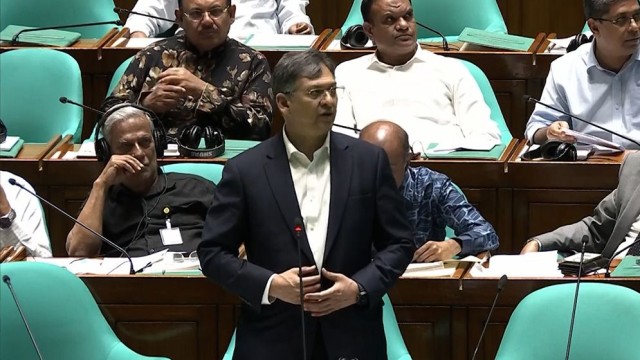
The Home Minister made the remarks in Parliament on Tuesday (November 10) while responding to a notice submitted by lawmaker Mir Ahmed bin Qasem under Rule 147 of the Rules of Procedure, seeking Benazir Ahmed's return to Bangladesh to face trial.
Salahuddin Ahmed said the government was providing Parliament with information about the steps taken to bring the former police chief back, following a resolution adopted by the House.
Describing the matter as sensitive and involving public interest, he said the government was proceeding in accordance with the rule of law, justice and international and diplomatic procedures.
He said that after a competent Bangladeshi court issued an arrest warrant against Benazir Ahmed, the relevant investigative agency initiated the process of seeking an Interpol Red Notice after verifying the necessary information and documents. Interpol subsequently issued the notice on April 11, 2025.
According to the Home Minister, on June 12, 2026, NCB Abu Dhabi officially informed NCB Dhaka that Benazir Ahmed had been arrested in the UAE.
At the same time, under Article 11 of the UAE's Federal Law No. 39 of 2006, Bangladesh was asked to submit a formal extradition request through diplomatic channels within 30 days.
Salahuddin Ahmed said Bangladesh did not wait until the deadline. Instead, the government submitted a formal extradition request to the UAE's Central Authority through diplomatic channels on June 16, just four days after receiving the notification.
A copy of the request was subsequently sent to NCB Abu Dhabi on June 21 for information and coordination.
Explaining the implications of Benazir Ahmed's bail, the Home Minister said extradition was a judicial and state-level process. The requesting country's central authority and courts examine the extradition request, alleged offences, arrest warrant, evidence and other legal requirements under their national laws before making a decision.
He stressed that a person's custody status or a decision taken by the judicial authorities of the requested country under its domestic laws did not necessarily mean that Bangladesh's extradition request had been withdrawn, rejected or concluded.
Granting bail, therefore, should not be interpreted as the end of the extradition process, he said. Nor should the legal and judicial steps already taken by the government be considered evidence of inaction or failure.
The Home Minister also said the government was pursuing legal action concerning assets allegedly held abroad in the names of Benazir Ahmed and his family members.
He said the Anti-Corruption Commission (ACC) had sent Mutual Legal Assistance Requests (MLARs) to the countries concerned. After receiving the necessary records and information, further legal steps would be taken to freeze, seize, confiscate or recover the assets in accordance with applicable laws, court orders and international legal cooperation mechanisms.
Salahuddin Ahmed added that Bangladesh had submitted its extradition request within the stipulated timeframe, provided additional documents requested by the UAE and appointed a local lawyer to handle the matter.
He said regular inquiries and coordination with relevant authorities regarding Benazir Ahmed's whereabouts and movements were also continuing.
The government would continue using all available legal, diplomatic and international police channels to bring the former IGP back to Bangladesh, the Home Minister said, adding that the process would be based on reliable official information and respect for the sovereignty and domestic laws of the UAE.
END/SMA/AJ