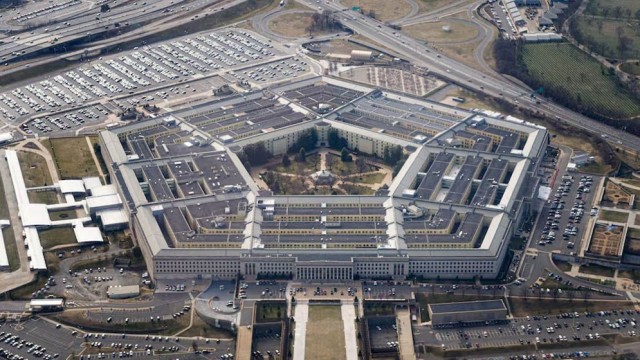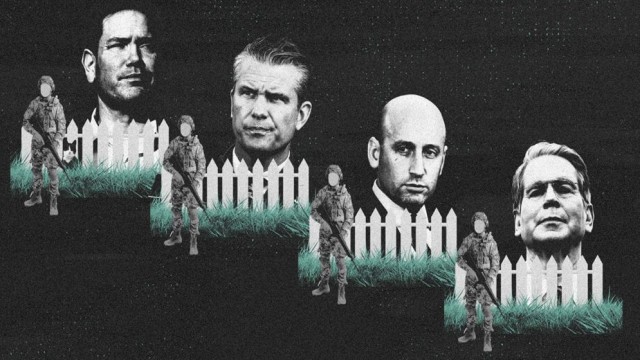
Washington, Nov 28 (V7N)- Several members of US President Donald Trump's cabinet have moved into military housing in Washington, D.C., citing growing security threats. The century-old residences, once reserved primarily for generals and senior military officials, are located inside heavily secured military installations and are inaccessible to the general public.
Around half a dozen members of the Trump administration are currently living in military residences in the capital. The trend is unusual in US political history, as senior civilian officials have rarely lived on military bases. However, rising domestic political violence and security concerns involving foreign powers have prompted officials to seek more secure accommodation.
Administration officials say military residences offer greater protection than private homes elsewhere in the city. However, experts warn that the growing separation of senior government officials from ordinary civilian life could affect a long-standing democratic tradition in the United States.
Ministers move into military housing over security concerns
Security concerns have intensified following incidents of political violence in the United States and reported threats from foreign adversaries.
According to a CNN report, Iran is planning to target senior Trump administration officials with a so-called 'dirty bomb' or chemical weapon attack in Washington. The report has added to concerns over the safety of high-ranking officials.
Treasury Secretary Scott Bessent recently left his luxury residence in Georgetown and moved to a secure military installation. Earlier this month, he told CNBC's Squawk Box that he had changed his residence because of threats against his life from Iran.
Bessent has been leading efforts to pressure Tehran through extensive economic sanctions. During the interview, he said he and other cabinet members had received death threats but would not retreat from their positions because of threats from Iranian leaders.
Attorney General Todd Blanche was also recently moved to military housing over similar security concerns, CNN reported, citing people familiar with the matter. His predecessor, Pam Bondi, also lived in military accommodation last year.
Not all the concerns involve foreign powers. Domestic political violence and threats against government officials have also contributed to the decisions. Security concerns have grown following the killing of conservative activist Charlie Kirk and a series of credible threats against public officials.
Last year, White House Chief of Staff Stephen Miller, his wife Katie and their four children moved from their home in Virginia to Fort McNair, a military base in Washington. The move followed a protest outside their residence in which a woman distributed flyers containing their home address.
A White House official said Miller and his family had faced a widespread and documented campaign of stalking, disclosure of personal information and threats, prompting them to relocate.
Lawmakers seek investigation into civilian officials' military housing
Some Democratic lawmakers have raised questions about the use of military accommodation by politically appointed civilian officials.
They have questioned whether such officials should occupy residences designated for military personnel and whether they are paying appropriate rent.
The Pentagon has been asked to submit a report to the House Armed Services Committee in the coming months. The report is expected to identify civilian officials living in military housing, explain the security threats behind their relocation, outline the legal basis for their accommodation and disclose the rent they pay.
Representative George Whitesides of California supported the proposal in the House Armed Services Committee. He said the issue required scrutiny, including an assessment of whether politically appointed officials were paying fair market rent.
Debate over rent for military residences
Military personnel living in these residences are required to pay rent. Depending on the size and facilities, monthly payments can exceed $4,500.
The cost of accommodating civilian officials in military housing has been debated before. Last year, Defence Secretary Pete Hegseth faced criticism after reports emerged that the US military was preparing to spend $137,297 renovating and modernising his residence.
The current rent arrangement dates back to a decision by former Defence Secretary Robert Gates, who served under presidents George W. Bush and Barack Obama.
Gates was the first defence secretary to live in military housing. He moved into a historic 19th-century mansion in Navy Hill, near the State Department.
At the time, federal law required civilian officials to pay rent comparable to that of similar properties outside military installations. Gates' monthly rent consequently exceeded $6,500.
However, the cost of installing security systems and providing round-the-clock protection at private residences prompted efforts to revise the rules. Congress eventually approved a new arrangement allowing defence secretaries to pay rent only 5 per cent higher than the amount charged to a four-star general or admiral.
Gates wanted his successors to benefit from the same arrangement. However, no other cabinet member moved into military housing after him for several years.
In 2017, during Trump's first presidency, then-Defence Secretary Jim Mattis moved into Navy housing. A year later, then-Secretary of State Mike Pompeo also expressed interest in living there.
The Navy, however, raised concerns about Pompeo's request. An internal Navy memo obtained by CNN cited practical, legal, financial and ethical complications. Officials were particularly concerned that accommodating a civilian secretary of state could require displacing a military officer from assigned housing when availability was already limited.
Pompeo eventually moved into military accommodation at Fort Myer in Virginia rather than the Navy residence.
'Generals Row' houses top Trump officials
What was once considered an exceptional arrangement has become more common during Trump's second term.
Stephen Miller and his family now live at Fort McNair, alongside Secretary of State Marco Rubio and Defence Secretary Pete Hegseth. Their residential neighbourhood is known as 'Generals Row'.
The historic homes, traditionally associated with senior military officers, stand on a peninsula where the Potomac and Anacostia rivers meet.
Earlier this year, Rubio and his wife shared an amusing account of living near Hegseth during an appearance on Katie Miller's podcast. They said their pet goldendoodle had accidentally wandered into Hegseth's front door.
Rubio said the situation sometimes worked in reverse, too. He often found one of Hegseth's cats sitting on his porch when he returned home at night, despite its owner living only two doors away.
Thomas Kahn, director of the Center for Congressional and Presidential Studies at American University, described Fort McNair as 'a world of its own' after visiting the installation.
The base has shops and was once home to some of Washington's best tennis courts. However, its walls and security fences separate the residential area from the surrounding city.
Kahn said threats against government officials were increasing, making them more isolated from wider society. He expressed concern that the practice of living in military housing could continue to expand.
A defence official who previously lived in military accommodation in Washington said some of the houses were spacious but not particularly luxurious. The official described the residence as roughly a century old and suitable for military accommodation rather than luxury living.
Security measures raise concerns over civilian life
Trump's second term has seen several initiatives aimed at changing the appearance and security of Washington. The president has described the city as unsafe and deployed the National Guard. He has also pursued plans for a large ballroom at the White House and renovations to a government golf course.
At the same time, the relocation of senior administration officials to secure military installations has raised questions about their growing distance from ordinary public life.
Experts say the practice could continue under future administrations, regardless of whether Republicans or Democrats hold power, if security threats remain a concern.
Kahn said senior government officials were already living increasingly separate lives from ordinary citizens, while the growing use of military residences could deepen that divide.
The debate now centres on how the government can protect its senior officials without weakening the tradition of civilian leaders remaining connected to the communities they serve.
END/SMA/AJ