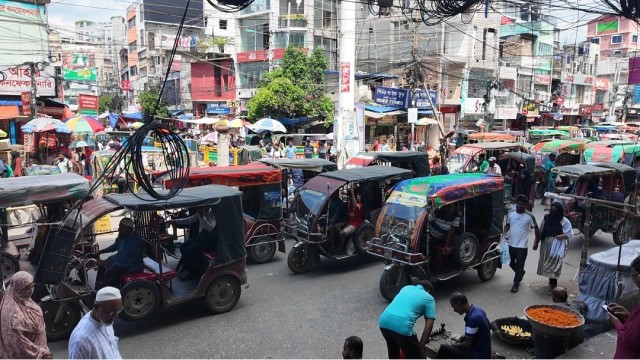
Rajshahi, Sept 29 (V7N) – Once known for its clean, spacious roads and relatively calm urban environment, Rajshahi is facing growing traffic congestion as battery-powered rickshaws and auto-rickshaws increasingly dominate its streets.
Residents say the problem is being compounded by unlicensed and unregistered vehicles, as well as allegations of tampered number plates. The situation is contributing to traffic congestion, disrupting normal movement and increasing road-safety concerns.
According to figures provided by Rajshahi City Corporation, the city has 5,819 registered battery-powered rickshaws and 8,970 registered auto-rickshaws, bringing the combined number to 14,789.
However, residents and local stakeholders allege that the actual number of such vehicles operating on city roads is significantly higher than the authorised figure. Questions have also been raised over how new vehicles continue to enter the city’s transport system despite restrictions on new registrations.
The city corporation has an official registration system for auto-rickshaws and charger rickshaws, while its regulations require registered vehicles to carry registration cards. The corporation has also previously announced measures against unregistered vehicles.
Congestion on Major Roads
A visit to different parts of Rajshahi found auto-rickshaws operating extensively on major roads as well as narrow residential streets.
Traffic congestion is frequently reported around Zero Point, Saheb Bazar, Laxmipur, Railgate, Talaimari and Court Station. Vehicles often stop on the road to pick up or drop off passengers, while some reportedly move against traffic or compete with one another for passengers.
Such practices slow down traffic and create potentially dangerous situations for pedestrians and other road users.
The problem is not limited to the number of vehicles. Passengers also complain about drivers demanding fares higher than officially determined rates, bargaining over fares and refusing short-distance trips.
A recent report also documented complaints from Rajshahi residents over unauthorised fare increases by battery-run auto-rickshaw drivers, with the Rajshahi City Corporation saying that fare changes require an approved process.
Unregistered Vehicles Raise Questions
Residents say vehicles without proper licences or number plates are operating freely across the city, making it difficult for authorities to identify and take action against them.
There are also allegations that some vehicles operate with altered or duplicated registration numbers.
The issue is not entirely new. Earlier reporting found that Rajshahi had faced a substantial gap between the number of licensed battery-powered vehicles and the number actually operating on city roads.
The Rajshahi City Corporation has previously introduced measures including registration, colour-based operation and time-based restrictions to manage the number of auto-rickshaws on the streets. Official city corporation records show that such systems have been used to regulate traffic and restrict unregistered vehicles.
New Vehicles Continue to Appear
Another concern is the continued production and entry of new auto-rickshaws into the city.
Local sources cited in the report say Rajshahi has at least 50 small and large workshops producing auto-rickshaws and that hundreds of new vehicles may be added to the city's transport fleet each month.
This has raised questions over how vehicles are entering the streets when the city corporation says new registration has been restricted.
The city corporation’s current online registration system remains operational for registration-related services, while official records also list licensing procedures and fees for auto-rickshaws, charger rickshaws and drivers.
Time and Economic Costs
The growing number of vehicles is also increasing travel times across the city.
Commuters, students, office workers, patients and businesspeople often have to spend considerably more time travelling along routes that previously could be covered within a few minutes.
A pedestrian, Habib, said congestion had made even short journeys unpredictable.
“Earlier, a journey that took five minutes can now take half an hour,” he said, adding that traffic congestion was affecting office schedules and everyday family activities.
Local businessman Sujon Mia, who spoke to the reporter in Saheb Bazar, said the number of rickshaws and auto-rickshaws had increased considerably in recent years.
He said some drivers travel at high speed and frequently disregard traffic rules. While he acknowledged the importance of auto-rickshaws for urban mobility, he called for more regular enforcement against vehicles operating without proper documents.
Drivers Also Seek Regulation
Not all drivers oppose stricter enforcement.
Mehedi Hasan, an auto-rickshaw driver from Shiroil, said authorities should take action against vehicles without proper licences and documents.
“We also want stricter measures from the city corporation,” he said, adding that many young people were driving vehicles and that properly licensed vehicles and qualified drivers should be retained while unauthorised vehicles should be seized.
Abdul Kader, a resident of the Railgate area, said auto-rickshaws had long played an important role in short-distance transportation.
“The problem is not the existence of auto-rickshaws but the lack of control over their numbers and operation,” he said.
Experts Call for Integrated Planning
Swapnil Rahman, an associate professor in the Department of Public Administration at Rajshahi University, said the traffic problem should not be viewed solely as an auto-rickshaw issue.
He said authorities needed to consider the total number of vehicles, road capacity, route management, parking facilities, designated passenger pick-up and drop-off points, driver training and enforcement of traffic laws.
He also called for monitoring the production of unregistered auto-rickshaws and the process through which new vehicles enter the city.
Urban planners say enforcement alone will not provide a lasting solution. They argue that authorities must also consider alternatives to the current transport system while introducing more professional traffic management.
Professor Abdul Wakil of the Department of Urban and Regional Planning at Rajshahi University of Engineering and Technology said registration numbers could be used more effectively to regulate auto-rickshaws.
He suggested a time- and route-based system under which different categories of vehicles could operate during different periods, reducing the number of vehicles simultaneously using the busiest roads.
Accident Risks
The growing congestion has also raised concerns about road safety.
Speeding, sudden stops in the middle of roads, competition for passengers and driving against traffic can create dangerous situations for pedestrians and other vehicles.
According to police figures cited in the report, 135 road accidents occurred in Rajshahi district and 34 in Rajshahi metropolitan area over the past year, with a combined death toll of 160. A total of 169 cases were filed during the period.
Police data cited in the report indicate that motorcycles and auto-rickshaws were involved in around half of the accidents, while trucks and dump trucks were linked to about 40 accidents.
Police Step Up Enforcement
The traffic division of Rajshahi Metropolitan Police says it conducts regular drives against auto-rickshaws operating without licences and documents.
According to police, unregistered vehicles are identified and subjected to legal action, while drivers are also called in for awareness programmes. In some cases, drivers are required to provide written undertakings not to operate vehicles in the city without proper registration.
Deputy Commissioner (Traffic) of Rajshahi Metropolitan Police Md Nur Alam Siddique said authorities were working to bring both registered and unregistered auto-rickshaws under a more disciplined system.
He said discussions had been held with Rajshahi City Corporation on reducing the number of auto-rickshaws and bringing existing vehicles under proper regulation.
He also said the city’s population and vehicle numbers had both increased, making additional vehicle storage facilities necessary.
“A permanent, secure and adequate dumping station is now essential,” he said, adding that such a facility would allow seized vehicles to be stored safely and help authorities take legal action more efficiently.
Rajshahi Metropolitan Police Commissioner Mohammad Faizul Kabir said legal action against some vehicles is difficult because many auto-rickshaws lack registration or chassis numbers.
He said a permanent dumping station would allow authorities to seize and store illegal vehicles, potentially helping reduce their numbers and improve traffic discipline.
The Challenge Ahead
Rajshahi’s auto-rickshaws serve an important role in providing affordable short-distance transportation. Any effort to regulate them therefore needs to balance traffic management, road safety and the livelihoods of drivers and owners.
The challenge for authorities is to determine the sustainable number of vehicles the city’s roads can accommodate, prevent unregistered vehicles from entering the system, enforce registration and licensing rules, and establish an efficient route and parking management system.
Without coordinated action, the continued growth of auto-rickshaws could place further pressure on Rajshahi’s roads and worsen congestion and safety risks.
For a city long associated with a relatively calm and organised urban environment, restoring order to its transport system is becoming an increasingly important part of its future urban planning.
END/MRA/SMA/