Ukhiya, Sept 28 (V7N) – Forest encroachment, hill cutting and the construction of illegal structures are posing growing challenges to the fragile ecosystem of Ukhiya in Cox’s Bazar, with repeated eviction drives highlighting the scale of pressure on protected forest land.
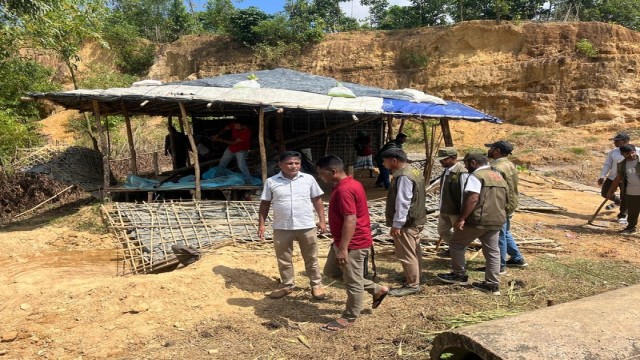
In the latest operation, the Forest Department reclaimed around 30 acres of forest land and demolished seven illegally constructed structures in the Madhurchhara area of Rajapalong Union on Sunday.
The operation was conducted from 9am to 1pm under the leadership of Ukhiya Range Officer Abdul Mannan. Forest officials said the drive was launched following information about illegal occupation of government forest land.
According to the Forest Department, seven structures built after occupying forest land were demolished and approximately 30 acres were brought back under government control.
Forest officials said their preliminary inquiry found alleged links between the occupation and two local individuals, Ibrahim, described by officials as a so-called headman, and his brother Omar Faruk. Legal action is being considered, officials said.
Efforts to obtain Ibrahim’s comment were unsuccessful as he did not answer phone calls.
Abdul Mannan said there was no scope for constructing illegal structures by occupying forest land and that operations to protect forest resources would continue.
The latest eviction is part of a broader series of operations in Ukhiya this year. A separate Forest Department drive earlier in September removed seven illegal structures and reclaimed about four acres of forest land in the Machhkaria Bill and Mohammad Alirghona areas.
A wider encroachment problem
Recent reporting has highlighted the scale of the challenge facing Ukhiya’s reserved forests. One report published earlier this month estimated that nearly 2,500 acres of reserved forest land had come under the control of different encroachers over the past 16 years. The same report said joint operations by the administration and Forest Department had recovered more than 150 acres and demolished more than 500 illegal structures over a five-month period. These figures are reported estimates and could not be independently verified by V7N.
The reported forms of encroachment include houses, shops, commercial establishments, agricultural activities and other structures built inside or around protected forest areas. Hill cutting and soil extraction have added another layer of pressure on the landscape, according to recent reports.
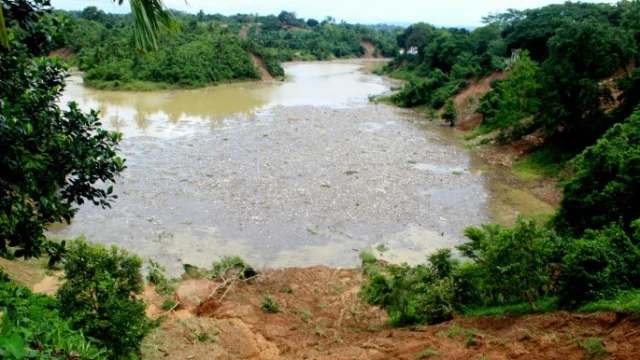
The problem is not limited to the occupation of flat forest land. Cutting hills to create space for buildings, settlements and other activities can permanently alter drainage patterns, vegetation and the stability of slopes.
In May, a report by bdnews24.com said around 900 two-storey structures were being built for Rohingya refugees in the Kutupalong area of Ukhiya after hills were cut inside land identified by the Forest Department as reserved. The Forest Department objected to the construction, while refugee authorities and UNHCR described the structures as temporary.
Hill cutting raises safety concerns
Hill cutting has also created risks for those living and working in the area.
On September 22, two Forest Department personnel were reportedly injured in an alleged attack while attempting to stop hill cutting and soil removal from government forest land in the Gajoghona area of the Thaingkhali forest range. The Forest Department said the officials had gone there after receiving information about the removal of soil by dump trucks.
A similar incident was reported in July, when five Forest Department personnel were injured during an operation against illegal betel-leaf plantations inside protected forest land in Cox’s Bazar. Three officials reportedly suffered serious head injuries.
Such incidents underline another difficulty facing forest protection agencies: enforcing environmental laws can involve confrontation with people who have financial interests in occupied forest land or activities conducted there.
Environmental costs
The environmental consequences of continued forest loss extend beyond the immediate area of an encroachment.
Forests help regulate water flow, protect soil and support biodiversity. Removing vegetation from hills can increase erosion and make slopes more vulnerable during heavy rainfall. The risks are particularly serious in Cox’s Bazar, where monsoon rainfall can trigger landslides on steep and deforested slopes.
In July, at least eight Rohingya refugees were killed in landslides across several camps in Cox’s Bazar after heavy monsoon rain. Reuters reported that the camps were located on steep, deforested hillsides that were highly vulnerable to collapse.
The connection between hill cutting and individual landslides requires site-specific investigation, but the wider vulnerability of deforested slopes during heavy rainfall is well documented.
Bangladesh’s Forest Act also places restrictions on activities in reserved forests, including trespassing, fresh clearing and the use of forest land for cultivation, buildings and other purposes without legal authority.
Enforcement alone may not be enough
Forest officials have intensified eviction drives in Ukhiya, but environmental observers and local stakeholders say protecting recovered land after an eviction is equally important.
If cleared areas are not monitored, restored and kept free from renewed occupation, illegal structures can return.
The challenge is therefore not simply to demolish structures but to establish a system that prevents new encroachment, identifies responsible parties, protects forest boundaries and restores degraded areas.
Effective coordination among the Forest Department, local administration, law enforcement agencies and communities is also essential.
At the same time, authorities face the difficult task of balancing the needs of a densely populated and economically active area with the legal requirement to protect reserved forests.
Protecting Ukhiya’s remaining forests
Ukhiya's forests form part of the wider ecological landscape of Cox’s Bazar and the Chittagong Hill Tracts region. Their protection is important not only for biodiversity but also for slope stability, water management and the resilience of communities living near forested hills.
The latest recovery of 30 acres of forest land is therefore more than an eviction operation. It reflects a much larger challenge: how to prevent protected land from being gradually converted into settlements, farms, commercial establishments and other uses.
For long-term protection, environmental experts and conservation stakeholders generally point to several priorities: regular monitoring of forest boundaries, rapid action against new encroachment, stronger control over hill cutting and soil extraction, restoration of degraded areas, and greater involvement of local communities in forest protection.
The Forest Department says its operations will continue.
For Ukhiya, however, the lasting measure of success will not be the number of structures demolished in individual drives. It will be whether recovered forests remain protected, hills remain intact and the area's increasingly fragile ecosystem can be preserved for future generations.
END/MSI/SMA/