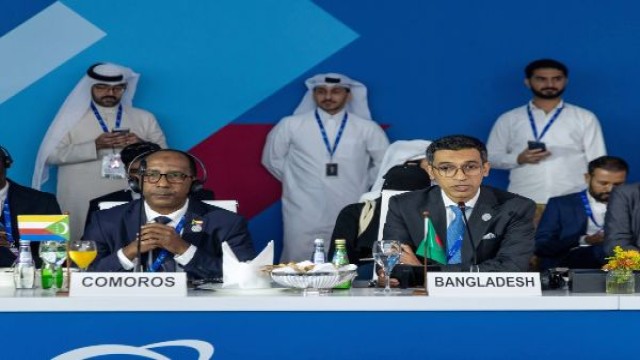
Dhaka, Nov 01 (V7N)- Bangladesh has been granted an additional three years to prepare for graduation from the United Nations’ Least Developed Country (LDC) category, extending the transition deadline to 2029. The government says it plans to use the extra time to strengthen the economy through financial sector reforms, export diversification, higher productivity and improvements in energy and revenue policies.
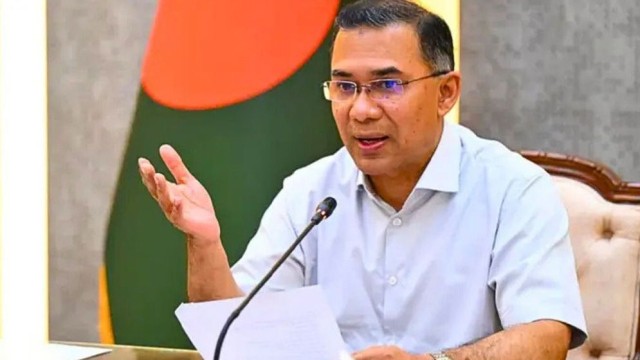
Financial Adviser Dr. Rashed Al Mahmud Titumir said the roadmap for building a stronger economy is closely linked to the country's preparations for LDC graduation. He said the government is working to address instability in the banking sector, increase the tax-to-GDP ratio, develop a sustainable energy policy and finalise free trade agreements (FTAs).
Bangladesh was included in the LDC category in 1975. It met the graduation criteria in the 2018 and 2021 assessments, which considered per capita income, human assets and economic and environmental vulnerability. However, the COVID-19 pandemic, economic challenges and political instability affected the country's preparations.
In February, the government sought an extension instead of proceeding with graduation on the previously scheduled timeline. The UN subsequently approved additional preparation time, moving Bangladesh's graduation deadline to 2029 rather than November 2026.
Despite the extension, the country faces significant economic and structural challenges. In an interview with the media, Titumir said the government was prioritising financial sector reforms, diversification of export products, stronger international competitiveness and increased productivity.
He added that plans for improving living standards and implementing necessary reforms were being developed through public consultation, economic strategies and specific action plans. According to him, confidence in the banking sector has begun to recover, while the tax-to-GDP ratio has also improved compared with the previous period. He said the progress cited covered the period from mid-February to June 30.
Graduation from the LDC category will gradually reduce Bangladesh's access to certain international benefits, including duty-free market access, special support measures and concessional financing. The ready-made garment sector and other major export industries could face greater competition as these facilities are phased out.
Economists and business leaders have therefore called for a clear, year-by-year reform plan to make effective use of the additional preparation period.
Dr. Mahfuz Kabir, research director at the Bangladesh Institute of International and Strategic Studies (BIISS), identified banking and energy sector reforms as immediate priorities. He said effective reforms in these areas could help the economy achieve growth of around 4 per cent in the current fiscal year, while failure to address the problems could see growth fall to 3.2 per cent.
Mohammad Hatem, president of the Bangladesh Knitwear Manufacturers and Exporters Association (BKMEA), also stressed the need for structural reforms in the banking system and the National Board of Revenue (NBR). He said greater clarity was needed regarding the European Union's due diligence requirements.
Hatem called for a specific roadmap identifying which reforms would be implemented in each of the next three years, saying this would help ensure that the additional preparation period was used effectively.
Titumir said the government's objective was not merely to complete the formal process of LDC graduation but to turn it into a sustainable economic transformation. He said the government was seeking participation from the private sector and other stakeholders, supported by necessary allocations and clearly defined strategies.
He added that stakeholders' ownership of the reform process and private sector involvement were essential to achieving the goal. Titumir also noted that Bangladesh's economy was considerably larger than those of many other LDCs.
Meanwhile, the United Nations has described the extension granted to Bangladesh and Nepal as an exceptional measure, saying it should not be treated as a general precedent for other countries.
The UN is also expected to conduct an interim assessment of Bangladesh's readiness and progress by the end of 2027. The review is expected to identify the country's progress towards graduation and the remaining steps needed before the 2029 deadline.
END/SMA/AJ