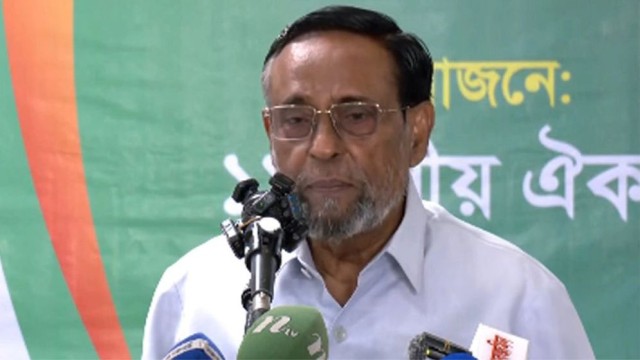
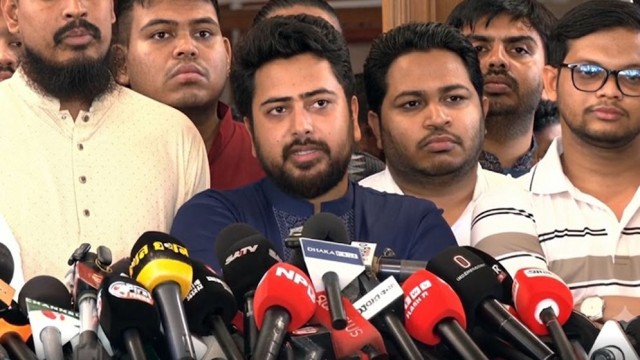
Dhaka, Jan 01 (V7N) — Bangladesh Jamaat-e-Islami Ameer Dr. Shafiqur Rahman has confirmed that he met an Indian diplomat at the beginning of last year, following his bypass surgery. The information was reported by Reuters on Wednesday and later confirmed by Shafiqur Rahman during an interview at his residence.
Speaking to Reuters, the Jamaat chief said the Indian diplomat requested that the meeting be kept confidential, unlike meetings he has held openly with diplomats from other countries. “Many diplomats have met me publicly, and those meetings were disclosed. What is the problem here?” he said, adding that openness is essential for improving bilateral relations. “We have no alternative to strengthening relations. We must be transparent with each other.”
Reuters sought comment from India’s Ministry of External Affairs regarding the meeting but did not receive an immediate response. However, a source within the Indian government confirmed that India maintains contact with various political parties in Bangladesh.
Addressing questions about Jamaat-e-Islami’s historical ties with Pakistan, Shafiqur Rahman said the party maintains balanced relations with all countries and does not intend to align itself closely with any single nation. He also expressed concern over former Prime Minister Sheikh Hasina’s stay in India after fleeing Bangladesh, saying bilateral relations between the two countries have since fallen to their lowest point in decades.
According to the Reuters report, Jamaat-e-Islami is preparing to demonstrate its political strength in the national election scheduled for February and has expressed interest in joining a government of national unity. Shafiqur Rahman said the party has already held discussions with several political groups regarding such a coalition.
Opinion polls cited by Reuters suggest Jamaat-e-Islami, contesting an election after nearly 17 years, could emerge as the second-largest party after the Bangladesh Nationalist Party (BNP), with a narrow margin between them. Jamaat was previously part of the BNP-led government from 2001 to 2006.
In the interview, conducted shortly after Jamaat formed an electoral alliance with the National Citizen Party (NCP), Shafiqur Rahman said the party seeks political stability for at least five years. “If parties come together, we can jointly run the government,” he said. He added that a common anti-corruption agenda would be central to any unity government, and that the prime minister would come from the party securing the highest number of seats. Whether he would be a prime ministerial candidate, he said, would be decided by the party.
Reuters noted that Jamaat-e-Islami’s resurgence follows the August 2024 uprising that led to the fall of Sheikh Hasina’s government. The Awami League is not participating in the upcoming election.
Shafiqur Rahman also told Reuters that a Jamaat-led government would not feel “comfortable” with President Mohammed Shahabuddin, who was elected in 2023 with Awami League backing. Earlier this month, President Shahabuddin told Reuters he intended to resign midway through his term. However, in a telephone conversation with Reuters on Wednesday, the president declined to comment on Jamaat’s position, saying he did not want to “further complicate” the matter.
END/V7D/SMA/