Sylhet, Nov 26 (V7N) – A divisional dialogue on Women, Peace and Security (WPS) was held in Sylhet to gather recommendations for formulating the country's second National Action Plan (NAP) on the issue.
The dialogue emphasised women's safety, digital financial literacy, prevention of cyber harassment, rights of female tea garden workers and women's participation in addressing climate change-related disasters.
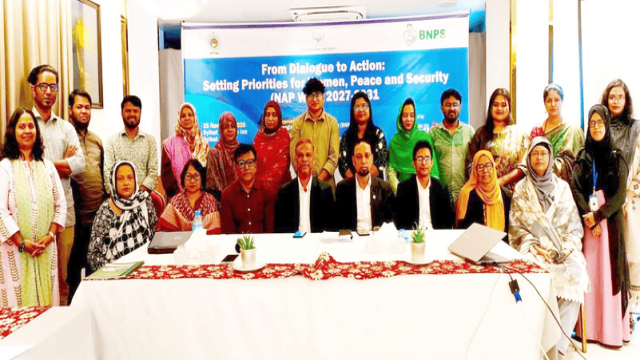
The event was organised on Wednesday (November 25) at Hotel Paradise Inn in Sylhet by the Reliant Women Development Organization (RWDO), Sylhet, and the Bangladesh Nari Progati Sangha (BNPS), with support from UN Women Bangladesh.
Titled "From Dialogue to Action: Identifying Priority Issues and Consolidating Recommendations for the Formulation of the National Action Plan on Women, Peace and Security," the dialogue aimed to identify local realities, challenges and priorities in the Sylhet division and develop specific recommendations for inclusion in the second National Action Plan.
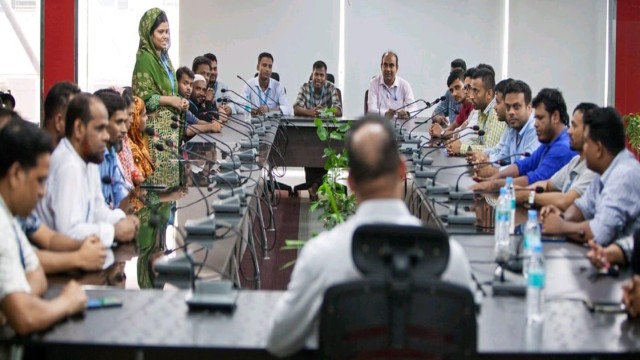
Government officials, women's rights activists, representatives of non-governmental development organisations, journalists, youth representatives and civil society members attended the event.
Participants reviewed the framework, implementation progress, achievements and limitations of the first National Action Plan on Women, Peace and Security (2019–2025).
Speakers stressed that the next action plan should ensure women's safety and access to justice while strengthening their meaningful participation in decision-making and peacebuilding processes. They also called for greater attention to climate change, cybersecurity, conflict and violence, transitional justice and access to justice for survivors of conflict-related sexual violence.
Speaking at the dialogue, Mohammad Shoaib Akhtar, Upazila ICT Officer of Bishwanath, said a large number of people from the Sylhet region live abroad, resulting in extensive digital financial transactions both at home and overseas.
He said women frequently face cyberattacks while conducting such transactions, making digital financial literacy programmes essential for them.
He also pointed out that the absence of a digital violence observatory and women-friendly cyber help desks leaves many women facing technology-facilitated harassment and cyberbullying without adequate information about services, legal assistance and remedies. He called for establishing accessible, women-friendly cyber support systems.
Mahfuz Alam, a representative of Ashar Alo and member of JIHA, stressed the importance of ensuring legal recognition, security and fundamental rights for members of gender-diverse communities. He said the lack of such protections prevents them from accessing essential services and equal opportunities.
Highlighting the challenges faced by female tea garden workers, Nafisa Tanzin, a youth representative of RWDO's Youth Shadhinota Project, said women in tea gardens have very limited access to women-friendly services.
As a result, many victims of gender-based violence are unable to seek justice, she added.
According to Tanzin, around 60 percent of workers at Daldali Tea Garden in Sylhet city, regardless of gender, are unaware of their human rights. She also said approximately 80 percent of the workers have no bank savings and continue to live within traditional social practices and restrictions.
To improve access to rights, facilities and essential services in remote and extensive tea garden areas, she proposed forming tea garden-based Women, Peace and Security committees.
She suggested that the committees include female worker representatives, adolescent girls and youth representatives, female health workers, women teachers, representatives of local women's organisations, female representatives of labour unions and nominees from the upazila administration.
Addressing women's participation in climate change adaptation and disaster management, Tanzin said decisions affecting women in flood-prone areas are often made without consulting them.
Women should not be treated merely as recipients of relief but should be given leadership opportunities in disaster management and climate resilience initiatives, she said.
She proposed establishing "Women-Led Climate Resilience and Safety Hubs" to promote women's leadership in these areas.
Representatives from the Sylhet District Social Services Office, Department of Women's Affairs, upazila administrations, District Relief and Rehabilitation Office, Divisional Family Planning Office and Sylhet Polytechnic Institute attended the dialogue.
Representatives of various non-governmental and development organisations, including the Bangladesh National Women Lawyers' Association, Women for Women Rights, JCC Sylhet, Tultikor Mohila Unnayan Samity, Green Disable Foundation and Ashar Alo Youth Organisation, also participated.
RWDO Sylhet Executive Director Samita Begum Meera, journalists, youth representatives and members of civil society were also present.
During group discussions and interactive sessions, participants identified existing challenges, implementation gaps and priority issues concerning Women, Peace and Security in the Sylhet division. Based on the experiences and opinions of different stakeholders, they put forward specific recommendations for inclusion in the second National Action Plan.
Participants emphasised that effective implementation of the national action plan requires grassroots participation, coordination between government and non-government organisations, and proper reflection of the experiences of marginalised communities.
At the conclusion, the key observations, opinions and recommendations were reviewed, with participants expressing hope that the priorities and recommendations from Sylhet would receive due consideration in the formulation of the second National Action Plan.
END/RIM/SMA/